
Reviewed · MONTREAL TOURS
Montreal: Discover Reso – The Underground City
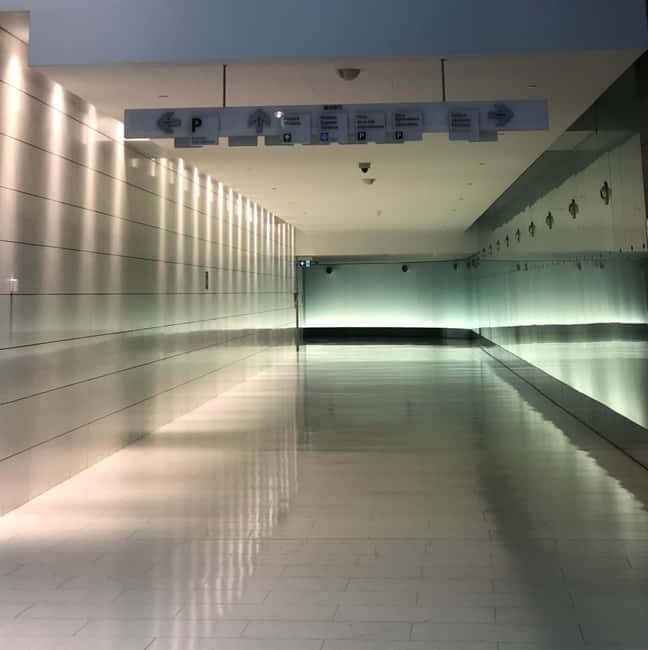
Montreal has a second city below street level. The RESO Underground City is far more than a mall corridor: it links shops, hotels, offices, restaurants, transit stations, public art, and major downtown buildings across roughly 33 kilometers of indoor passages. This two-hour walk with local guide Misha gives you a practical map of that vast network, along with stories and photo stops you could easily miss alone.
I like the way the tour combines useful city skills with unusual sights. You get a short Metro lesson and ride, then visit places such as the Berlin Wall fragment, the year-round ice rink, the Cathcart Terrace, and the Barbie Expo. I also like the small group limit of 10, which makes it easier to ask questions and stay with the guide.
The main consideration is the amount of walking and stair climbing. The route covers a lot of ground in two hours, and the underground passages can be confusing even after you understand the basic layout. If your mobility is limited, this tour is not suitable, and anyone hoping for a slow café visit should know that the pace is fairly active.
In This Review
- Key points to know before booking
- Why Montreal’s underground city needs a guide
- Starting beneath the fountain at Complexe Desjardins
- From a souvenir shop to a former bank café
- Berlin Wall history and the World Trade Centre
- Metro 101 and a short underground ride
- The ice rink, Central Station, and Cathcart Terrace
- The Ring and Montreal’s downtown story
- Coffee, Les Cours Mont-Royal, and Place Montreal Trust
- Barbie Expo and the photo-friendly stops
- What the pace feels like
- Is $29 good value?
- Who should book the Discover RESO tour?
- Final verdict: book early in your Montreal stay
- FAQ
- Where does the Montreal RESO tour meet?
- How long does the tour last?
- What languages are offered?
- How large is the group?
- Is the tour suitable for children?
- Can wheelchair users join?
- What should I wear?
- Is food or drink included?
- Can I cancel the booking?
Key points to know before booking
- A practical Montreal orientation: Misha teaches the basics of the Metro and shows you how the connected underground passages work.
- A 33-kilometer indoor route: The RESO links shopping centers, office towers, transit hubs, restaurants, and cultural stops beneath downtown.
- A strong cold-weather option: The meeting point and much of the route stay indoors, making this useful on freezing, rainy, or very hot days.
- More than shopping: You see a Berlin Wall fragment, a historic bank converted into a café, an indoor ice rink, public art, and the Ring sculpture above ground.
- Small-group guiding: With no more than 10 people, the tour feels personal and allows room for questions and local suggestions.
- Best booked early in your visit: The Metro lesson and route tips can help you get around Montreal more confidently afterward.
Why Montreal’s underground city needs a guide
Montreal’s RESO is often described as the world’s largest underground city, but that name can mislead you. It is not one continuous cavern with one grand entrance. Instead, it is a network of connected indoor spaces, tunnels, shopping centers, hotels, office complexes, train stations, and Metro links.
That is what makes it useful, and also what makes it hard to understand at first. You can enter from one building, follow signs toward a shopping center, cross a station, and suddenly find yourself in another complex with a different visual style. A map helps, but a local guide helps more.
Misha’s role is not just to point out doors and corridors. She explains how the sections connect and gives you enough Metro instruction to continue exploring on your own. This practical side is one of the strongest reasons to book. Several people found that the short Metro lesson gave them confidence to reach places such as the farmers market and the botanical garden later in their trip.
I would schedule this tour near the beginning of a Montreal visit. You get a useful indoor route on day one, learn which buildings connect, and receive recommendations for places to eat and visit afterward. It can save you from wasting time or paying for extra rides when a Metro and RESO connection will do the job.
More City Tours in Montreal
- From Montreal: Quebec City and Montmorency Falls Day Trip
★ 4.5 · 2,669 reviews - Quebec City and Montmorency Falls Day Trip from Montreal
★ 4.0 · 2,437 reviews - Montreal City Sightseeing Tour with Live Commentary
★ 4.0 · 1,953 reviews
Starting beneath the fountain at Complexe Desjardins
The tour begins at Complexe Desjardins, at 175 René-Lévesque Boulevard West. Once inside, go downstairs to the main atrium and look for the wide fountain near the food court. Misha waits on the benches beside it.
This is a sensible meeting point, especially in winter. You do not need to stand outside in the cold while looking for a guide, and the fountain is an easy landmark. Coffee shops, food counters, and restrooms are close by, which helps if you arrive early.
Complexe Desjardins also gives you an immediate sense of the RESO’s scale. The open atrium, shops, food court, and multiple passageways show how the underground network functions as part of everyday Montreal life rather than as a single tourist attraction.
One small practical warning: the meeting instructions are specific, so read them carefully. A past participant had confusion about the meeting location. Go inside the complex and head downstairs, rather than waiting at the street address.
From a souvenir shop to a former bank café
Early stops include a local souvenir shop and a historic bank that has been converted into a café. These may sound modest beside the bigger attractions, but they help explain the character of the RESO.
The souvenir shop gives you a quick look at Montreal-themed shopping below ground. The former bank café adds architectural interest and shows how older commercial spaces have been reused. Misha fills in the story as you move, so the route is not simply a parade of storefronts.
This section is also a reminder that the tour is designed around discovery and orientation, not just famous sights. You see the kinds of places you might walk past without realizing they are part of the city’s underground system.
If you want a long stop for shopping, this is not that kind of tour. The point is to notice the spaces and understand how they fit into the network. You can return later with more time.
Berlin Wall history and the World Trade Centre
The World Trade Centre of Montreal brings one of the tour’s most memorable stops. Here, you see a piece of the Berlin Wall along with the large God of the Sea statue.
The Berlin Wall fragment is a striking object in an unexpected setting. Rather than visiting a formal museum, you encounter a piece of twentieth-century history while moving through a downtown complex. The contrast between the polished interior and the wall fragment gives the stop extra impact.
The God of the Sea statue adds a different mood, with a grand decorative presence that suits the building’s public spaces. Together, these sights show why a guide is helpful. The most interesting features are not always marked with obvious tourist signs, and a quick walk through the passage could leave you wondering what you just passed.
Misha also takes photographs during the experience. If you enjoy recording a trip, this is a useful bonus, particularly at the more unusual stops and designated photo areas.
A few more tours worth putting side by side
- Montreal: Guided Bus Tour
★ 4.4 · 3,064 reviews - Montreal: Hop-On Hop-Off Double-Decker Bus Tour
★ 4.1 · 2,760 reviews - Montreal Mile End Authentic Food Tour with 7 Delicacies Tastings
★ 5.0 · 2,598 reviews - The Original Old Montréal Walking Tour by Guidatour
★ 4.5 · 2,217 reviews
Metro 101 and a short underground ride
The Metro portion is one of the tour’s most useful features. Misha gives you a quick introduction to using Montreal’s subway system, then takes the group on a short ride.
Do not expect a full transit course. It is a compact lesson meant to make the system less intimidating. You learn enough to understand the basic process and connect the Metro with the underground passages.
That matters because the RESO is closely tied to downtown stations. For a first-time visitor, the difference between a shopping mall entrance, an office complex, and a Metro connection can be unclear. A guide who shows you the links in person can make the map feel much more practical.
This is also where the tour’s value extends beyond the two-hour route. Once you know how to use the Metro, you can reach more of Montreal without relying on taxis or rideshare services. One participant specifically used the lesson to travel independently to the botanical gardens and Insectarium afterward.
The ice rink, Central Station, and Cathcart Terrace
The route continues to the 1000 de la Gauchetière indoor ice rink, which operates year-round. You may see skating activity depending on the schedule, but check the rink’s timetable in advance if this stop is important to you. The tour includes the visit, not a promise that you will have time or access to skate.
This is a fun example of how the RESO supports ordinary city life. Montreal’s underground world is not only for getting from one warm building to another. It includes places to eat, shop, work, meet friends, and enjoy recreation.
Central Station follows, giving you a look at one of the city’s major transportation hubs. The stop helps connect the underground system to Montreal’s wider rail and transit network.
Cathcart Terrace adds a more stylish pause, with a restaurant and Biergarten among the route’s food and social spaces. Meals are not included, so think of this as a place to see and possibly return to rather than a scheduled lunch. There are food and drink options at several points, but you should budget separately if you want to buy something.
The Ring and Montreal’s downtown story
At one point, the tour goes outside to see The Ring, the large sculpture that frames views of downtown. This brief outdoor break matters because it reconnects the underground network with the city above it.
The Ring provides a useful visual pause after a long stretch indoors. It also frames more than two centuries of Montreal’s downtown development, giving you a way to think about the relationship between the old city, modern towers, and the underground links beneath them.
Bring a coat in cold weather even though most of the tour is indoors. You will encounter varying temperatures throughout the route, and this short outdoor section can feel sharp on a winter day.
Coffee, Les Cours Mont-Royal, and Place Montreal Trust
The tour includes a quick espresso or fresh juice stop in the tunnels to recharge. The wording suggests a brief refreshment break rather than a full sit-down café visit, so plan your expectations accordingly. Drinks and personal purchases should be treated as extra unless the specific booking details confirm otherwise.
Les Cours Mont-Royal provides one of the more elegant architectural settings on the route. Its polished interiors contrast with the practical function of the passageways, and it is a good place for photographs.
Place Montreal Trust and Eaton Centre, including the Time Out Market, add more shopping and dining connections. These stops help you understand how the RESO works as a connected downtown district. You are not simply walking through a hidden tunnel. You are moving between major commercial buildings that remain active in all seasons.
The trade-off is that this part of the tour can feel less distinctive if you dislike malls and retail areas. For me, the value comes from learning how the spaces connect and knowing where to return later, not from spending extended time in each shop.
Barbie Expo and the photo-friendly stops
The Barbie Expo is likely to be one of the tour’s most playful stops. It is built for photographs, and the experience includes access to a selfie zone.
This changes the tone after the architectural and transit-focused sections. You move from public art and historic objects to a colorful display that is deliberately fun and camera-ready. If you enjoy taking pictures, you will have plenty to work with throughout the route, not only at the Barbie exhibit.
Admission details can vary by attraction, so confirm what is covered when you book. The supplied tour information lists a visit to the Barbie exposition and access to a selfie zone, while also noting that personal expenses and meals are not included.
Misha’s habit of helping with photo angles is another useful touch. You are not rushed through every stop without a chance to frame a picture. Still, the tour covers a lot of ground, so serious photographers may want to return later for more time.
What the pace feels like
Two hours is enough to cover a strong portion of the central RESO, but it is not enough to explore every branch. The route includes many stops, a Metro ride, indoor and outdoor sections, and considerable walking.
You should wear comfortable shoes and be ready for stairs. One participant enjoyed seeing a large part of the network but specifically warned about the walking and stair climbing. Another found that the route took longer to navigate than expected because the underground connections are easy to confuse.
The small group limit helps. With up to 10 people, Misha can keep the group together and explain the map without the feel of a large procession. Her style comes across as warm, lively, and personal, and the strongest praise focuses on her friendly manner, local pride, humor, and clear explanations.
She leads in English and French. The experience is shaped by her personal knowledge of Montreal and the RESO, rather than presented as an official city interpretation. That gives the tour a more conversational feel, but visitors seeking a formal institutional history lesson may prefer a museum or architectural tour.
Is $29 good value?
At $29 per person, I consider this a fair price if you are new to Montreal’s downtown network. You are paying for a small-group guide, route planning, local context, Metro instruction, and access to a wide range of sights in a short period.
The value is especially good in poor weather. A cold snap, heavy rain, or heat wave can make outdoor sightseeing tiring, while the RESO lets you keep moving between major parts of downtown. You still go outside briefly for The Ring, but the tour’s main route offers shelter.
The price makes less sense if you already know the RESO well or only want to shop. You can enter many of these complexes on your own, and the tour does not include a meal, hotel pickup, or personal shopping costs.
For a first visit, though, the practical lessons may repay the cost. Knowing how to move through the passages and use the Metro can save time and transport money during the rest of your stay.
Who should book the Discover RESO tour?
I would choose this experience if you:
- Are visiting Montreal for the first time
- Want an indoor activity in cold, rainy, or very hot weather
- Enjoy architecture, public art, quirky attractions, and photography
- Feel unsure about using the Metro
- Prefer a local guide to a self-guided map
- Want restaurant and sightseeing suggestions for later
- Can comfortably walk and manage stairs
I would skip it if you have limited mobility, need a wheelchair-accessible route, are traveling with a baby stroller, or are carrying large luggage. Unaccompanied minors and children under 5 are not accepted.
The tour also suits independent visitors who want help at the start, then plan to explore alone. Misha’s route tips can give you the confidence to return to the shopping centers, food stops, and Metro connections at your own pace.
Final verdict: book early in your Montreal stay
I recommend the Discover RESO tour for first-time visitors who want to understand the city below the city. Its best features are not just the Berlin Wall fragment, Barbie Expo, ice rink, or The Ring. The real benefit is learning how Montreal’s indoor network fits together and how to use it afterward.
Book it early if you can. You will get the most from the Metro lesson, local food suggestions, and route advice. Just wear sturdy walking shoes, leave large bags behind, and expect an active two hours rather than a leisurely indoor stroll.
At $29, this is a useful and entertaining orientation to one of Montreal’s most unusual features, with Misha’s personal touch adding warmth to a place that could otherwise feel like a maze.
FAQ
Where does the Montreal RESO tour meet?
The meeting point is inside Complexe Desjardins at 175 René-Lévesque Boulevard West in Montreal. Go downstairs to the main atrium near the large fountain, where the guide waits on the benches.
How long does the tour last?
The experience lasts about two hours. The route includes many stops and a short Metro ride, so the pace involves steady walking.
What languages are offered?
The live tour is offered in English and French.
How large is the group?
The tour is limited to 10 participants.
Is the tour suitable for children?
Children under 5 are not permitted. Unaccompanied minors are also not allowed.
Can wheelchair users join?
No. The experience is listed as unsuitable for wheelchair users.
What should I wear?
Wear comfortable shoes because the tour involves substantial walking and some stair climbing. Prepare for different temperatures in the underground city and bring a camera if you want photos.
Is food or drink included?
Meals and drinks are not included unless specifically stated for your booking. Food and drinks are available for purchase at various stops, including the espresso or juice break.
Can I cancel the booking?
You can cancel up to 24 hours in advance for a full refund. The activity also offers a reserve-now-and-pay-later option.
Newest reviews from Montreal
- Private Departure Transfer to Montreal Airport YUL★ 4.5 · 45 reviews
- 3 Day and 2 Night Tour: Toronto, 1000 Islands, and Niagara Falls★ 5.0 · 46 reviews
- Montréal Downtown and Underground City Private Walking Tour★ 5.0 · 47 reviews
- AURA experience at Notre-Dame Basilica and guided cruise★ 4.0 · 47 reviews
- Haunted Griffintown Ghost Walking Tour in Montréal★ 5.0 · 47 reviews
- Montreal: Guided Bar Crawl with Free Shots and Club Entry★ 3.5 · 48 reviews
- Explore the Underground City with a local comedian★ 4.5 · 49 reviews
- Montreal: Jean-Talon Market & Beyond Locally Owned Food Tour★ 5.0 · 50 reviews
Montreal Tours, compared.

Montreal Mile End Authentic Food Tour with 7 Delicacies Tastings
Read our review →
Quebec City and Montmorency Falls Day Trip from Montreal
Read our review →
The Original Old Montréal Walking Tour by Guidatour
Read our review →
Old Montreal Small-Group Walking Tour | Max 10 | by MTL Detours
Read our review →
Montreal City Sightseeing Tour with Live Commentary
Read our review →Browse the lists this tour appears in