
Reviewed · MONTREAL TOURS
Old Montreal Small-Group Walking Tour | Max 10 | by MTL Detours
Old Montreal rewards those who slow down. This two-hour walking tour makes sense of the district’s crooked streets, stone buildings, churches, and old financial quarter without asking you to decode the city on your own. I like the small limit of 10 people, and I like the practical restaurant, shop, and museum tips you receive at the end. The main drawback is that most of the tour is outdoors, with cobblestones, stairs, and little time to sit.
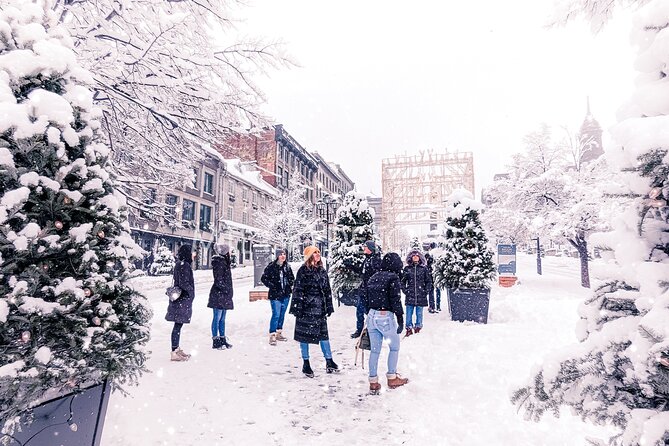
The guide quality is a major part of the appeal. Louise receives repeated praise for her storytelling and care, while Amelie, Darren, Elise, Silvia, and Louis have also led warm, lively walks. On bitter winter days, guides have added indoor warm-up stops, hand warmers, and even maple candy, but you still need proper clothing and shoes.
In This Review
- Key points to know before booking
- Why a small Old Montreal tour helps
- Meeting at Place d’Armes and finding your bearings
- Bonsecours Market and Montreal’s civic story
- Rue Saint-Paul and the pleasure of walking slowly
- Place Jacques-Cartier and the Old Port connection
- City Hall and the buildings that carry memory
- Notre-Dame Basilica from the outside
- Banking, colonial rule, and the old financial district
- The Sailors’ Church and the city’s beginnings
- What the guides do especially well
- Winter, rain, snow, and the cobblestone question
- The handout, maple candy, and useful local advice
- Who should book this $44.40 introduction
- Should you book the MTL Detours walk?
- FAQ
- How long does the Old Montreal Small-Group Walking Tour last?
- How many people can join the tour?
- What language is the tour conducted in?
- What is included in the ticket price?
- Is entry to Notre-Dame Basilica included?
- Where does the tour end?
- Is the tour suitable for children?
- What happens if the tour is canceled?
Key points to know before booking
- A 10-person limit keeps the walk personal: You should be able to hear the guide and ask questions without shouting across a crowd.
- The route covers Old Montreal’s essential sights: Expect Place Jacques-Cartier, Rue Saint-Paul, Bonsecours Market, Notre-Dame Basilica, the Old Port area, and the former financial district.
- The storytelling goes beyond dates and names: Guides connect buildings to civic life, colonial rule, religion, banking, food, art, and modern Montreal.
- The route ends near Bonsecours Market: You finish close to Place Jacques-Cartier, a handy spot for lunch, coffee, shopping, or further sightseeing.
- Winter walks can work well with preparation: Indoor pauses and thoughtful guides help, but cold, snow, rain, and wind remain part of the deal.
- The handout adds value after the walk: It lists local places to eat, see, and explore, along with a small treat and a parting gift.
Why a small Old Montreal tour helps
Old Montreal looks easy on a map. On foot, it is a different story. The streets do not follow a neat modern grid, and the most interesting details are often above eye level or tucked behind a familiar façade. A guide gives you the story before you walk past the building, which changes the way you see the whole district.
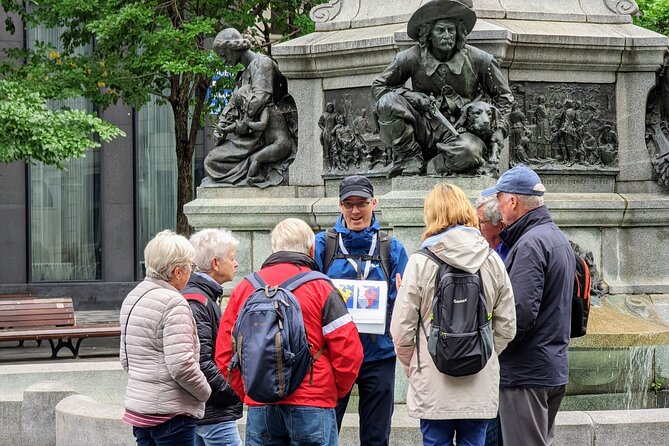
I especially like the 10-person cap. A large group can turn a historic walk into a slow-moving queue, with the guide repeating every point for people at the back. Here, the format allows more questions and makes it easier to keep together on narrow streets.
The tour is offered in English and costs $44.40 per person. That is not the cheapest way to walk around Old Montreal, since the streets themselves are free. But the price is reasonable if you want a strong introduction, local recommendations, and a guide who can connect several centuries of history in two hours.
The value is best on your first day in Montreal. You get the basic map in your head, learn which places deserve a return visit, and leave with suggestions for food, drinks, shops, museums, and other stops. I would not book it only to take photographs. I would book it to understand what you are looking at.
More Walking Tours in Montreal
- The Original Old Montréal Walking Tour by Guidatour
★ 4.5 · 2,217 reviews - Montréal: The Original Old Montréal Walking Tour
★ 4.8 · 911 reviews - Old Montreal: Traditional Ghost Walk of the Haunted City
★ 4.7 · 746 reviews
Meeting at Place d’Armes and finding your bearings
The walk begins at 503 Place d’Armes in Montreal, near the Marché Saint Laurent meeting point listed for the experience. Check your confirmation carefully so you know exactly where to stand. There is no hotel pickup, so you need to make your own way there by foot or public transport.
The first few minutes matter. Old Montreal can feel confusing when you arrive, especially if you are coming from downtown or the Old Port. Starting with a guide removes the small stress of checking your phone every few steps.
The route finishes at Bonsecours Market, 350 Rue Saint-Paul E, in the area around Place Jacques-Cartier. That ending is useful because you are not dropped in an isolated spot. You can continue into the square, explore the market area, find a meal, or use the location as a base for more sightseeing.
The walk lasts about two hours. That is a good length for an introduction. You cover plenty of ground, but the tour does not consume half your day or leave you trying to remember a hundred disconnected facts.
Bonsecours Market and Montreal’s civic story
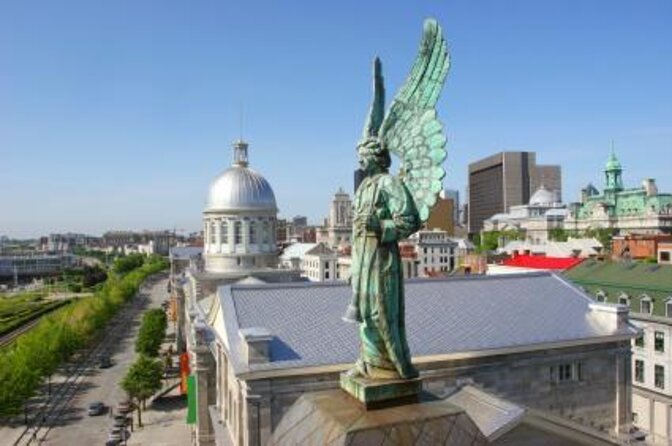
One of the early sights is the silver-domed Bonsecours Market, one of Old Montreal’s most recognizable buildings. The dome is easy to photograph, but its real interest lies in how the building connects commerce and public life.
Your guide explains how this landmark shaped civic life in Old Montreal. That context is useful because the building is more than a pretty architectural backdrop. It helps show how Montreal grew as a trading city and how public buildings became part of the city’s identity.
You may also finish near Bonsecours Market, so this is a useful place to note for later. The tour gives you the story first, then leaves you close enough to return when you have more time.
Rue Saint-Paul and the pleasure of walking slowly
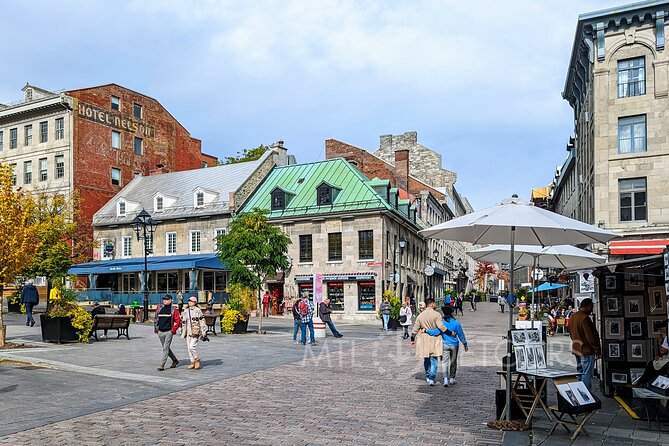
The route includes Rue Saint-Paul, known as Montreal’s oldest street. Its cobblestones and historic façades give Old Montreal much of its visual character, though they also create the first practical warning: wear shoes with solid soles.
A guide can point out how the street changed over time instead of leaving you with the vague idea that everything is simply old. Historic buildings are not all from the same period, and their uses have shifted as Montreal changed from a colonial settlement to a major commercial city and then to a place shaped by tourism, art, restaurants, and daily city life.
This is where the small group helps again. Rue Saint-Paul can be busy, and a large tour may block the pavement or lose people at corners. A group of 10 is easier to move through the street without turning the walk into a public performance.
More Old Montreal walks:
- Old Montreal Ghost Walking Tour
★ 4.5 · 726 reviews - Montreal: Top Rated Small Group Old Montreal Walking Tour
★ 4.9 · 611 reviews - Walking tour of Old Montreal – 16/42 Tours
★ 5.0 · 592 reviews - Old Montreal Guided Food Tour with 8+ Local Delicacies Tastings
★ 5.0 · 461 reviews
Place Jacques-Cartier and the Old Port connection
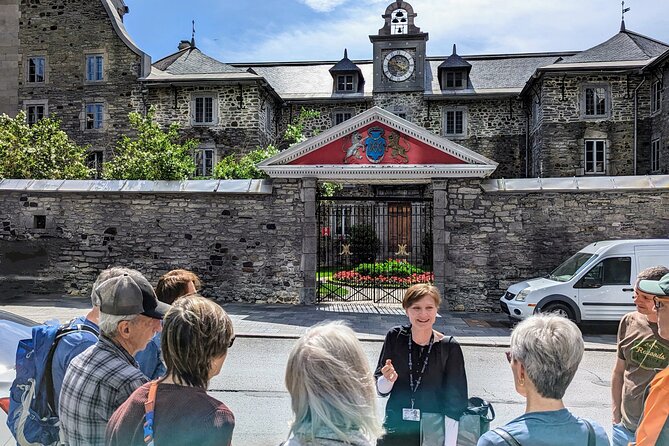
Place Jacques-Cartier is one of the most animated historic squares in Old Montreal. The square opens toward the Old Port and gives you a sense of how the waterfront shaped the city’s growth.
The square is also a good place to understand the difference between seeing Montreal and reading Montreal. You can admire the buildings and open space on your own, but the guide explains why this location mattered and how the port affected commerce and civic life.
Do not expect a long seated pause here. The tour involves walking and standing for most of its length, with limited seating. If your feet tire easily, plan your pace and tell the guide early rather than waiting until the end.
City Hall and the buildings that carry memory
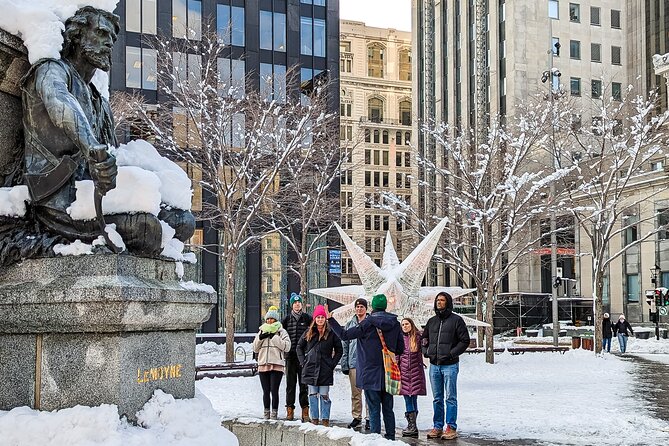
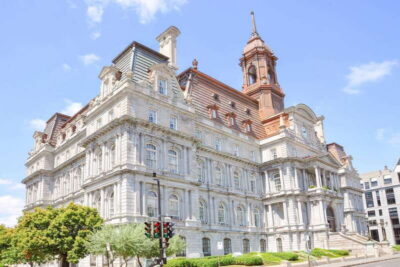
The route takes in Montreal City Hall, a grand Second Empire building tied to key moments in the city’s past. Its scale and ornament can make it seem like a purely architectural stop, but the story turns it into a place connected with decisions, conflict, and public power.
This is one of the strengths of a local guide. You get more than an architectural label. The guide explains what happened here and why the building matters to the city, helping you connect Montreal’s physical appearance with its political story.
Several guides receive strong praise for this kind of storytelling. Louise is repeatedly singled out for explaining buildings, people, and events in a way that feels lively rather than academic. Silvia is also praised for knowing details about nearly every building along the route and for explaining the city’s original boundaries.
The tone appears to be friendly and conversational. That suits this district. Old Montreal has plenty of serious history, including difficult and sometimes sordid chapters, but a good guide can present it without making the walk feel like a lecture.
Notre-Dame Basilica from the outside
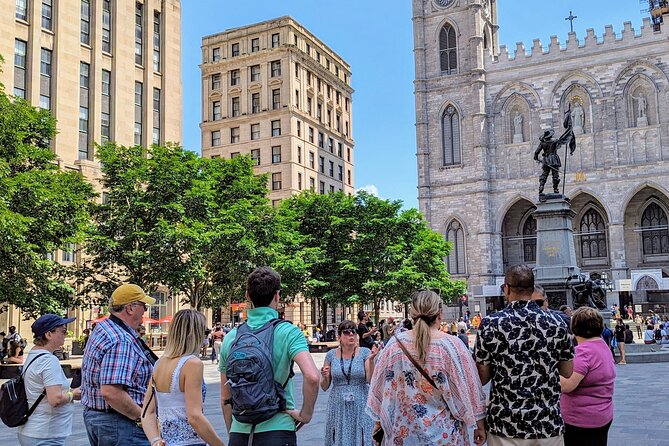
The tour includes an exterior view of Notre-Dame Basilica, Montreal’s best-known landmark. Interior admission is not included, so you should not book this walk expecting to see the famous interior.
That limitation is important. The exterior stop gives you the story behind the basilica’s creation and places it in the setting of Old Montreal, but you need a separate visit if you want to go inside. For many people, that is fine. A two-hour orientation can introduce the building, then you can decide later if the interior deserves your time and admission fee.
The stop also illustrates the tour’s overall approach. You see a selection of major sights, but the route is not built around lengthy entries into each one. It is a walking overview, not a series of museum visits.
Banking, colonial rule, and the old financial district
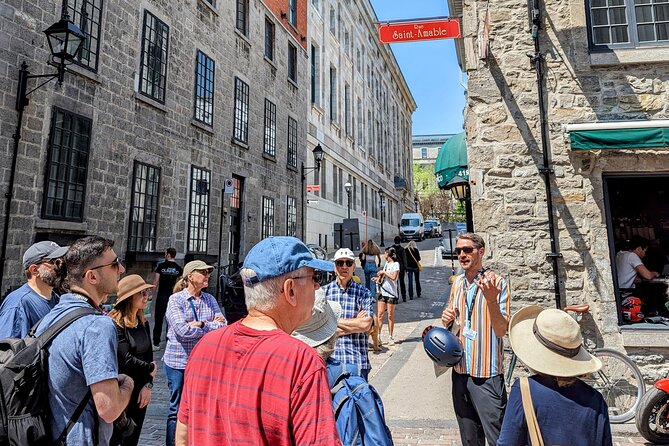
Old Montreal was once the centre of Montreal’s financial life, and the walk includes Canada’s oldest bank. You also pass through the former financial district, once known as Canada’s Wall Street.
This section gives the city a useful economic dimension. Without it, Old Montreal can look like a preserved quarter of churches and stone houses. The banking stops show how money, trade, shipping, and business helped shape the city.
The former governor’s residence, an 18th-century building, adds a colonial chapter. Here you hear about Montreal under earlier systems of rule and get a clearer sense of how power operated before the city became the modern Canadian centre you see today.
I appreciate the mix of subjects. The walk is not only about beautiful buildings. It moves through religion, government, banking, commerce, and the port. That broader view helps you understand why Old Montreal mattered and why it still matters.
The Sailors’ Church and the city’s beginnings
The route includes Notre-Dame-de-Bon-Secours Chapel, known as the Sailors’ Church because of its connection with the Old Port. This stop links faith and seafaring, showing how religious buildings served people whose lives depended on the river and the port.
The walk also brings you near the birthplace of Montreal. That is a key moment for anyone trying to understand the city’s earliest story. Your guide explains how Montreal was founded and how the settlement’s boundaries and purpose changed over time.
You should not expect the tour to provide a full archaeological or museum visit at this point. The value comes from location and explanation. You are standing near the beginning of the city while the guide gives you the basic story needed to make sense of the streets around you.
What the guides do especially well
The strongest part of this experience is the human delivery. Louise is praised for passion, clear storytelling, local history, architecture, culture, and even movie history. Amelie is described as funny, personable, and well prepared, with a formal guide-training background.
Darren brings humor and a lively approach, while Elise receives praise for being attentive and easy to interact with. Louis is noted for combining city history with practical recommendations. Silvia is remembered for personal, detailed explanations of buildings and the city’s early boundaries.
You cannot choose a specific guide unless the company allows it at booking, so treat these names as examples of the team rather than a promise. Still, the repeated praise points to a clear strength: the company places a lot of weight on guide preparation and personal contact.
The best guides also adjust to conditions. On very cold days, indoor pauses have been added, and hand warmers have been offered. One winter walk included warm-up stops that helped the group stay comfortable at temperatures around 6 degrees Fahrenheit. Those touches matter, but they do not replace a warm coat, gloves, and weatherproof footwear.
One piece of practical criticism deserves attention. A few comments describe a fast walking pace. Other feedback calls the pace gentle and suitable for people who cannot walk quickly. That difference may reflect the group and the weather. On a cold day, the guide may move faster between stops to reduce time outside. If you need a slower pace, speak up at the start.
Winter, rain, snow, and the cobblestone question
This tour runs outdoors in rain, snow, and cold weather, with cancellation possible in poor conditions. Dress for the forecast, not the photograph you hope to take.
In winter, wear warm layers and shoes that handle uneven cobblestones. Hand warmers may be available, and guides may bring the group inside briefly, but those are thoughtful extras rather than guaranteed equipment. Snow can make the historic streets beautiful, yet it can also make footing less certain.
The tour requires a moderate level of walking, including uneven surfaces and stairs. Most of the two hours are spent standing or walking, and seating is limited. The experience is not recommended if you have major mobility limits or cannot keep moving at a steady pace.
Service animals are allowed, and the tour operates near public transportation. Most people can take part, but children must be at least 12 years old, minors must have an accompanying adult, and every person needs a paid ticket.
The handout, maple candy, and useful local advice
The practical extras improve the value of the tour. You receive a paper list of places to eat, see, and explore, selected by the MTL Detours team. That can save you from spending your next hour sorting through random online suggestions.
The advice is most useful because it comes at the end of a route that has already shown you the area. You can ask about a restaurant near your next stop, a shop you passed, or a museum worth returning to. Guides have also suggested food and shopping options during the walk.
A small local treat and a parting gift are included. Maple candy has appeared as one of the treats, and postcards have also been praised as a pleasant extra. These are not reasons alone to pay for the tour, but they add a personal touch and give you something small to take away.
Who should book this $44.40 introduction
I would choose this tour for a first visit to Montreal, especially if you have only a few days and want to get oriented early. It also suits solo visitors, couples, families with teenagers, and anyone who prefers questions and conversation over a large scripted group.
It is a good fit if you enjoy history but do not want two hours of dates. The tour balances architecture, civic life, culture, food, art, religion, banking, and local recommendations. It is also useful for visitors who want to return to Notre-Dame Basilica, Bonsecours Market, the Old Port, or the historic streets after learning what they are seeing.
I would hesitate if you want interior access to every major landmark. Notre-Dame Basilica is viewed from outside, and the tour does not function as a museum admission package. I would also hesitate if cobblestones, stairs, cold, or steady walking will make the experience uncomfortable.
Free cancellation is available up to 24 hours before the start time. Changes made within 24 hours are not accepted, and late cancellations do not receive a refund. If the minimum number of participants is not reached or poor weather cancels the walk, you are offered another date or a refund.
Should you book the MTL Detours walk?
Yes, if you want a friendly, well-paced introduction to Old Montreal with a real chance to ask questions. The 10-person limit, strong guide team, useful local handout, and route through the old port, churches, civic buildings, banks, and financial district make $44.40 a fair price.
Book it near the start of your stay so you can use the recommendations afterward. Wear sensible shoes, allow for cold or wet weather, and remember that the basilica is exterior only. If you do those three things, this is a practical way to turn Old Montreal from a pretty collection of streets into a city you understand.
FAQ
How long does the Old Montreal Small-Group Walking Tour last?
The tour lasts approximately two hours.
How many people can join the tour?
The group is capped at 10 participants.
What language is the tour conducted in?
The tour is conducted in English.
What is included in the ticket price?
The ticket includes the two-hour guided walk, an information handout with local recommendations, a small local treat, and a parting gift.
Is entry to Notre-Dame Basilica included?
No. The basilica is viewed from the outside, and interior entry is not included.
Where does the tour end?
The tour ends near Place Jacques-Cartier square and Bonsecours Market at 350 Rue Saint-Paul E.
Is the tour suitable for children?
The minimum age is 12. Minors must be accompanied by an adult, and all participants need a paid ticket.
What happens if the tour is canceled?
If the tour is canceled because of poor weather or because the minimum number of participants is not reached, you are offered a different date or a full refund. You can also cancel for a full refund up to 24 hours before the start time.
Newest reviews from Montreal
- Private Departure Transfer to Montreal Airport YUL★ 4.5 · 45 reviews
- 3 Day and 2 Night Tour: Toronto, 1000 Islands, and Niagara Falls★ 5.0 · 46 reviews
- AURA experience at Notre-Dame Basilica and guided cruise★ 4.0 · 47 reviews
- Montréal Downtown and Underground City Private Walking Tour★ 5.0 · 47 reviews
- Haunted Griffintown Ghost Walking Tour in Montréal★ 5.0 · 47 reviews
- Montreal: Guided Bar Crawl with Free Shots and Club Entry★ 3.5 · 48 reviews
- Explore the Underground City with a local comedian★ 4.5 · 49 reviews
- Montreal: Jean-Talon Market & Beyond Locally Owned Food Tour★ 5.0 · 50 reviews
Montreal Tours, compared.

Montreal Mile End Authentic Food Tour with 7 Delicacies Tastings
Read our review →
Quebec City and Montmorency Falls Day Trip from Montreal
Read our review →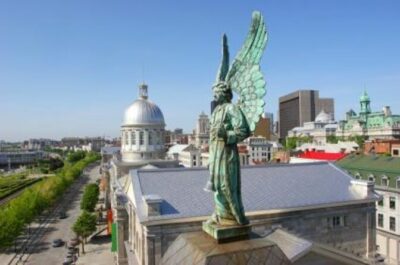
The Original Old Montréal Walking Tour by Guidatour
Read our review →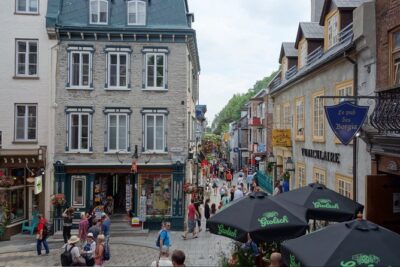
Montreal City Sightseeing Tour with Live Commentary
Read our review →
Browse the lists this tour appears in