
Reviewed · MONTREAL TOURS
Montreal: Art Center and Museum Audio Guided Tour
Montreal’s art scene has an unusual address. Inside a 1879 building in Griffintown, you can move from working artist studios to European paintings, Picasso prints, antique furniture, and old wax figures for just $12. I like the mix of modern local art and 19th-century collections, and I like that the visit lets you set your own pace with an English or French audio guide. The main catch is practical: the three-floor building has no elevator, and the displays can feel loosely organized.
This is not a polished, single-track museum tour. It feels more like entering an old industrial building that has been given several new lives. You will see more than 45 resident artists, though the exact experience can vary depending on which studios and rooms are open during your visit. Plan for a curious, slightly eclectic outing rather than a perfectly ordered museum route.
In This Review
- Key points to know before you go
- Entering Griffintown’s 1879 industrial building
- A self-paced route through local studios
- From contemporary Montreal art to 19th-century Europe
- The wax figures and other unexpected displays
- What the audio guide adds in English and French
- How long to allow for the visit
- Three floors, stairs, and a serious accessibility note
- Is $12 a good deal in Montreal?
- What the strongest praise tells you
- Who should book this art center visit?
- Should you book the Montreal Art Center and Museum?
- FAQ
- Where does the Montreal Art Center and Museum tour take place?
- What does the $12 admission include?
- How many resident artists are associated with the center?
- Is the audio guide available in English?
- Is the building wheelchair accessible?
- Are special events included with general admission?
- Can I cancel the booking for a refund?
Key points to know before you go
- A former ironworks building: The 1879 structure once belonged to Caledonian Iron Works, which made parts for ship engines and trains.
- Working artist studios: The visit includes access to studio spaces for more than 45 local artists.
- European and international art: Expect 19th-century paintings and works on paper by names including Picasso, Monet, and Rembrandt.
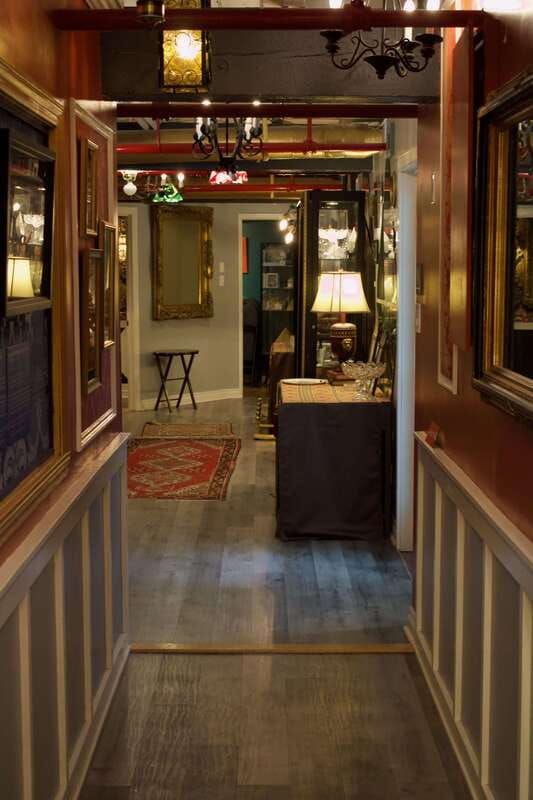
- Old building details: Look for 140-year-old safes, Douglas fir structural elements, antique furniture, and historic displays.
- Former Grévin Museum figures: Historical wax statues add an odd and memorable note to the collection.
- Low-cost, self-paced visit: At $12, this is good value if you enjoy browsing rather than following a tightly scripted tour.
Entering Griffintown’s 1879 industrial building
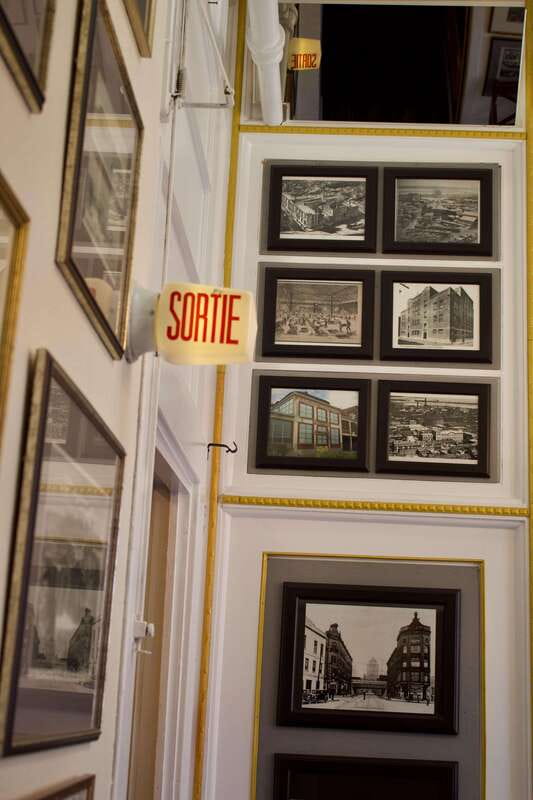
The setting does much of the work here. The Montreal Art Center and Museum occupies a patrimonial building at the heart of Griffintown, built in 1879 for the Caledonian Iron Works company. Its original purpose was practical and industrial, with the company producing parts for ship engines and trains.
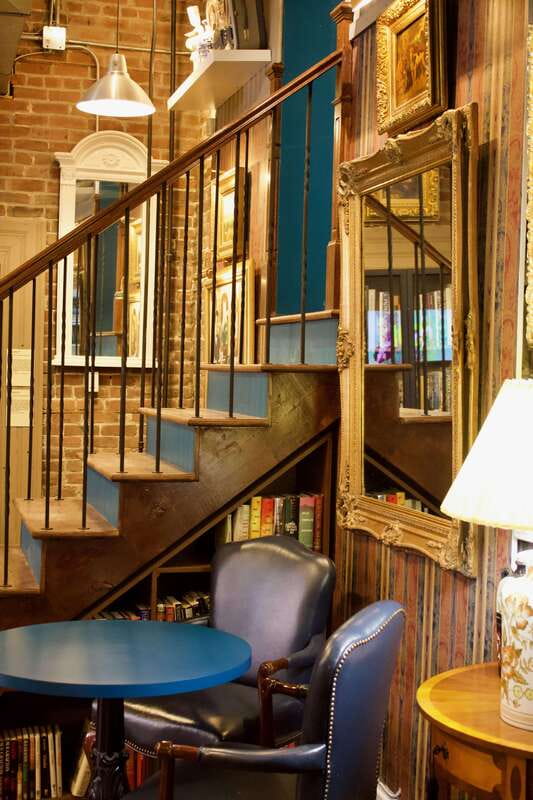
You are not entering a modern white-box gallery. The building itself is part of the attraction, and you should give yourself time to look up, around, and behind the art. Douglas fir structural elements, old safes, antique furniture, and display fixtures help explain why the visit feels more like a time capsule than a standard museum stop.
That character is also the source of some of the mixed reactions. A historic building rarely offers the clean lines and simple circulation of a purpose-built museum. You might find the rooms charming and full of surprises, or you might find the arrangement a little scattered.
If the door is closed when you arrive, call 514-667-2270. A staff member will come to meet you. This is a useful detail because the entrance may not operate like a large public museum with a wide-open lobby and constant front-desk traffic.
More museums in Montreal:
- Museum of Illusions Montreal – 70+ Illusions to Explore
★ 4.0 · 103 reviews - Montreal: Museum of Illusions Entry Ticket
★ 4.6 · 25 reviews - McCord Stewart Museum – Admission
★ 4.5 · 17 reviews
A self-paced route through local studios
The most unusual part of the experience is the chance to see artist studio spaces. The center is home to more than 45 resident artists, and the studio tour gives the visit a working-art-center feel rather than a purely historical one.
I like this part because it puts finished art in the same setting as the people who make it. You may find yourself looking at a painting in a gallery and then wondering how an artist works in the nearby rooms. The point is not only to admire art behind glass or on a clean wall. You also get a sense of the building as a place where creative work happens now.
The information does not promise a personal meeting with every artist, so keep your expectations reasonable. You are touring studio spaces and meeting some of the local artists, not signing up for a private workshop or a guaranteed conversation with all 45-plus residents.
The self-guided format suits you if you like to linger over one piece and skip another. One visitor specifically appreciated being able to go at an unhurried pace. That flexibility matters because there is no pressure to keep up with a group or reach the next scheduled stop.
At the same time, the loose format may not suit everyone. If you want a clear route with a guide explaining every room in order, the experience could feel brouillon, or somewhat muddled. The audio guide helps, but it does not necessarily turn the whole building into a carefully numbered museum circuit.
From contemporary Montreal art to 19th-century Europe
The center’s strongest idea is its contrast between present-day local art and older European and international works. You can begin with art made by Montreal-based artists and then shift toward a permanent collection of 19th-century paintings.
That change in period gives the visit more variety than a small contemporary gallery alone. You are not looking at one style, one era, or one narrow theme. The art moves between local and international, modern and historical, working studios and permanent displays.
The 19th-century collection is especially useful for visitors who want a little European art during a Montreal trip but do not want to spend hours in a huge institution. The available details name works on paper by Picasso, Monet, and Rembrandt, along with European and international 19th-century paintings.
Those names create interest, but they should not lead you to expect a major national collection. The experience is best understood as a compact, mixed collection in a historic setting. You come for the combination and the atmosphere, not only for one famous artist.
The modern art receives some of the warmest praise. Visitors have described the art as beautiful and the combination of modern work with earlier periods as especially appealing. I can see why: the contrast gives the older pieces a different context, while the newer work keeps the visit connected to Montreal today.
The wax figures and other unexpected displays
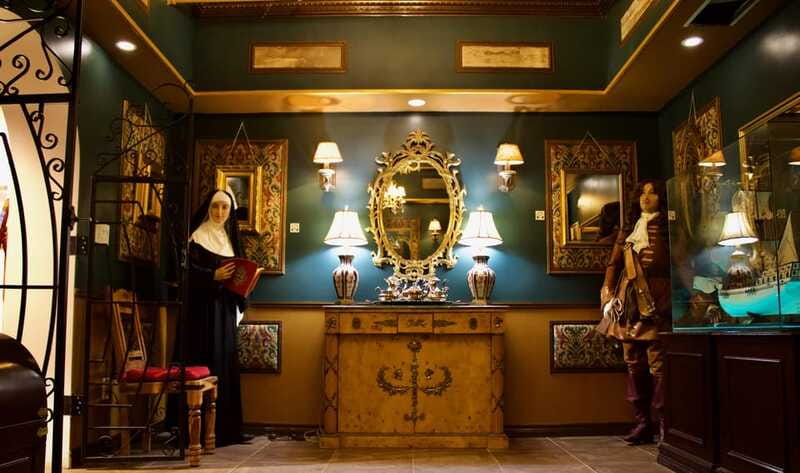
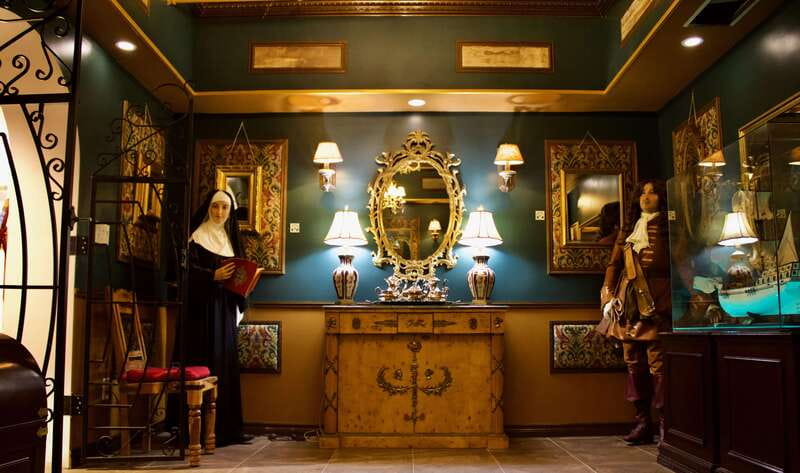
The historical wax statues from the former Grévin Museum are one of the center’s more surprising features. They do not fit neatly beside local studio art or 19th-century paintings, and that is exactly why they are memorable.
You may find the figures fascinating, strange, or slightly out of place. The collection adds a museum-of-curiosities feeling to the building. It also reinforces the sense that this is not a single-theme institution. Several chapters of Montreal’s cultural past have found a home here.
The wax statues are worth seeing even if they are not your main reason for coming. They offer a change of pace between paintings and studio rooms, especially if you are visiting with someone who needs more than wall-to-wall art.
Look also for the old safes and antique furnishings. These objects help you read the building as a survivor of changing industries and changing uses. A standard museum often asks you to focus on the artwork; here, the room itself keeps competing for your attention.
More self-guided routes:
- Montreal Prohibition Mystery: Self-Guided Walking Adventure
★ 4.0 · 9 reviews - Old Montreal self-guided walking tour & scavenger hunt
★ 3.5 · 7 reviews - Private Self-guided River Rafting Tour in Calgary
★ 5.0 · 182 reviews - Vancouver Bike or Ebike Rental – Self Guided Map provided
★ 5.0 · 149 reviews
What the audio guide adds in English and French
Admission includes an audio guide in English or French, plus a museum map. This is important because the center combines several collections and uses a historic building with three floors.
The guide gives you a way to add context without committing to a live group tour. You can listen when you want, pause when a painting catches your eye, and move along when a room is not holding your attention. For many visitors, that is a better match than a fixed speech delivered at a fixed speed.
The audio guide also gives the visit some structure. Without it, you might miss why the industrial building matters, overlook the Caledonian Iron Works connection, or walk past the old safes and structural details without understanding their place in the story.
Still, audio cannot solve every organizational issue. If the room sequence is not immediately obvious, you will need to use the map and pay attention to the guide’s instructions. This is a visit where a little personal orientation helps.
The host or greeter can assist in English or French. No individual guide names are provided, so you should not expect a named art historian or a particular live presenter. The experience is primarily audio guided and self-paced.
How long to allow for the visit
The ticket is valid for one day, and availability determines the starting times. The supplied details do not give a precise number of hours, so I would avoid treating this as a tightly timed attraction.
The practical advantage is flexibility. You can take your time with the art, stop in the studio areas, and examine the historic objects without feeling that you have only a few minutes. If you are building a full day in Montreal, this can work as a flexible stop rather than a tour that controls your entire schedule.
The drawback is that the open-ended format may make the visit feel less complete if you rush. With local studios, several gallery areas, historical details, and wax figures all competing for attention, a quick pass could leave you seeing the building without really understanding it.
I would give yourself enough time to use the map and audio guide properly. The exact duration depends on how closely you listen and how much time you spend with the resident artists’ work.
Three floors, stairs, and a serious accessibility note
The building has three floors and no elevator. This is the most important practical limitation, and it affects more than convenience. People with mobility impairments and wheelchair users may not be able to enjoy the full experience.
If stairs are difficult for you, contact the center before booking and confirm what access is possible. The supplied information specifically says the tour is not suitable for people with mobility impairments or wheelchair users, so you should take that warning seriously rather than assume an old building has been adapted.
Wear comfortable shoes. Even if the visit is not physically demanding in the usual sense, you will be moving through several rooms and floors in a historic structure. The experience takes place rain or shine, so weather will not cancel the tour, but you still need to plan how you will reach the entrance and arrive comfortably.
Alcohol and drugs are not allowed. Special events are also excluded from general admission. If an additional event is taking place, you need to purchase a separate ticket online or at the front desk.
Is $12 a good deal in Montreal?
At $12 per person, the value is strong if you enjoy variety and independent exploring. Your admission covers the museum rooms and galleries, the artists’ studio spaces, a map, and the English or French audio guide.
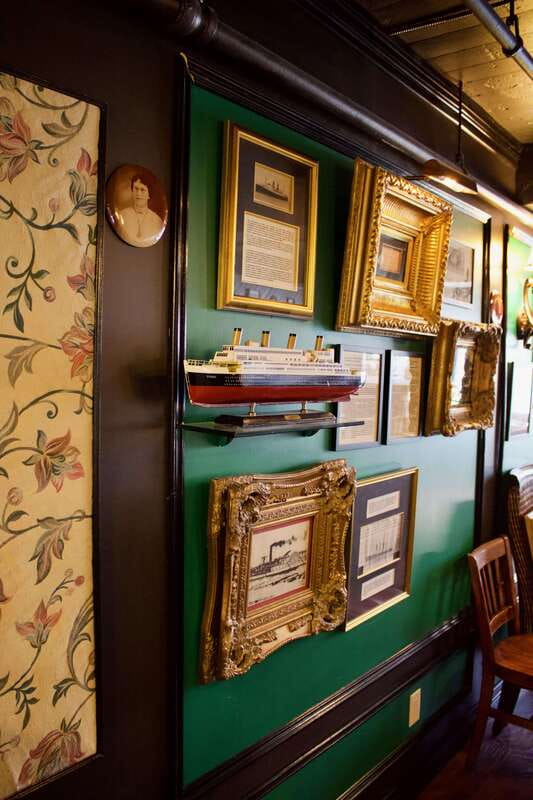
That is a useful package for a modest price. You are not paying only to view a few paintings. You are also paying for access to a historic building, a working artist center, local art, older international works, and unusual objects from the former Grévin Museum.
The value depends on your museum style. If you want a polished, highly edited collection with clear labels and a grand architectural setting, this may feel less satisfying. If you like finding connections between old buildings, living artists, odd displays, and art from different periods, $12 buys a lot of browsing time.
You can also support the resident artists by purchasing artwork. Buying is not required, of course, but it gives the center a more direct connection to the local art scene than a standard museum shop would.
What the strongest praise tells you
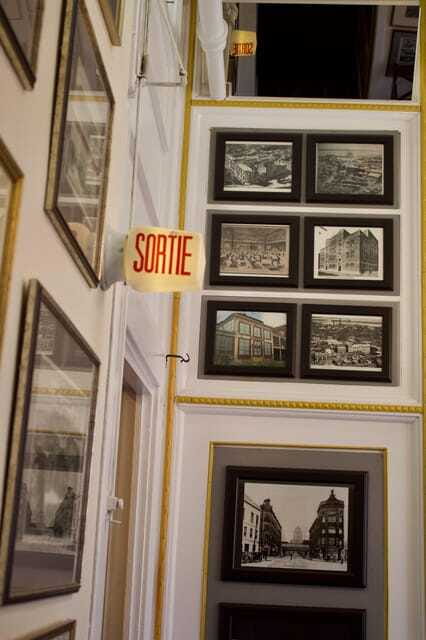
The most positive reactions focus on three things: the beauty of the art, the contrast between modern and earlier periods, and the freedom to move at your own pace.
That combination tells you who is most likely to enjoy the visit. You will probably be happy here if you like choosing your own route, stopping for details, and seeing a collection that does not fit into one tidy category.
The visit also has a sense of discovery. Entering an artist workshop inside an old industrial building feels original and curious, especially if you have already seen Montreal’s better-known museums and want something less formal.
The one clear criticism concerns organization. The center can feel untidy in its presentation, and the mix of art, furniture, industrial details, and wax statues may seem more accidental than planned. I would treat that as part of the character, but not pretend it will appeal to everyone.
Who should book this art center visit?
I would recommend it to independent art lovers, repeat visitors to Montreal, fans of historic buildings, and anyone who likes local art presented outside a conventional museum setting. It is also a good low-cost option if you want an indoor cultural stop with a flexible pace.
Families and mixed-interest groups may appreciate the variety. The wax figures and old industrial features offer something different from paintings, while the resident studios provide a look at art being made in the present.
I would be cautious if you need step-free access, want a fully guided experience, or prefer museums with a strict chronological layout. You may also want to skip it if your only goal is to see major works by Picasso, Monet, or Rembrandt. The named artists are part of a wider collection, not the sole focus of the visit.
Should you book the Montreal Art Center and Museum?
Book it if the idea of old industrial rooms filled with local artists, 19th-century art, and historical oddities sounds appealing. At $12, the price leaves room for the experience to be a little quirky, and the self-paced format lets you make the most of what catches your eye.
Before paying, confirm the cancellation terms shown for your specific booking. The information gives both a 24-hour free-cancellation policy and a note saying the tour is non-refundable, so it is wise to check the final conditions carefully.
The bottom line is simple: this is a distinctive, affordable art stop for curious visitors who enjoy character more than polish. If you can manage three flights of stairs and do not need a perfectly ordered route, it offers an enjoyable look at Montreal art in a building that is nearly as interesting as the collection.
FAQ
Where does the Montreal Art Center and Museum tour take place?
It takes place in a 1879 patrimonial building in Griffintown, Montreal, Quebec. The building originally belonged to the Caledonian Iron Works company.
What does the $12 admission include?
Admission includes access to museum rooms and galleries, a tour of artist studio spaces, a museum map, and an audio guide in English or French.
How many resident artists are associated with the center?
The center has more than 45 resident artists. The visit includes access to their studio spaces and an opportunity to meet some of the local artists.
Is the audio guide available in English?
Yes. The audio guide is available in English and French. The host or greeter can also assist in English or French.
Is the building wheelchair accessible?
No elevator is available, and the building has three floors. The tour is not suitable for wheelchair users or people with mobility impairments.
Are special events included with general admission?
No. General admission excludes special events. You can buy a separate ticket online or at the front desk if you want to attend an additional event.
Can I cancel the booking for a refund?
The booking information includes a policy allowing cancellation up to 24 hours in advance for a full refund, but it also states that the tour is non-refundable. Check the specific terms shown at checkout before booking.
More Audio Tours
- Icefields Parkway: a Smartphone Audio Driving Tour
★ 4.0 · 118 reviews - Cabot Trail: a Smartphone Audio Driving Tour
★ 4.5 · 118 reviews - Niagara: Behind The Falls, Skylon Tower Ticket & Tesla Audio Tour
★ 3.5 · 69 reviews - Sea to Sky Highway: a Smartphone Audio Driving Tour
★ 4.0 · 32 reviews
Newest reviews from Montreal
- Montreal Home Dining & Dim Sum Cooking Class★ 4.5 · 6 reviews
- Montreal: Private Walking Tour of Downtown & Underground★ 4.8 · 6 reviews
- Montreal : Old Montreal Walking Tour With A Guide★ 4.2 · 6 reviews
- 3h Boat Safari – Montreal’s Nature and Iconic Attractions Tour★ 3.5 · 6 reviews
- Experience Old Montreal on e-scooters with a local comedian★ 5.0 · 6 reviews
- Private Transfer from Montreal Airport YUL to Montreal / Bromont★ 4.5 · 6 reviews
- Montreal: Canadian Forest Guided Tour by Snowmobile★ 4.3 · 6 reviews
- Montreal: Brewpub Experience Beer Tasting & Walking Tour★ 4.3 · 6 reviews
Montreal Tours, compared.

Montreal Mile End Authentic Food Tour with 7 Delicacies Tastings
Read our review →
Quebec City and Montmorency Falls Day Trip from Montreal
Read our review →
The Original Old Montréal Walking Tour by Guidatour
Read our review →
Old Montreal Small-Group Walking Tour | Max 10 | by MTL Detours
Read our review →
Montreal City Sightseeing Tour with Live Commentary
Read our review →Browse the lists this tour appears in