
Reviewed · MONTREAL TOURS
Montreal: 2-Hour Private Complete Hidden City Experience
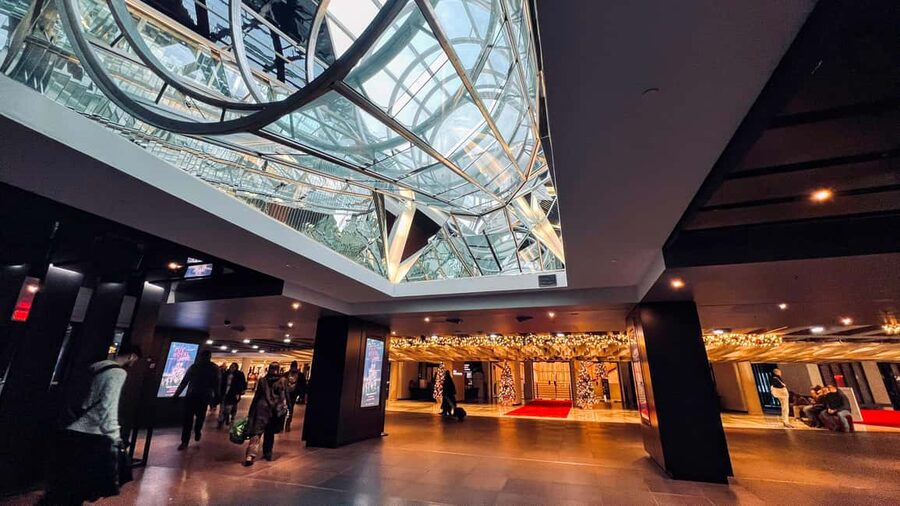
Montreal has a city beneath the city. This private two-hour walk reveals the RÉSO, a huge network of passageways, shopping galleries, offices, hotels, restaurants, cultural spaces, and transit links beneath downtown. I like the tour’s focus on how Montrealers actually use this unusual urban system, and I like having a private guide who can adjust the pace and explain the confusing connections. The main drawback is that it involves plenty of walking and is not suitable for wheelchair users or people with mobility impairments.
The tour begins inside the Tim Hortons building at 1508 Rue de Bleury, a practical starting point near several major downtown complexes. Gustavo Trindade has earned especially warm praise for being friendly, flexible, engaging, and good at taking family photos. Bring comfortable shoes and water, and keep your camera ready: the RÉSO is useful, but it also contains plenty of unexpected art and architectural details.
In This Review
- Key points to know before booking
- Why Montreal built a city below street level
- Starting at 1508 Rue de Bleury
- Place Montreal Trust and Montreal Eaton Centre
- Place Ville Marie and Gare Centrale
- Place Bonaventure and the World Trade Centre
- Palais des Congrès and unexpected art
- Place des Arts and Complexe Desjardins
- What the private format adds
- Guide style and language options
- Walking comfort, access, and weather
- Who will get the most from this tour?
- Booking value and final advice
- FAQ
- How long is the Montreal underground city tour?
- Where does the tour meet?
- Which languages are available?
- Is this a private group tour?
- What should I bring?
- Is the tour suitable for wheelchair users?
Key points to know before booking
- A private look at Montreal’s underground network: You get a personal guide rather than a large group, with the chance to ask questions and request a slower or more flexible pace.
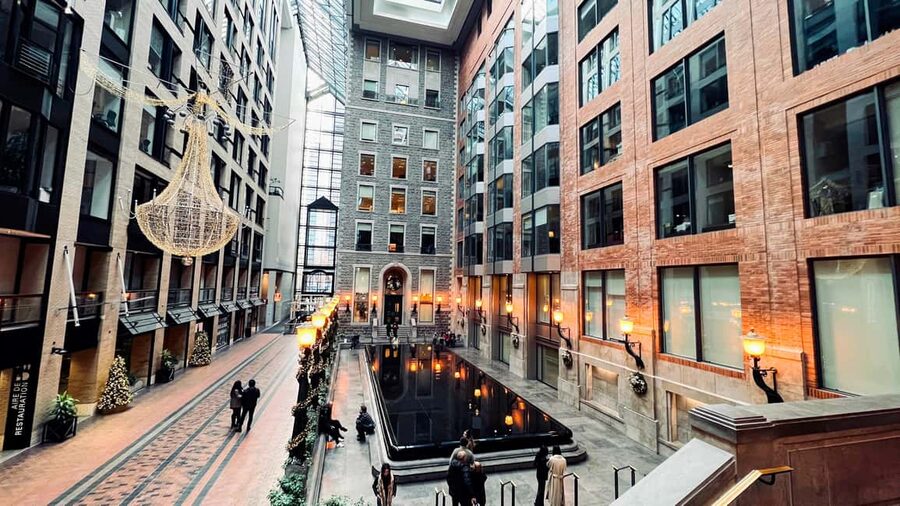
- More than a winter refuge: The RÉSO connects offices, hotels, restaurants, shopping galleries, cultural venues, and public transportation, making it part of ordinary city life.
- A downtown route with broad coverage: The walk passes Place Montreal Trust, Montreal Eaton Centre, Place Ville Marie, Gare Centrale, Place Bonaventure, the World Trade Centre, Palais des Congrès, Place des Arts, and Complexe Desjardins.
- Strong guide feedback: Gustavo Trindade is praised for his warmth, local understanding, clear explanations, flexibility, and willingness to take photos.
- Good for poor weather: Rain or cold weather becomes far less of a problem underground, though you still need sturdy walking shoes.
- Important access limitation: The experience is not suitable for wheelchair users or people with mobility impairments.
Why Montreal built a city below street level
Montreal’s RÉSO is often called the underground city, but that label can give the wrong impression. You will not spend two hours in a single cavern beneath the pavement. Instead, you move through connected commercial buildings, underground malls, corridors, transit areas, and indoor public spaces.
The network developed over time as downtown buildings, railway facilities, shopping centers, hotels, offices, and cultural institutions were linked together. The result is less a secret tunnel system than a second layer of downtown, one that lets people move around without facing Montreal’s snow, wind, rain, and summer heat.
That practical purpose is central to the tour. You learn how the RÉSO changed daily routines, not just how it was constructed. Office workers can reach lunch spots and shops without returning to street level. Hotel guests can reach parts of downtown indoors. Visitors can connect with major buildings and transportation points while avoiding unpleasant weather.
I like this focus because it gives the underground city a human scale. The interesting question is not simply how large the network is. It is how a city adapts its public spaces to climate, commerce, and daily movement.
More City Tours in Montreal
- From Montreal: Quebec City and Montmorency Falls Day Trip
★ 4.5 · 2,669 reviews - Quebec City and Montmorency Falls Day Trip from Montreal
★ 4.0 · 2,437 reviews - Montreal City Sightseeing Tour with Live Commentary
★ 4.0 · 1,953 reviews
Starting at 1508 Rue de Bleury
Your meeting point is inside the Tim Hortons building at 1508 Rue de Bleury, Montréal, QC H3A 0B4. You should arrive with enough time to find the building and wait inside, rather than expecting a street-side meeting.
This location puts you near the western side of the downtown underground network. From here, the guide can introduce the basic layout before leading you into the connected galleries and passages.
A private tour helps at this stage. The RÉSO can feel confusing because corridors often belong to different buildings, and entrances may look like ordinary mall or office access points. With Gustavo, you can ask where a passage leads, how the buildings connect, and which parts are most useful for getting around.
The meeting point is also worth noting for anyone carrying luggage or planning the tour around another activity. Hotel pickup and drop-off are not included, so you are responsible for reaching Rue de Bleury and continuing on afterward.
Place Montreal Trust and Montreal Eaton Centre
Place Montreal Trust and the Montreal Eaton Centre give you an early look at the commercial side of the RÉSO. These are not just stops for shopping. They show how the underground network functions as an extension of downtown streets.
You pass through galleries where stores, food outlets, offices, and building entrances share the same indoor system. That arrangement explains why the RÉSO is part of everyday life rather than a sightseeing attraction alone.
The Eaton Centre is especially useful for understanding the scale of the connected shopping areas. You might find yourself moving through a broad public corridor one moment and entering a more enclosed retail space the next. The guide’s role is to point out those changes and explain how they fit into the larger network.
There is a small limitation here: the itinerary lists these places as pass-by locations, not extended visits. If you want time to shop, browse, or eat, you will need to return on your own after the tour. The value comes from orientation and context, not from a shopping stop.
Place Ville Marie and Gare Centrale
Place Ville Marie is one of downtown Montreal’s major landmarks and an important part of the RÉSO story. Its connection to the underground system shows how modern office towers and public circulation areas can be tied together below street level.
You will see how people move between commercial spaces, workplaces, and transportation links without treating each building as a separate destination. That connection is one of the tour’s most useful lessons. Once you understand it, you can use the network with much more confidence during the rest of your Montreal visit.
Gare Centrale adds another layer. A major railway station connected to the RÉSO helps explain why the system matters beyond shopping. It links downtown employment, intercity transportation, hotels, and commercial buildings in one indoor route.
The itinerary treats Gare Centrale as a pass-by point, so you should not expect a full railway station tour. Still, its place on the route helps you see the underground city as transportation infrastructure as well as retail space.
A few more tours in Montreal worth putting side by side
- PRIVATE 2-Hour tour of Montréal in Convertible Cadillac + Murals
★ 5.0 · 73 reviews - Montreal: Private 2h Walking Tour RESO and Old Montreal
★ 5.0 · 20 reviews - Montreal: Street Art & Mural 2-Hour Guided Walking Tour
★ 4.9 · 13 reviews - 2-Hour Private Montreal Boat Cruise
★ 4.5 · 8 reviews
Place Bonaventure and the World Trade Centre
Place Bonaventure continues the tour’s look at large-scale downtown architecture. This part of the route shows how older and newer buildings have been brought into the same pedestrian system.
The guide can help you notice the transitions that are easy to miss when you walk alone. A corridor may seem like a mall, hotel connection, office passage, or station access point, but the overall network depends on all these uses working together.
The World Trade Centre Montréal and Centre de commerce mondial add an international business flavor. These spaces are linked to hotels, offices, restaurants, and public walkways, giving the underground city a purpose well beyond winter survival.
I find this part valuable for visitors who want to understand Montreal’s urban design. You are not merely looking at decorated corridors. You are seeing how commercial development and public movement were planned together over many years.
The route may also feel less immediately scenic here than at the cultural stops. If you want grand monuments at every turn, this tour may seem ordinary in places. Its appeal lies in the way ordinary office and shopping spaces connect into something unusual at city scale.
Palais des Congrès and unexpected art
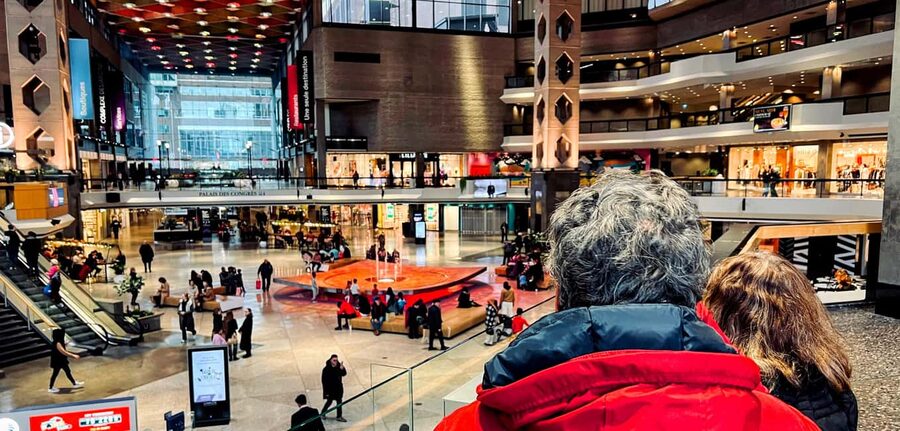
The Palais des Congrès de Montréal brings a cultural and architectural change to the walk. Convention centers often have broad public areas, unusual design features, and links to nearby buildings, making them natural pieces of the RÉSO.
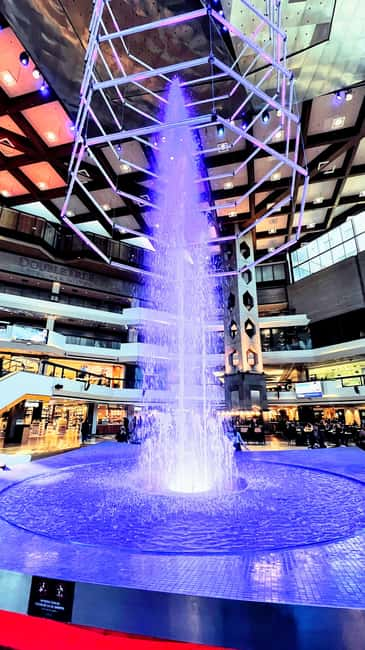
The tour includes access to hidden passageways and shopping galleries, along with attention to murals, installations, and other artworks. The exact works you see can depend on the route and what is open, but the point is clear: the underground city is not only concrete, signs, and storefronts.
A camera is worth carrying. Gustavo has offered to take photos for families at interesting spots, a small touch that can make a private tour feel more personal. You should still ask before stopping for a longer picture break, since the two-hour schedule requires steady movement.
This is also where a guide adds real value. Art and design details are easy to pass without context, particularly in a busy commercial setting. A good explanation turns a corridor into part of Montreal’s story rather than just a shortcut.
Place des Arts and Complexe Desjardins
Place des Arts gives the route a clear connection to Montreal’s performing arts scene. Its presence on the underground circuit shows how cultural venues can join the same indoor system as offices, shops, hotels, and transit points.
You pass by rather than attend a performance, so this is a look at the location and its connection to the network, not a theater visit. If you are interested in Montreal’s arts institutions, you may want to return later for a show or a closer look at the district.
Complexe Desjardins completes the listed route with another major commercial and public space. By this point, you should have a much better sense of how the RÉSO works as a chain of linked interiors rather than one uniform underground attraction.
The route’s range is one of its strengths. In two hours, you move past shopping centers, railway access, office towers, convention facilities, cultural venues, and trade-related buildings. You will not explore every corridor, but you will see enough variety to understand the network’s purpose.
What the private format adds
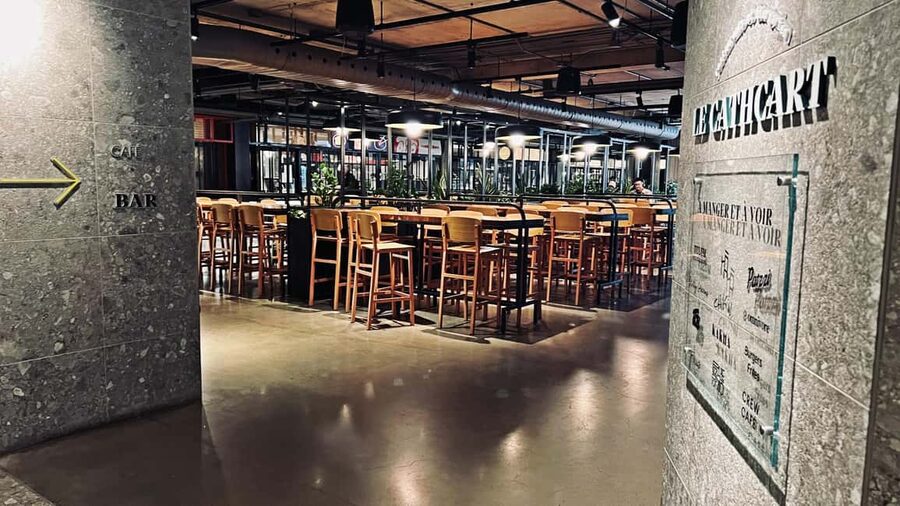
At $101 per person, this is not the cheapest way to walk through downtown. You are paying for a private two-hour experience, a live guide, access to less obvious connections, and interpretation that is difficult to get from a map alone.
The price makes the most sense for a small group that values personal attention. Gustavo has been praised for adjusting to individual needs, keeping the tone friendly, providing the right amount of information, and going beyond the basic route. Those qualities matter more in a private tour than in a large group, where the guide must follow one fixed pace.
I would not book it mainly for transportation. You can use parts of the RÉSO independently once you understand the signs and connections. I would book it for the background, orientation, and details you might otherwise miss.
The tour also has practical value early in your stay. If you are visiting during poor weather, the guide can show you how downtown’s indoor routes fit together. That knowledge may help you reach restaurants, shops, hotels, offices, and public transportation without repeatedly heading outdoors.
The two-hour length is another plus. It is long enough to cover a wide section of downtown but short enough to fit around museum visits, meals, or an afternoon of sightseeing. Since food and drinks are not included, plan those separately.
Guide style and language options
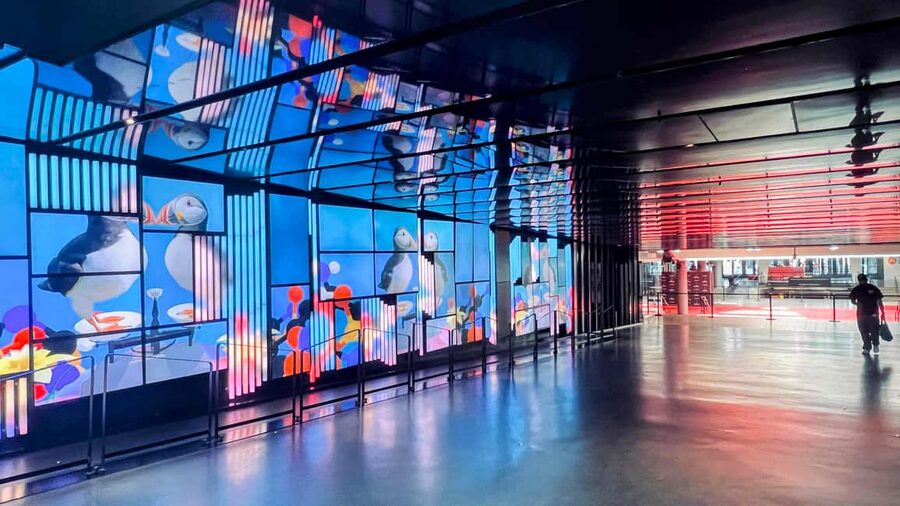
Gustavo Trindade is the named experience provider, and the strongest praise centers on his personality and flexibility. He is described as kind, engaging, friendly, and well informed about the RÉSO. He has also taken family photos and adjusted the experience to suit personal requests.
That combination is important because the underground city can feel technical if presented only as a construction project. A lively guide can connect the architecture to daily life, point out unusual details, and keep the walk from becoming a sequence of building names.
Tours are offered in English, French, Spanish, and Portuguese. If you are more comfortable in one of those languages, confirm your preferred language when arranging the experience.
Because the format is private, you can ask for clarification whenever the route becomes confusing. You can also tell the guide if you need a little more time at a particular art installation or landmark, though the fixed two-hour duration means the route still needs to keep moving.
Walking comfort, access, and weather
Wear comfortable walking shoes. The route covers a large downtown area, and indoor walking can be deceptive. You may not notice the distance because you are protected from weather, but two hours on hard floors still calls for sensible footwear.
Bring a bottle of water and a camera. Alcohol and drugs are not allowed. Hotel pickup and drop-off are not included, so allow time to reach the Rue de Bleury meeting point and arrange your own onward transportation.
The tour is not suitable for wheelchair users or people with mobility impairments. The supplied information does not promise an accessible route, so you should treat this restriction seriously rather than assume that every passage and building connection will work for you.
Rainy days are particularly well suited to this activity. One strong advantage is that the RÉSO lets you see a major part of downtown while staying indoors. Still, you may encounter stairs, changes in flooring, or long stretches of walking, so comfortable footwear remains important even in perfect weather.
Who will get the most from this tour?
I would recommend this experience to first-time Montreal visitors who want to understand downtown beyond the usual street-level sights. It is also useful for anyone visiting in winter or on a rainy day, when the indoor network becomes more than a curiosity.
Architecture fans, urban design enthusiasts, shoppers, business visitors, and families can all find something worthwhile here. The private format is especially helpful for families because the guide can keep the pace practical and help with photos.
You may want to skip it if your main goal is outdoor Montreal, historic streets, food tasting, or major interior attractions. The route passes many landmarks but does not include meals, hotel transfers, or extended visits inside each one.
I would also think twice if you dislike malls and commercial corridors. The RÉSO includes art and cultural spaces, but retail and office connections are a large part of what you see. That is not a flaw, but it is central to the experience.
Booking value and final advice
Free cancellation up to 24 hours before the start gives you some flexibility, and the reserve-now, pay-later option helps if you are still arranging your Montreal schedule. Check the available starting times before committing, since the experience lasts two hours and does not include transportation to the meeting point.
You should book this tour if you want the RÉSO explained rather than simply crossed. The combination of private guiding, downtown coverage, unusual passageways, and practical city context makes the $101 price easier to justify for couples, families, or small groups.
Skip it if you need full accessibility, prefer a self-guided walk, or want a tour focused on street-level landmarks. For everyone else, Gustavo’s friendly approach and the chance to see how Montreal functions below ground make this a smart addition to a city visit, especially when the weather turns unpleasant.
FAQ
How long is the Montreal underground city tour?
The guided experience lasts two hours.
Where does the tour meet?
Meet inside the Tim Hortons building at 1508 Rue de Bleury, Montréal, QC H3A 0B4.
Which languages are available?
The live tour guide can provide the experience in English, French, Spanish, or Portuguese.
Is this a private group tour?
Yes. The experience is organized for a private group.
What should I bring?
Bring comfortable walking shoes, a camera, and a bottle of water.
Is the tour suitable for wheelchair users?
No. The experience is not suitable for wheelchair users or people with mobility impairments.
Newest reviews from Montreal
- Montreal Home Dining & Dim Sum Cooking Class★ 4.5 · 6 reviews
- Montreal: Private Walking Tour of Downtown & Underground★ 4.8 · 6 reviews
- Montreal : Old Montreal Walking Tour With A Guide★ 4.2 · 6 reviews
- 3h Boat Safari – Montreal’s Nature and Iconic Attractions Tour★ 3.5 · 6 reviews
- Experience Old Montreal on e-scooters with a local comedian★ 5.0 · 6 reviews
- Private Transfer from Montreal Airport YUL to Montreal / Bromont★ 4.5 · 6 reviews
- Montreal: Canadian Forest Guided Tour by Snowmobile★ 4.3 · 6 reviews
- Montreal: Brewpub Experience Beer Tasting & Walking Tour★ 4.3 · 6 reviews
Montreal Tours, compared.
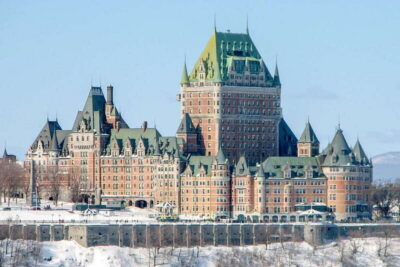

Montreal Mile End Authentic Food Tour with 7 Delicacies Tastings
Read our review →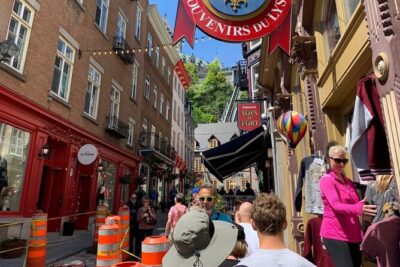
Quebec City and Montmorency Falls Day Trip from Montreal
Read our review →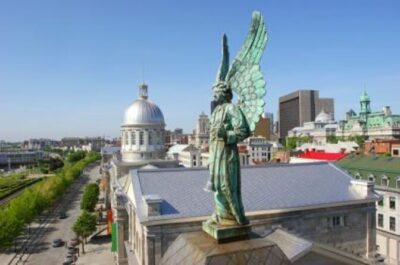
The Original Old Montréal Walking Tour by Guidatour
Read our review →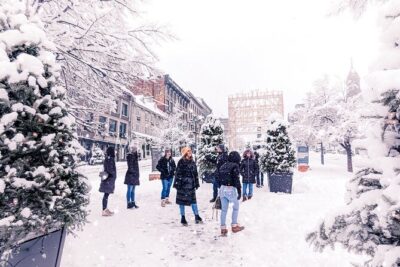
Old Montreal Small-Group Walking Tour | Max 10 | by MTL Detours
Read our review →
Montreal City Sightseeing Tour with Live Commentary
Read our review →Browse the lists this tour appears in