
Reviewed · MONTREAL TOURS
Pen Making With The Woodworker Himself
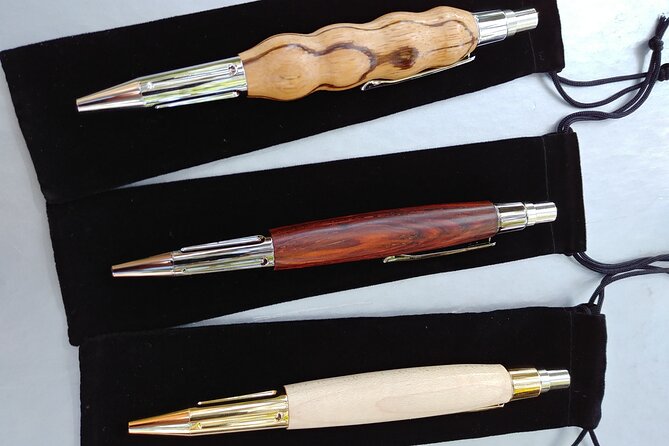
Make something you can use every day. This three-hour Montreal workshop gives you direct time at a wood lathe, with instruction from Jonathan as you turn, sand, polish, and assemble your own wooden pen. I like the hands-on format and the chance to choose from local and exotic woods. I also like that the finished item is a useful keepsake, not just a quick craft project.
The main consideration is the price: $161.10 per person is a serious spend for a three-hour activity. You are paying for personal instruction, equipment, materials, and a small-group setting, so it makes the most sense if you want to learn a real workshop skill rather than simply buy a souvenir.
In This Review
- Key Points About This Montreal Workshop
- Starting at 4710 Rue Saint-Ambroise
- A Short Introduction to the Lathe
- Choosing Wood for Your Pen
- Watching the Full Demonstration
- Taking Control of the Lathe
- Sanding, Polishing, and Assembly
- A Souvenir With a Personal Story
- Who Should Book This Experience
- Timing, Language, and Group Size
- Is $161.10 a Fair Price?
- The Best Way to Plan Your Visit
- My Take: Should You Book It?
- FAQ
- Where does the pen-making workshop begin?
- Where does the experience end?
- How long does the workshop last?
- How much does the experience cost?
- Is the workshop offered in English?
- How many people can join the workshop?
- Can I choose the wood for my pen?
- Will I make the pen myself?
- Can I take the finished pen home?
- Is cancellation free?
Key Points About This Montreal Workshop
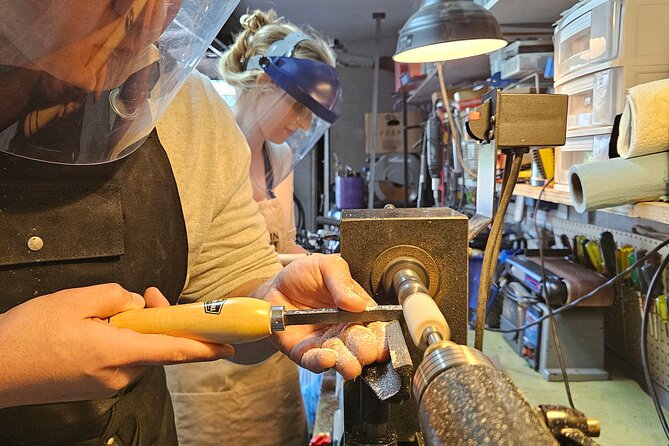
- You operate the lathe yourself, with guidance through shaping, sanding, polishing, and assembly.
- Jonathan teaches in a relaxed, friendly way, helping keep the session fun while you learn a new skill.
- You choose your own wood, including local and exotic options, so every pen has a different look.
- The finished pen goes home with you, giving the activity a useful and personal result.
- The group is limited to nine people, which should allow for instruction without the feel of a large class.
- The workshop lasts about three hours and begins and ends at 4710 Rue Saint-Ambroise in Montreal.
Starting at 4710 Rue Saint-Ambroise
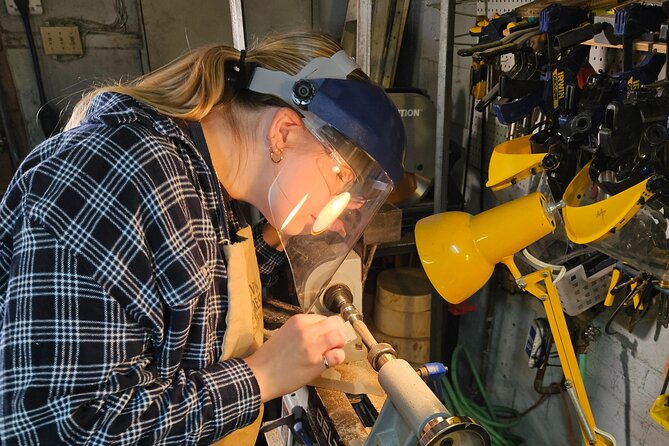
The workshop begins at 4710 Rue Saint-Ambroise, Montréal, Québec H4C 2C7. You return to this same location at the end, so there is no second meeting point to find and no need to arrange transport between stages of the activity.
The address is near public transportation, which matters because a hands-on workshop is easier to enjoy when you are not worrying about parking or crossing the city between appointments. You should still allow enough time to arrive before the start, particularly if you have a fixed dinner booking or another scheduled activity afterward.
The class is offered in English. Confirmation is provided when you book, and the experience normally fills well ahead of time, with bookings averaging about 61 days in advance. That is useful planning information: if this is one of the main activities on your Montreal list, do not leave it until the last few days.
The group can include up to nine people. That is not a private lesson, but it is small enough to keep the class focused. You will likely have other people working nearby, yet the format should feel more personal than a large tourist workshop.
A few more tours worth putting side by side
- Montreal: Guided Bus Tour
★ 4.4 · 3,064 reviews - Montreal: Hop-On Hop-Off Double-Decker Bus Tour
★ 4.1 · 2,760 reviews - From Montreal: Quebec City and Montmorency Falls Day Trip
★ 4.5 · 2,669 reviews
A Short Introduction to the Lathe
The session begins with an introduction to the lathe and its parts. This is important even if you have used tools before. A lathe works differently from a hand tool, and understanding how the machine is arranged gives you a better sense of what each stage is meant to accomplish.
You first get some background on the lathe itself, then a safety briefing. This is not filler. The safety talk sets the ground rules before you handle the equipment, helping you understand how to work carefully and confidently.
I like that the activity does not push you straight into making the pen. You get a clear explanation first, followed by a demonstration of the full process. That order gives you a picture of the finished object before you begin making your own decisions.
The safety briefing is also a good sign for beginners. You do not need to arrive with a woodworking background, and the information provided says most people can participate. Still, you should expect to pay attention, follow instructions, and work at the pace of the class rather than treat the lathe like a casual toy.
Choosing Wood for Your Pen
One of the most personal parts of the workshop is selecting your wood. You can choose from local and exotic woods, allowing you to pick a color, grain, or general look that fits your taste.
The exact selection is not specified, so you should not arrive expecting a particular species. The useful point is that your pen does not come from a single preset kit chosen for everyone. Your choice of material helps make the finished piece distinct.
Wood choice also gives the activity a stronger connection to traditional making. You are not only operating a machine. You are deciding how the raw material will look once it has been shaped, smoothed, and finished.
If you are attending with someone else, the wood selection can make the activity feel more individual. Two people can follow the same steps and still leave with noticeably different pens. That personal choice is part of the value, especially if you want a small object tied to your time in Montreal.
Watching the Full Demonstration
Before you take over, you watch a detailed demonstration of the pen-making process from beginning to end. The stages include turning, profiling, sanding, polishing, and assembling the pen.
Seeing the entire process first helps you understand how the stages fit together. Turning creates the basic form. Profiling refines the shape. Sanding removes roughness, polishing brings out the surface, and assembly turns the finished wooden parts into a working pen.
I appreciate this full demonstration because it gives you a practical map. You can see that the final polish depends on careful work earlier in the process. The pen is not finished simply because the wood has been rounded on the lathe.
The demonstration also lets you watch the hand movements before trying them yourself. That can make the first attempt less intimidating. You know what the finished shape should look like and can pay attention to how Jonathan guides the material through each stage.
A completely different kind of day out on the same trip:
- Montreal Mile End Authentic Food Tour with 7 Delicacies Tastings
★ 5.0 · 2,598 reviews - Quebec City and Montmorency Falls Day Trip from Montreal
★ 4.0 · 2,437 reviews - The Original Old Montréal Walking Tour by Guidatour
★ 4.5 · 2,217 reviews - Old Montreal Small-Group Walking Tour | Max 10 | by MTL Detours
★ 5.0 · 2,088 reviews
Taking Control of the Lathe
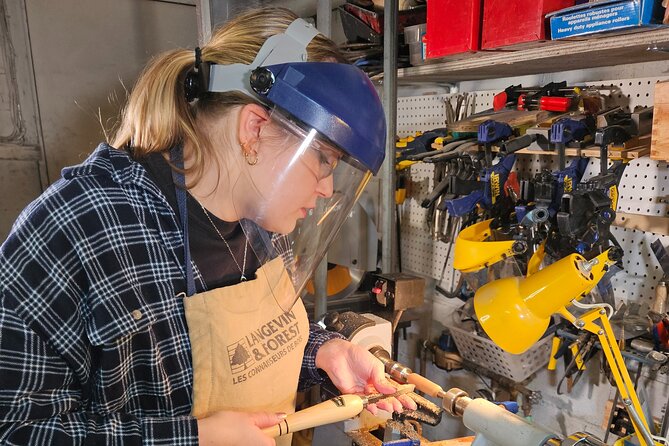
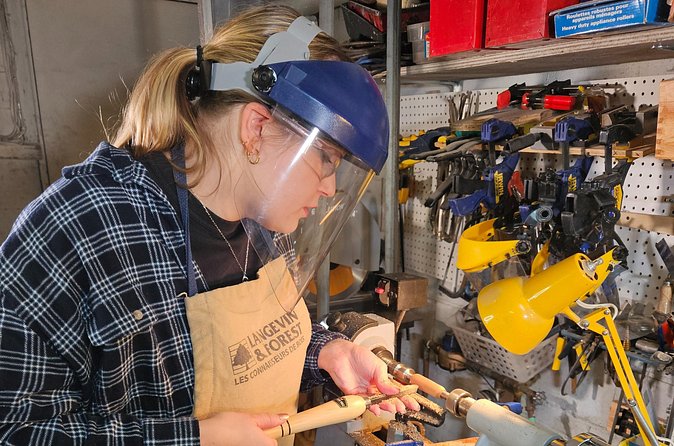
The central part of the experience is your turn at the lathe. With guidance, you operate the machine and shape your pen yourself rather than watching a woodworker do all the work.
This is where the workshop earns its place as an activity rather than a shopping stop. You are making decisions and handling the project directly. The instructor remains available to guide you, but the finished pen is connected to your own effort.
The process covers more than one quick pass. You work through turning and profiling, then continue with sanding and polishing before assembly. Each stage calls for a different kind of attention, so the three-hour length gives the project room to develop.
Jonathan’s teaching style is an important part of the experience. The atmosphere is described as relaxed, fun, and full of laughs, while still giving you the help needed to learn. That balance matters. A workshop can become stressful if every small error feels serious, but it can also feel empty if the instructor does everything for you.
You should expect a guided class, not total independence. The point is to learn under supervision, use the tools safely, and leave with a finished object. If you enjoy trying something unfamiliar with an instructor nearby, this format should suit you well.
Sanding, Polishing, and Assembly
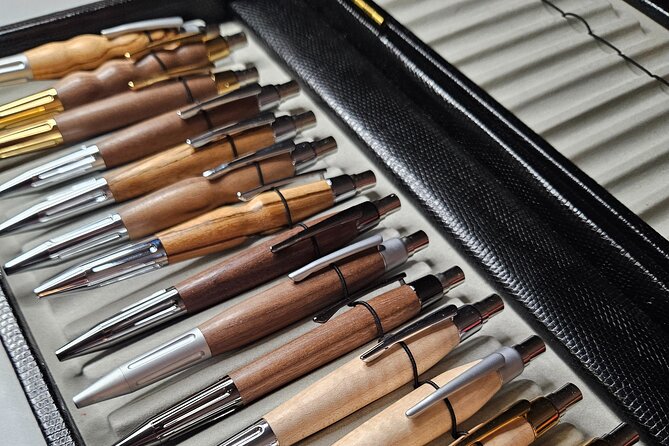
The less dramatic stages often decide how good the final pen feels. Sanding smooths the turned wood, while polishing gives the surface its finished appearance. These steps reward patience and care more than speed.
The pen-making process includes assembly after the wood has been shaped and finished. This gives the activity a satisfying final stage, because the separate pieces become a usable writing instrument in your hands.
You will want to stay engaged through the entire process rather than focus only on the lathe. The turning may be the part you imagined before booking, but sanding, polishing, and assembly are what help turn a rough form into a keepsake you can proudly display or use.
I like this structure because the finished item has a clear connection to the work you put into it. It is not merely a piece of wood you shaped for a few minutes. You follow the pen through several steps and see how each one affects the result.
A Souvenir With a Personal Story
Montreal offers plenty of souvenirs that can be picked up in a shop. This pen gives you something different: a small object you helped create during a scheduled workshop.
That does not automatically make it worth the price for everyone. If you mainly want an inexpensive memento, $161.10 may feel high. A shop-bought pen will cost less and take almost no time.
The value is stronger if you enjoy learning by doing. You are paying for the session, the equipment, the material choices, the instruction, and the chance to make the item yourself. You also receive a finished pen that can remind you of the activity long after your Montreal visit.
This experience may work particularly well for a couple, parent and adult child, friends, or anyone who likes practical crafts. It can also suit a solo visitor who wants a focused activity with a clear result. Since the group size is capped at nine, the workshop should not feel like a mass-produced souvenir stop.
Who Should Book This Experience
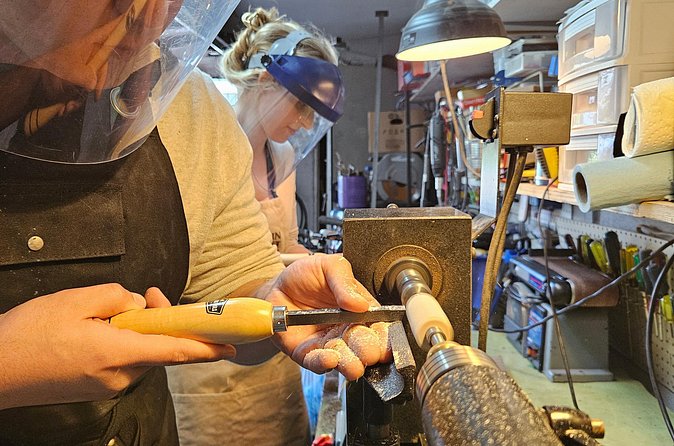
I would recommend this workshop to people who like tools, craft, design, and useful objects. You do not need to describe yourself as a woodworker. The instruction and demonstration are built into the session, and most people can participate.
It is also a good choice if you want a break from sightseeing. Three hours at the lathe gives you a different way to spend part of the day, with your attention on material, shape, and technique rather than on another museum room or busy street.
Families should note that the available information says most people can participate, but it does not give a minimum age. If you are considering booking for a child, confirm suitability before reserving.
People with service animals can bring them, according to the activity information. The workshop is also near public transportation, which makes it easier to reach without a car.
I would be less likely to recommend it to someone with a very tight schedule. The class lasts approximately three hours, and the activity works best when you can give it your full attention. I would also skip it if you dislike hands-on work or prefer a guide to do the making for you.
Timing, Language, and Group Size
The session is offered in English, so you should be comfortable receiving safety instructions and workshop guidance in that language. Clear communication matters when you are operating equipment, especially during the first introduction and demonstration.
A maximum of nine people keeps the class from becoming too large. The exact amount of individual attention can vary depending on the group, but the format is still more intimate than a large public lesson.
Flexible scheduling is available. If the listed date or time does not fit your plans, you can contact the instructor and ask about another option. This is useful if your Montreal schedule is built around fixed museum hours or restaurant reservations, though you should arrange it before assuming a different time is possible.
Free cancellation is available if you cancel at least 24 hours before the local start time. A cancellation made less than 24 hours in advance is not refunded, and changes inside that window are not accepted. I would book once your schedule is fairly firm, but not wait so long that your preferred date disappears.
Is $161.10 a Fair Price?
At $161.10 per person, this is not a casual add-on. The price needs to be judged against the type of activity you want.
For a simple souvenir, it is expensive. For a three-hour, small-group craft class with equipment, materials, safety instruction, demonstration, personal guidance, and a finished wooden pen, the price is easier to defend.
The strongest value comes from the active teaching. You are not just receiving a pen. You are learning the sequence behind it and getting a chance to operate the lathe under supervision. The more you care about the process, the more reasonable the cost becomes.
The perfect five-star rating from 17 reviews and a 100 percent recommendation rate also suggest a consistently positive experience, especially around the instruction and relaxed atmosphere. The strongest praise centers on Jonathan’s teaching and the fun of making a one-of-a-kind souvenir.
Still, those numbers should not replace your own judgment. A perfect rating cannot make the price right for someone who has no interest in woodworking. Think of this as a workshop with a finished keepsake, not as a cheap object-making activity.
The Best Way to Plan Your Visit
Since this experience is often booked about 61 days ahead, I would reserve early if you have a specific day in mind. Flexible scheduling may help, but it is better treated as a useful option than a guarantee.
Plan for the full three hours. Do not place this workshop between two activities with narrow start times unless you can allow room for delays. The class ends back at the same meeting point, which simplifies the end of the day, but it does not shorten the workshop itself.
Wear practical clothing suited to a hands-on workshop. The supplied information does not provide a dress code, so I would avoid anything you would be worried about while working around wood and workshop equipment. Most importantly, arrive ready to listen during the safety briefing.
Bring curiosity rather than a fixed idea of the perfect pen. You choose your wood, but the final result will also reflect the shaping and finishing process. That variation is part of the charm.
My Take: Should You Book It?
Book this experience if you want to make something useful, learn the basics of wood turning, and spend three focused hours with an instructor. The personal wood choice, hands-on lathe work, and finished pen give the activity more substance than a quick souvenir purchase.
Skip it if you want the cheapest possible gift, have limited time, or would rather watch than operate tools. At $161.10, the workshop earns its price through participation and instruction, not through the material value of the pen alone.
For the right person, this is a memorable Montreal activity with a clear payoff: you leave with a pen, a new appreciation for the work behind it, and a story attached to something you made yourself.
FAQ
Where does the pen-making workshop begin?
It begins at 4710 Rue Saint-Ambroise, Montréal, QC H4C 2C7, Canada.
Where does the experience end?
The activity ends back at the same meeting point at 4710 Rue Saint-Ambroise.
How long does the workshop last?
The experience lasts approximately three hours.
How much does the experience cost?
The listed price is $161.10 per person.
Is the workshop offered in English?
Yes. The experience is offered in English.
How many people can join the workshop?
The activity has a maximum of nine participants.
Can I choose the wood for my pen?
Yes. You can select from a variety of local and exotic woods.
Will I make the pen myself?
Yes. With guidance, you operate the lathe and work through turning, profiling, sanding, polishing, and assembly.
Can I take the finished pen home?
Yes. You create a wooden pen that you can take home.
Is cancellation free?
Yes, if you cancel at least 24 hours before the experience start time. Cancellations made less than 24 hours before the start are not refunded, and changes within that period are not accepted.
Newest reviews from Montreal
- Montreal: Private Walking Tour of Downtown & Underground★ 4.8 · 6 reviews
- Montreal Home Dining & Dim Sum Cooking Class★ 4.5 · 6 reviews
- Montreal : Old Montreal Walking Tour With A Guide★ 4.2 · 6 reviews
- 3h Boat Safari – Montreal’s Nature and Iconic Attractions Tour★ 3.5 · 6 reviews
- Experience Old Montreal on e-scooters with a local comedian★ 5.0 · 6 reviews
- Private Transfer from Montreal Airport YUL to Montreal / Bromont★ 4.5 · 6 reviews
- Montreal: Canadian Forest Guided Tour by Snowmobile★ 4.3 · 6 reviews
- Montreal: Brewpub Experience Beer Tasting & Walking Tour★ 4.3 · 6 reviews
Montreal Tours, compared.




Montreal Mile End Authentic Food Tour with 7 Delicacies Tastings
Read our review →
Quebec City and Montmorency Falls Day Trip from Montreal
Read our review →
The Original Old Montréal Walking Tour by Guidatour
Read our review →
Old Montreal Small-Group Walking Tour | Max 10 | by MTL Detours
Read our review →
Montreal City Sightseeing Tour with Live Commentary
Read our review →Browse the lists this tour appears in