
Reviewed · MONTREAL TOURS
Making Their Mark: Montreal Jewish History Walking Tour
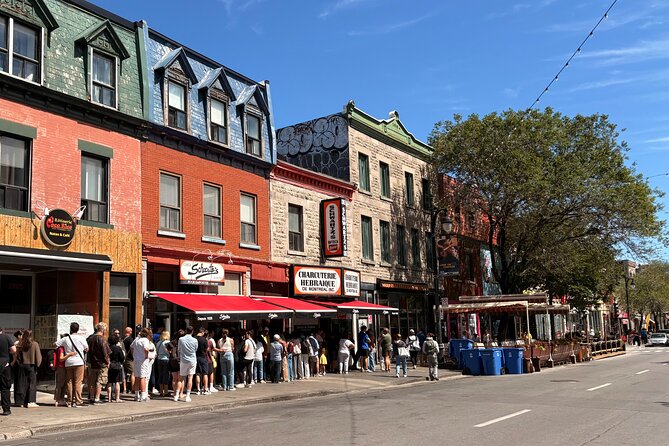
Montreal’s Jewish past is hiding in plain sight. This two-hour walking tour through the Plateau and Mile End connects old streets, former Jewish institutions, and personal stories about Eastern European immigration, work, religion, education, and community life. I especially like the human scale of the tour and the way guides such as Shannon, Emily, Pauline, and Tani turn history into something personal. I also like that the route shows both what remains and what has disappeared.
The main drawback is simple: this is a walking tour of a neighborhood that was once much more Jewish than it is today. Some original buildings are gone, and parts of the route can feel visually ordinary. You should also check the exact meeting point carefully, since the tour begins and ends at different street locations and does not begin at the museum building.
In This Review
- Key points to know before you go
- Saint-Laurent Boulevard: where the story begins
- Jewish Montreal through working streets and former businesses
- Stories of immigration, work, and community life
- What you actually see on the Plateau and Mile End route
- Why the missing buildings are part of the experience
- The guides: the real strength of the walk
- Is $24.03 a good value?
- Who will enjoy this walking tour most
- Should you book Making Their Mark?
- FAQ
- How long is the Making Their Mark walking tour?
- Where does the tour begin?
- Where does the tour end?
- Is the tour conducted in English?
- Is the Museum of Jewish Montreal included as an indoor visit?
- Can I cancel for a full refund?
Key points to know before you go
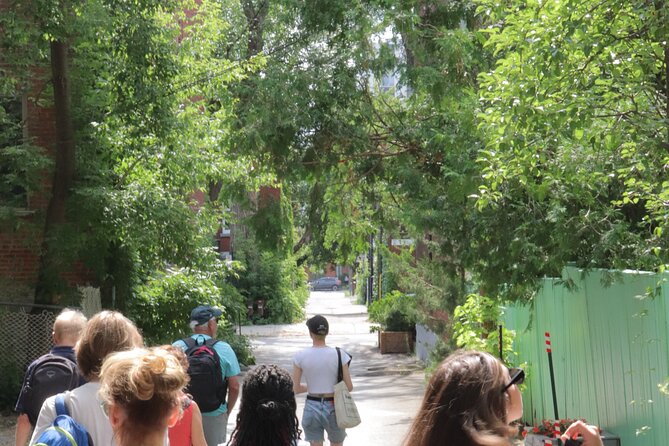
- A two-hour walk through Plateau and Mile End: The route focuses on streets and former community sites rather than a long indoor museum visit.
- The Jewish story is told through real people: Expect discussion of immigrants, religious leaders, educators, medical workers, business owners, and community builders.
- Guides make a major difference: Shannon receives especially warm praise for her clear storytelling and emotional connection, while Emily, Pauline, and Tani are also singled out for lively presentations.
- The original neighborhood has changed: You will see traces of the past, but many Jewish sites have moved elsewhere or disappeared.
- A small group keeps questions manageable: The maximum group size is 20 people, and the tour includes a short rest break.
- The price is modest for a guided city walk: At $24.03 per person, it offers a useful introduction if you want context before exploring Montreal on your own.
Saint-Laurent Boulevard: where the story begins
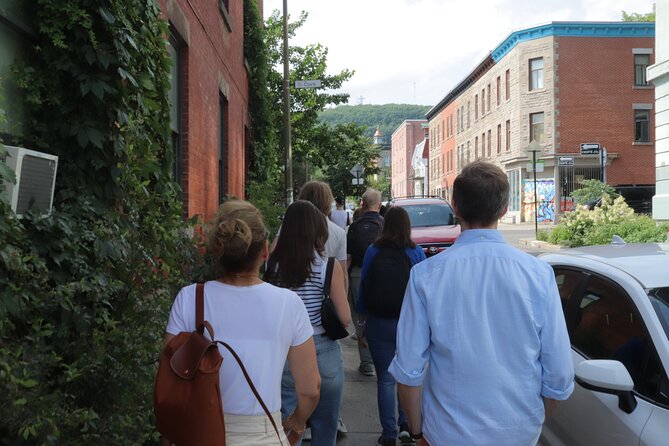
The tour begins outside 3961 Boul. Saint-Laurent, near the intersection with Napoleon. The formal meeting information also lists 4129 Boul. Saint-Laurent, so you should rely on the current location printed on your ticket and confirm it before setting out. This is not a minor detail. One person reported being sent to the wrong place and having to call the museum to find the group.
The opening location puts you in the Plateau and Mile End area, where the tour’s subject becomes part of the streets around you. Saint-Laurent Boulevard is not presented simply as a pretty avenue. It works as a starting point for understanding how Jewish immigrants settled, worked, worshipped, and built institutions in Montreal.
Your guide sets the period and the people in place. The tour deals especially with Eastern European Jewish immigration and the difficult realities facing newcomers. You hear about how people made a living, formed religious communities, supported education, and contributed to Montreal’s wider civic and commercial life.
I like this approach because it avoids treating history as a list of dates. The guide’s job is to show how ordinary streets carried extraordinary pressure. A storefront, apartment building, former tailor shop, or community institution can open a window onto questions of work, language, poverty, faith, family, and opportunity.
More Walking Tours in Montreal
- The Original Old Montréal Walking Tour by Guidatour
★ 4.5 · 2,217 reviews - Old Montreal Small-Group Walking Tour | Max 10 | by MTL Detours
★ 5.0 · 2,088 reviews - Montréal: The Original Old Montréal Walking Tour
★ 4.8 · 911 reviews
Jewish Montreal through working streets and former businesses
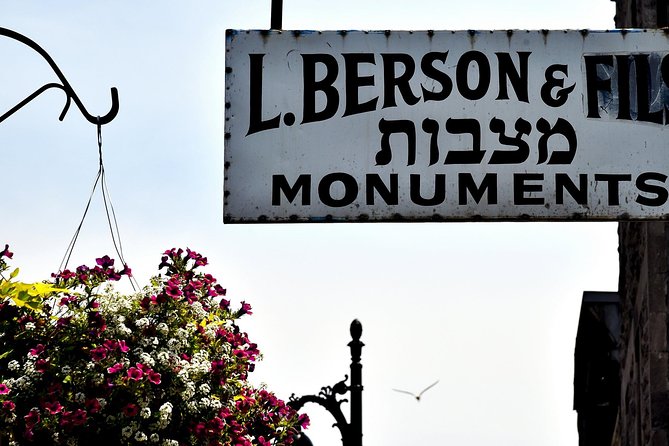
One of the more specific stops mentioned by participants is H. Fischer & Fils, including its tailor shop. That detail matters. A business site gives the story a physical anchor and shows how Jewish life was tied to skilled trades and small enterprise, not only to synagogues or famous leaders.
The tour also looks at people who made a mark in several areas of Montreal life. You may hear about individuals connected with education, medical care, religious communities, and industry. This wider focus helps you see Jewish Montreal as a network of work and public service rather than a closed-off enclave.
Guides have been praised for explaining how present-day buildings relate to the past. That is useful because the neighborhood does not always announce its history. A modern facade or an unremarkable block may sit where Jewish families once lived, worked, or gathered. The guide supplies the missing layer.
At the same time, you should set your expectations properly. This is not a tour packed with preserved interiors. One of the most honest observations about the route is that not much of the original neighborhood remains. That can feel disappointing if you expect a clearly preserved Jewish quarter with signs at every turn.
I see that change as part of the lesson. Montreal’s Jewish population and institutions shifted over time, and the older neighborhood changed with them. The tour asks you to imagine what stood there before, using stories and surviving clues rather than relying on a perfectly preserved historic district.
Stories of immigration, work, and community life
The strongest part of the experience is the human story. The tour explains the arrival of Eastern European Jews and the conditions they faced in Montreal. It also gives attention to their contributions, which keeps the presentation from becoming only a story of hardship.
A good guide makes clear that immigration is not one single experience. People arrived with different skills, beliefs, ambitions, and family situations. Some found a place in industry or commerce. Others helped build religious, educational, or medical institutions. The result was a community that shaped Montreal while adapting to a new city.
Shannon is repeatedly praised for making early twentieth-century Jewish life understandable without overwhelming the group. Her presentation is described as clear, personable, and emotionally aware. Emily is also praised for explaining the original Jewish area and the people who influenced education, medicine, religion, and industry.
Pauline’s style appears to be especially warm and direct. She has been praised for making neighborhood life come alive, answering questions honestly, and admitting when she does not have a definite answer. That last quality is worth noting. A guide who can separate firm information from uncertainty is more useful than someone who tries to sound certain about everything.
Tani is praised for being prepared and for handling questions well, including with families traveling with teenagers. The range of guides means the tone may vary by departure, but the common thread is strong preparation and a personal connection to the subject.
What you actually see on the Plateau and Mile End route
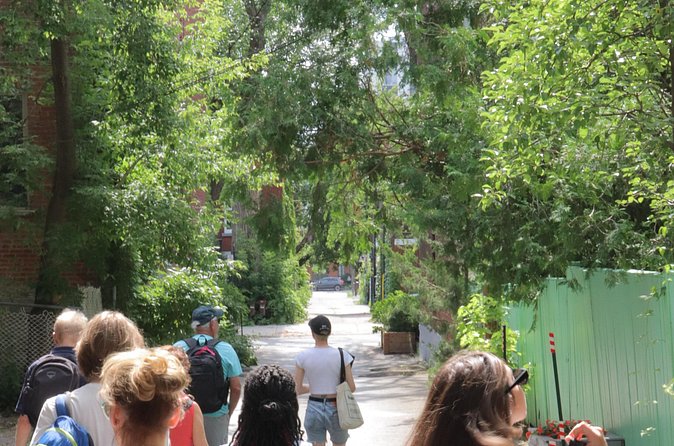
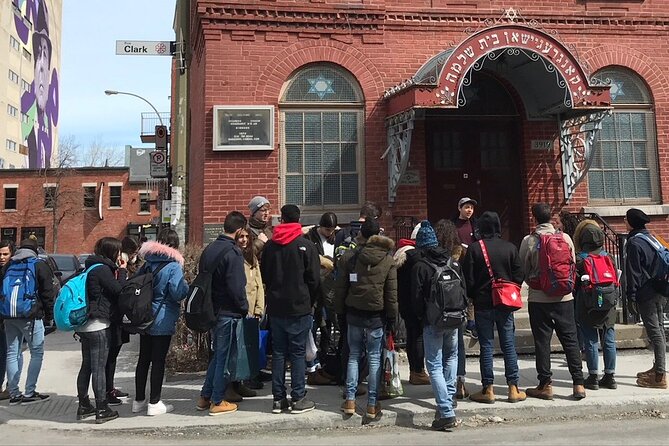
The walk begins and ends at different locations around the Plateau and Mile End neighborhoods. The stated endpoint is outside 3919 Rue Clark, at the corner of Clark and Bagg. That makes this a useful activity for combining with other plans in the area, though you should allow time to reach your next stop.
The route is built around outdoor observation and explanation. You walk from site to site, pause while the guide adds context, and gradually build a picture of a neighborhood that has changed. This balance between narration and seeing actual places is one of the tour’s best features.
The pace is generally described as comfortable for a two-hour walk. A short break in the middle gives you time to rest, which helps, especially on a warm day or if you have already spent the morning walking around Montreal. Still, you should wear comfortable shoes and expect steady movement. The tour requires a moderate level of physical fitness.
Because the group can include up to 20 people, it is not a private walk. That said, a group of this size is still small enough for questions, and one account specifically notes that there was plenty of time to discuss topics. If you prefer a completely personal guide, this will feel more social than intimate. If you enjoy learning alongside others, the group format should work well.
More historical tours:
- Montreal History Guided Sightseeing Cruise
★ 3.5 · 363 reviews - Rabbis, Writers and Radicals: Montreal Jewish History Walking Tour
★ 4.5 · 52 reviews - Victoria Guided Food and History Tour
★ 5.0 · 2,015 reviews - Gastown Historic Walking Food Tour
★ 5.0 · 1,863 reviews
Why the missing buildings are part of the experience
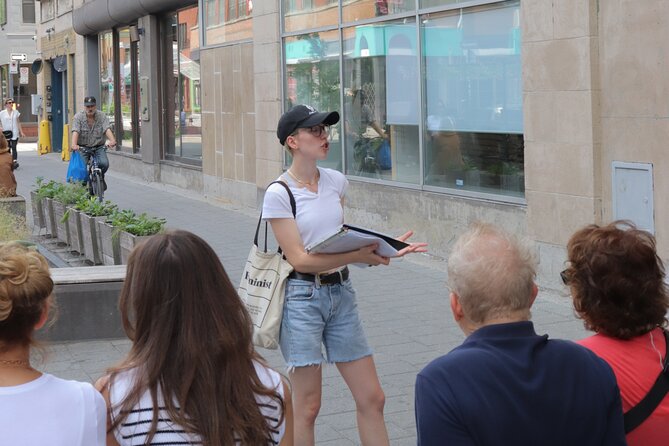
The most important practical warning is also the most meaningful. Much of the old Jewish neighborhood has changed, and many original buildings are no longer there. Some institutions and community centers have moved to other parts of Montreal.
You will therefore spend time looking at places that may not look historic at first glance. The value comes from the explanation. The guide helps you understand what once occupied a street and why the community moved or changed.
This can be frustrating if you want a visual parade of preserved landmarks. It can also be moving. The absence of old buildings reminds you that neighborhoods are not museum displays. Families move, businesses close, institutions relocate, and the city reuses its streets.
One person wished the tour had included more about postwar Jewish Montreal. That is a fair limitation to keep in mind. The main emphasis is on the earlier immigrant community and its roots in the Plateau area. If your main interest is postwar life, later migration, or the present-day Jewish community, you may want to treat this walk as an introduction rather than the final word.
The museum’s exhibitions can add that extra indoor context. The Museum of Jewish Montreal is located at 5220 St-Laurent Boulevard, but the walking tour does not begin or end there. The museum exhibitions are listed as open Thursday through Sunday, with Monday openings beginning in late May 2024. Check current hours before planning a museum visit around the walk.
The guides: the real strength of the walk
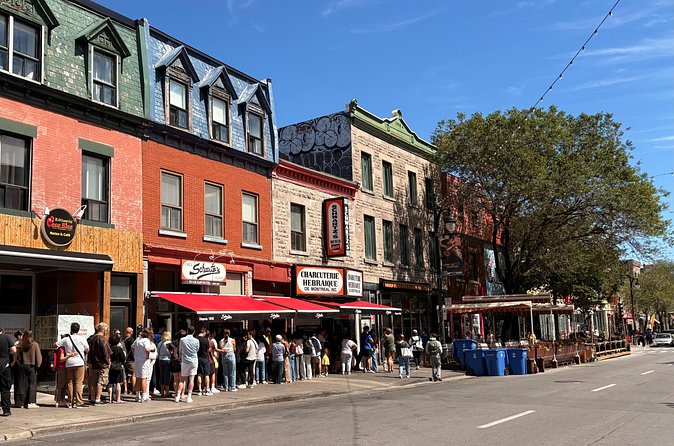
The most praised part of this experience is the guiding. Shannon receives especially strong approval for her command of Montreal Jewish history, her storytelling, and her ability to connect emotionally with the people being discussed. Several comments describe her as personable, patient, organized, funny, and attentive to the group.
That combination matters. A history walk can easily become a lecture delivered on a sidewalk. Here, the best guides appear to keep the pace moving while making room for questions and reflection. They explain the facts, but they also help you understand what those facts meant in daily life.
Emily is praised for communicating clearly and relating present buildings to the past. Pauline is described as enthusiastic, engaging, and willing to be candid when an answer is uncertain. Tani is noted for preparation and for explaining Jewish life in Montreal in a way that worked for a family with two teenagers.
Guide assignments can change, so you cannot assume that one particular person will lead your departure. Still, the feedback points to a consistent strength in the provider’s staff: clear explanations, good organization, and a sincere interest in the subject.
The guide also watches the group’s energy. The short break and measured pace help make the two hours feel manageable. One family described the full walk as substantial but not exhausting, which is about right for anyone used to city walking.
Is $24.03 a good value?
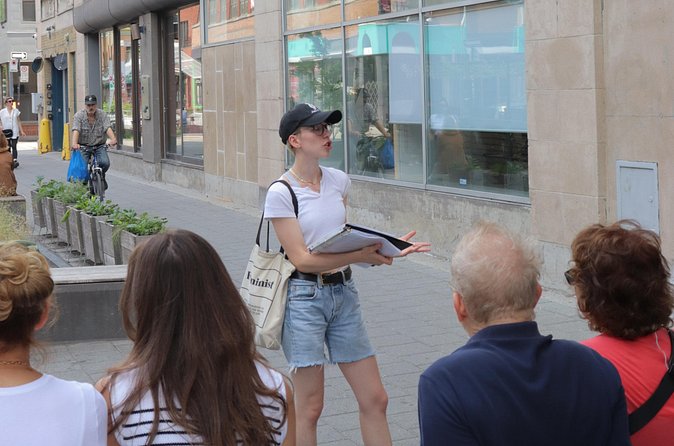
At $24.03 per person, this is a fairly inexpensive way to add historical context to your Montreal visit. You are paying for a local English-speaking guide and a carefully organized two-hour walk, not for admission to a major attraction or a full day of sightseeing.
The value depends on what you want from a tour. If you simply want to see attractive streets, you can explore the Plateau and Mile End without paying anyone. If you want to understand who lived there, how Jewish immigrants built a community, and why the visible remains are limited, the guide makes the price worthwhile.
I especially like the fact that the tour covers more than religion. The discussion includes education, health care, industry, business, community leadership, and family life. That gives you a broader sense of how a minority community shaped the city.
The 4.8 rating from 166 reviews and 96 percent recommendation rate suggest a strong level of satisfaction, though the isolated no-show complaint deserves attention. That case was attributed to an external booking error, and the provider offered a full refund while noting that tours were running as scheduled. To protect yourself, save the provider’s contact details and check the meeting point shortly before departure.
Free cancellation is available if you cancel at least 24 hours before the start time. Changes or cancellations inside that window are not accepted for a refund. The booking confirmation arrives at the time of booking, and the tour includes a mobile ticket.
Who will enjoy this walking tour most
I would recommend this experience to anyone with a genuine interest in Jewish history, immigration, Montreal neighborhoods, or the way cities change. It also works well as a first-day activity because it gives you social and historical context for the Plateau and Mile End.
Families can do it, including families with teenagers. The subject is serious, but the guides appear to keep the presentation lively and accessible. Couples and solo visitors should also find the group format easy to join.
This is not the best choice if you have difficulty walking for two hours or if you want to spend most of the time indoors. It may also disappoint you if you expect a preserved Jewish quarter, a large number of surviving landmarks, or a strong focus on postwar Montreal.
Go with comfortable shoes, carry water, and arrive at the exact street address on your ticket. Since the ending point is different from the starting point, make sure you know where the walk finishes before scheduling lunch, transportation, or another timed activity.
Should you book Making Their Mark?
Book it if you want a thoughtful introduction to Montreal’s early Jewish community and enjoy learning through streets, stories, and vanished places. The price is reasonable, the walk is family-friendly, and the guides appear to be the experience’s greatest asset.
Skip it if you want a short indoor museum visit, a tour centered on contemporary Jewish Montreal, or a neighborhood filled with intact historic buildings. For most visitors interested in how immigration helped shape Montreal, I think this is a worthwhile two-hour outing, especially when led by a strong guide such as Shannon, Emily, Pauline, or Tani.
FAQ
How long is the Making Their Mark walking tour?
The tour lasts approximately two hours.
Where does the tour begin?
The tour begins outside 3961 Boul. Saint-Laurent at the intersection with Napoleon. Because another meeting address is also provided, check the exact location on your current ticket before arriving.
Where does the tour end?
The listed endpoint is outside 3919 Rue Clark, at the intersection of Clark and Bagg.
Is the tour conducted in English?
Yes. The tour is offered in English.
Is the Museum of Jewish Montreal included as an indoor visit?
No. The walking tour begins and ends at street locations around the Plateau and Mile End, not at the museum building. The museum’s exhibitions are located at 5220 St-Laurent Boulevard and have separate operating hours.
Can I cancel for a full refund?
Yes, if you cancel at least 24 hours before the experience start time. Cancellations or changes made less than 24 hours before the start time are not accepted for a refund.
Newest reviews from Montreal
- Private Departure Transfer to Montreal Airport YUL★ 4.5 · 45 reviews
- 3 Day and 2 Night Tour: Toronto, 1000 Islands, and Niagara Falls★ 5.0 · 46 reviews
- AURA experience at Notre-Dame Basilica and guided cruise★ 4.0 · 47 reviews
- Montréal Downtown and Underground City Private Walking Tour★ 5.0 · 47 reviews
- Haunted Griffintown Ghost Walking Tour in Montréal★ 5.0 · 47 reviews
- Montreal: Guided Bar Crawl with Free Shots and Club Entry★ 3.5 · 48 reviews
- Explore the Underground City with a local comedian★ 4.5 · 49 reviews
- Montreal: Jean-Talon Market & Beyond Locally Owned Food Tour★ 5.0 · 50 reviews
Montreal Tours, compared.

Montreal Mile End Authentic Food Tour with 7 Delicacies Tastings
Read our review →
Quebec City and Montmorency Falls Day Trip from Montreal
Read our review →
The Original Old Montréal Walking Tour by Guidatour
Read our review →
Old Montreal Small-Group Walking Tour | Max 10 | by MTL Detours
Read our review →
Montreal City Sightseeing Tour with Live Commentary
Read our review →Browse the lists this tour appears in