
Reviewed · MONTREAL TOURS
Leather belt making workshop
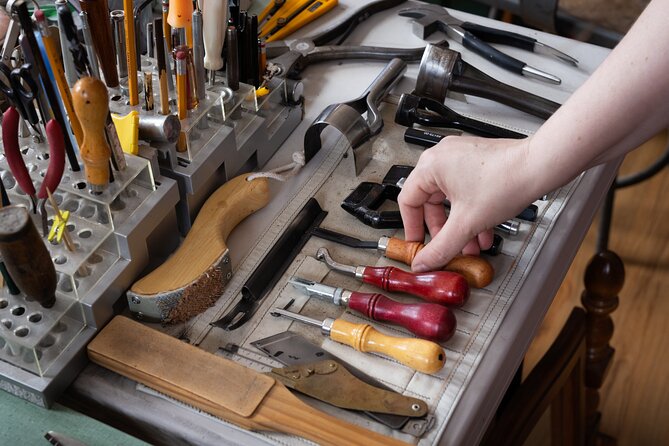
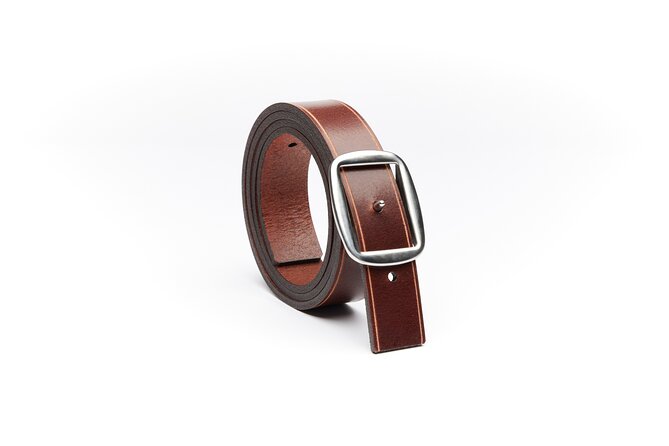
Make something you can wear home. This Montreal leather belt workshop gives you a useful souvenir and a real introduction to leathercraft, guided by designer Kimberly Fletcher at her Flechr studio in Plateau Mont-Royal. I like the small group limit of four, and I like that beginners need no previous experience. The main consideration is the hands-on nature of the class: a few hammer blows are required, so it may not suit anyone highly sensitive to noise.
Over about two and a half hours, you learn how to choose leather, cut and shape it, assemble the belt, and finish it with your own design choices. Kimberly’s patience and humor are major strengths, but this is still a practical workshop, not a passive craft demonstration. You will need to take part at each stage, and the class is recommended for ages 13 and over.
In This Review
- Key points at a glance
- Why this Montreal belt class is worth your time
- Arriving at Flechr in Plateau Mont-Royal
- Choosing leather and planning your belt
- Cutting and shaping leather by hand
- Assembling the pieces into a durable belt
- Finishing techniques that make the belt yours
- Kimberly Fletcher’s teaching style
- Noise, age, and participation details
- Group size and the value of the session
- Booking, cancellation, and planning ahead
- Who will enjoy this leatherworking class?
- Should you book the Flechr belt workshop?
- FAQ
- Where does the leather belt workshop take place?
- How long does the class last?
- Is the workshop suitable for beginners?
- What will I learn during the class?
- How many people can join the workshop?
- Is the activity offered in English?
- Can I cancel for a full refund?
Key points at a glance
- A wearable Montreal souvenir: You make your own leather belt rather than buying a mass-produced keepsake.
- A true beginner class: No previous leatherworking experience is needed, and Kimberly Fletcher guides you through each stage.
- A very small group: The workshop accepts a maximum of four people, allowing for close instruction.
- A 2.5-hour creative project: The session covers leather selection, cutting, shaping, assembly, and finishing.
- A Plateau Mont-Royal studio setting: The workshop takes place at Flechr, Kimberly’s design studio at 5450 Rue de Bordeaux.
- A few practical limits: It is recommended for ages 13 and up, and hammering creates some unavoidable noise.
Why this Montreal belt class is worth your time
I like craft classes that leave you with something useful. A belt fits that bill better than a fragile trinket. You get a physical reminder of Montreal, but you also gain a basic skill you can use again if leatherwork catches your interest.
The Flechr class is especially appealing because it keeps the project focused. You are not trying to learn every branch of leathercraft in one afternoon. Instead, you work toward one clear result: a belt that you have helped design, cut, assemble, and finish.
That focus matters for beginners. Leatherwork can look simple until you handle the material and tools yourself. The class breaks the process into manageable steps, so you can concentrate on one decision at a time rather than worry about the whole project.
The small group is another strong point. With no more than four people, Kimberly can give direct help when you need it. That is useful when you are learning how to make a clean cut, position pieces, or finish an edge. It also gives the session a personal feel that a large craft class cannot easily match.
More workshops and classes in Montreal:
- The Bagel Class presents : Montreal Bagel Making Workshop!
★ 5.0 · 463 reviews - Montreal: Cooking Class & Lunch with Michelin-Trained Chef
★ 4.4 · 32 reviews - Montreal Cooking Class & Wine Tasting with Michelin Chef Robert
★ 4.5 · 14 reviews
Arriving at Flechr in Plateau Mont-Royal
The workshop begins and ends at Flechr studio, located at 5450 Rue de Bordeaux, Montréal, Quebec H2H 2A8. The studio is in Plateau Mont-Royal, an area known for independent businesses, apartments, cafes, and creative workspaces.
The exact class takes place at the studio, so plan your route before you leave. The activity is near public transportation, which is helpful if you are not driving in Montreal. Since the session lasts around two and a half hours and returns to the same location, you do not need to arrange a second meeting point or wonder where the class finishes.
I would allow enough time to arrive calmly. A craft workshop starts more pleasantly when you are not rushing through the door with your phone in one hand and a transit map in the other. You will also want to be ready for a focused period of cutting, shaping, and assembly.
The studio location gives the class a more personal setting than a standard sightseeing stop. You are entering the working environment of a Montreal designer, not simply attending a general-purpose activity built for a large crowd.
Choosing leather and planning your belt
The first part of the class covers how to select the right type of leather. This is important because the material affects the belt’s appearance, feel, and durability.
A beginner may naturally focus on color or surface texture. Kimberly’s instruction helps you think beyond that first impression. A belt must be strong enough for regular wear, and its leather needs to work with the cutting and assembly steps that follow.
You will also make choices about the final look. The class includes techniques for finishing the belt, giving you room to create something personal rather than producing an identical item alongside everyone else.
That creative control is one of the best reasons to book this activity. A store-bought belt can be attractive, but it carries no story about how it was made. Your finished piece will reflect the decisions you made in the studio, even if your first cut is not perfectly straight.
Do not expect an industrial production line. This is a guided introduction, so the goal is not speed. You are learning why the material matters and how each stage contributes to a durable finished accessory.
Cutting and shaping leather by hand
Once the leather is selected, the class moves into cutting and shaping. This is where the project becomes more active and where careful attention pays off.
You learn the basic methods needed to turn a piece of leather into the main body of a belt. The work calls for patience. Rushing a cut can affect the look of the finished piece, so you should listen closely to Kimberly’s instructions and ask for help when you need it.
I appreciate that the class does not assume you already understand leather tools or techniques. Kimberly guides beginners through the process, making the workshop suitable for someone who has never handled leather in a studio setting.
This stage may be more demanding than the promotional wording suggests. You are not simply decorating a ready-made belt. You are making decisions and taking part in the physical work. That is the reward, but it is also the reason to arrive ready to concentrate.
The result should feel more meaningful because you have shaped the material yourself. Even small imperfections can become part of the object’s character, as long as you approach the work with realistic expectations.
A few more tours worth putting side by side
- Montreal: Guided Bus Tour
★ 4.4 · 3,064 reviews - Montreal: Hop-On Hop-Off Double-Decker Bus Tour
★ 4.1 · 2,760 reviews - From Montreal: Quebec City and Montmorency Falls Day Trip
★ 4.5 · 2,669 reviews - Montreal Mile End Authentic Food Tour with 7 Delicacies Tastings
★ 5.0 · 2,598 reviews
Assembling the pieces into a durable belt
After cutting and shaping, you assemble the belt components. This stage brings the separate parts together and shows why the earlier choices matter.
A well-made belt needs more than a good-looking strip of leather. The pieces must be placed and joined with care so the finished accessory can handle normal use. The class explains the basic construction process without requiring prior leathercraft training.
Kimberly’s role is central here. A participant described her as a skilled craftswoman with patience and humor, qualities that matter when a project takes an unexpected turn. Beginners often need reassurance as much as technical instruction, especially when they are working with unfamiliar materials.
The group size helps again. In a class of four, you have a better chance of receiving timely guidance instead of waiting while an instructor moves from table to table. It also means you can see how other people approach the same project without being lost in a crowd.
Assembly is likely the point where your belt begins to look like a finished object rather than a work in progress. That small moment can be satisfying, especially because the project began with a material choice and a set of separate steps.
Finishing techniques that make the belt yours
The final stage covers ways to finish the belt and give it a personal look. This is where a functional object can become a piece of wearable art.
The exact finishing options are not specified, so you should not arrive expecting a particular color range, buckle style, or decoration. What you can expect is instruction in techniques that make the belt feel more individual and complete.
Finishing also serves a practical purpose. It is not only about decoration. The way the edges and surfaces are treated affects the belt’s final appearance and can help it look more polished.
I like this part of the class because it gives you a chance to express yourself after learning the technical basics. You have already learned how to select, cut, shape, and assemble the leather. Now you can make choices that reflect your taste.
Keep in mind that handmade work takes time. Your belt may not look exactly like a professionally manufactured accessory, and that is part of the point. The value comes from making it yourself under the guidance of a working designer.
Kimberly Fletcher’s teaching style
Kimberly Fletcher is both the instructor and the designer behind Flechr. The strongest praise for the class centers on her patience, humor, and skill.
Those qualities are not minor extras. Leatherworking can be intimidating for a first-timer, especially when the work involves cutting material or using tools. A calm instructor helps you stay focused rather than freeze at the first uncertain step.
The class is designed for beginners, and that makes Kimberly’s teaching role especially important. You do not need to arrive with technical vocabulary or previous practice. You need a willingness to listen, try, and adjust.
A workshop with a personal instructor can also feel more genuine than a standard commercial activity. You are learning in the studio of a Montreal designer and making an object linked to that creative setting. For anyone interested in local design, this connection adds value.
The maximum group size of four supports that teaching style. It allows the class to remain social without becoming crowded. You can work independently, but help should be close when you need it.
Noise, age, and participation details
This activity is recommended for people aged 13 and over. That makes it a possible choice for families with older teenagers, but you should consider each participant’s comfort with tools and sustained hands-on work.
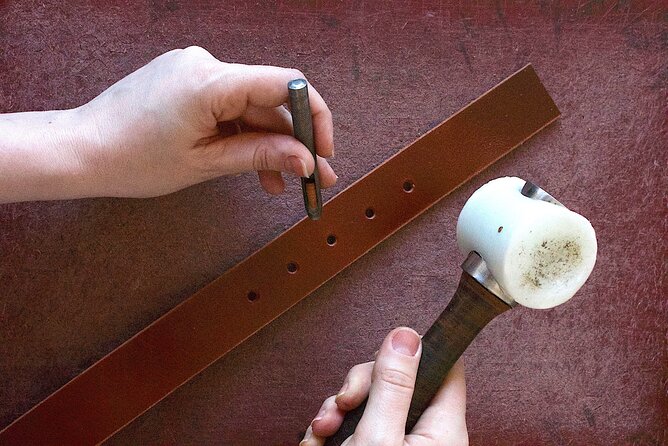
A few hammer blows are necessary to create the belt. The noise is limited by the description, but anyone highly sensitive to sound should take note before booking. This is not a silent craft session.
You also need to take part physically. Most people can participate, and service animals are allowed, but the class involves cutting, shaping, assembly, and finishing. If you have concerns about handling materials or tools, contact the provider before booking rather than assuming every step can be adapted.
The workshop is offered in English. That makes the instructions accessible to English-speaking participants, though you should choose another activity if you need a different teaching language.
Group size and the value of the session
The maximum of four people is a major part of the experience’s value. Small classes usually make it easier to ask questions, receive corrections, and follow a project from beginning to end without feeling overlooked.
The class lasts roughly two hours and thirty minutes. That is enough time for a substantial project while still leaving room in your Montreal day for another activity.
The exact price is not provided here, so I cannot judge it against a specific dollar amount. I would assess the cost in relation to what is included: direct guidance from Kimberly, materials and instruction for a complete belt project, a small class, and a finished accessory you can use.
You should also consider the value of the memory. A belt made during a Montreal studio workshop has a personal story that a standard souvenir does not. If you enjoy learning by doing, that may justify a higher price than a quick sightseeing stop.
If you mainly want a cheap belt, this is probably not the right activity. If you want a creative class with a useful result and personal instruction, the format makes good sense.
Booking, cancellation, and planning ahead
You receive confirmation when you book, and the activity is available with a mobile ticket. The class requires a minimum number of participants, so there is a small possibility that it could be canceled if that minimum is not reached. In that case, you are offered another date or experience, or a full refund.
Free cancellation is available if you cancel at least 24 hours before the start time. Cancellations made less than 24 hours ahead are not refunded, and changes within that period are not accepted. The cut-off uses Montreal local time.
I would book this class when your schedule is firm. A small-group workshop depends on attendance and careful planning, so last-minute changes are less flexible than they are for a self-guided museum visit.
Who will enjoy this leatherworking class?
This workshop suits you best if you like making things, appreciate local design, or want a souvenir with a story behind it. It is also a good choice if you have already visited Montreal’s major sights and want an activity that feels more personal.
Beginners should feel comfortable booking. No previous leathercraft experience is required, and the course is built around instruction at every stage.
Older teenagers may enjoy it as well, especially if they like fashion, design, or practical crafts. Keep the age recommendation and hammering noise in mind.
The class may not suit you if you dislike hands-on projects, have very limited time, or want a quiet activity. It also may not be ideal if you expect a quick demonstration followed by a finished belt handed to you. You are there to do the work.
Should you book the Flechr belt workshop?
I would book this Montreal leather belt class if you want a small, creative experience led by a local designer. The strongest reasons are the maximum group size of four, the clear beginner focus, and the chance to leave with a useful belt made through your own effort.
The main cautions are simple: expect hands-on work, allow about two and a half hours, and be comfortable with a few hammer blows. With a current rating of 5 out of 5 from 17 ratings and a 100 percent recommendation rate, it has a strong record, but the best match is still someone who enjoys learning through making.
FAQ
Where does the leather belt workshop take place?
The workshop takes place at Flechr studio, 5450 Rue de Bordeaux, Montréal, Quebec H2H 2A8, Canada.
How long does the class last?
The activity lasts approximately 2 hours and 30 minutes.
Is the workshop suitable for beginners?
Yes. No previous leatherworking experience is required, and Kimberly Fletcher guides you through the process.
What will I learn during the class?
You learn how to select leather, cut and shape it, assemble the belt, and use finishing techniques to make it personal.
How many people can join the workshop?
The class has a maximum of four participants.
Is the activity offered in English?
Yes. The workshop is offered in English.
Can I cancel for a full refund?
You can cancel for a full refund if you do so at least 24 hours before the experience begins. Cancellations or changes made less than 24 hours before the start time are not accepted for a refund.
Newest reviews from Montreal
- Montreal Home Dining & Dim Sum Cooking Class★ 4.5 · 6 reviews
- Montreal: Private Walking Tour of Downtown & Underground★ 4.8 · 6 reviews
- Montreal : Old Montreal Walking Tour With A Guide★ 4.2 · 6 reviews
- 3h Boat Safari – Montreal’s Nature and Iconic Attractions Tour★ 3.5 · 6 reviews
- Experience Old Montreal on e-scooters with a local comedian★ 5.0 · 6 reviews
- Private Transfer from Montreal Airport YUL to Montreal / Bromont★ 4.5 · 6 reviews
- Montreal: Canadian Forest Guided Tour by Snowmobile★ 4.3 · 6 reviews
- Montreal: Brewpub Experience Beer Tasting & Walking Tour★ 4.3 · 6 reviews
Montreal Tours, compared.




Montreal Mile End Authentic Food Tour with 7 Delicacies Tastings
Read our review →
Quebec City and Montmorency Falls Day Trip from Montreal
Read our review →
The Original Old Montréal Walking Tour by Guidatour
Read our review →
Old Montreal Small-Group Walking Tour | Max 10 | by MTL Detours
Read our review →
Montreal City Sightseeing Tour with Live Commentary
Read our review →Browse the lists this tour appears in