
Reviewed · CAMPBELL RIVER TOURS
Vancouver Island: People Water Land – Indigenous & Whales
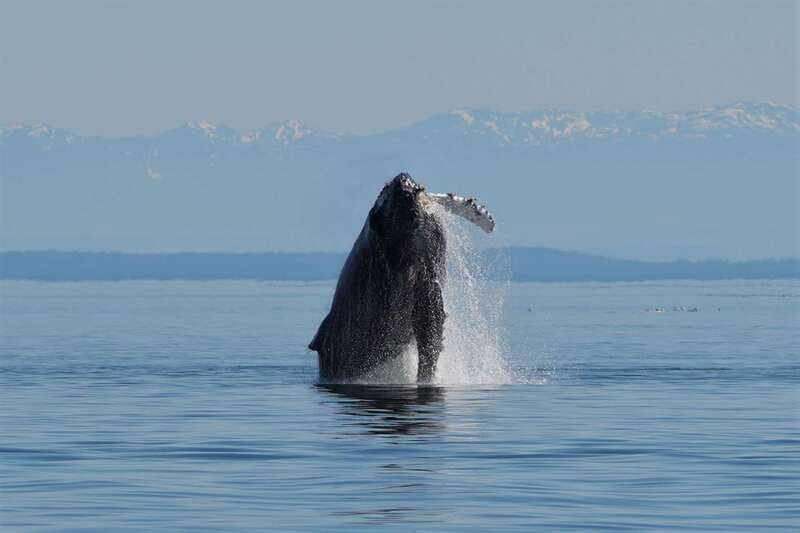
Whales are only half the story. Vancouver Island’s People Water Land tour pairs Salish Sea wildlife with a First Nations-led visit to Aupe, a former Xwémalhkwu (Homalco) village site. I like the small group of no more than 12 people, and I like that the experience supports Homalco-owned cultural and environmental work rather than treating local culture as a backdrop.
The covered boat has indoor and outdoor seats, a toilet, and heat, which matters on a cool coastal morning. The main consideration is nature’s lack of a timetable: whales may appear at a distance, or not at all, and the two-kilometre walk at Aupe includes uneven ground and slippery rocks.
This is a thoughtful five-hour outing from Campbell River for anyone who wants more than a quick wildlife ride. You will look for orcas, humpback whales, dolphins, seals, sea lions, and eagles, then walk through a former village while a Homalco guide shares language, stories, and family knowledge. The cedar bracelet activity gives the cultural part a hands-on finish.
In This Review
- Key points to know before booking
- A five-hour journey from Campbell River
- Inside the covered boat and outside on the Salish Sea
- Wildlife watching without a false promise
- Stepping ashore at Aupe
- Cedar bark, language, and living culture
- What the food and timing add
- Who will enjoy this tour most
- Practical value at $272 per person
- Should you book People Water Land?
- FAQ
- Where does the People Water Land tour depart from?
- How long is the experience?
- What is included in the price?
- How much does the tour cost?
- What wildlife might I see?
- Is the tour suitable for children?
- How difficult is the walking portion?
- What should I bring?
- What happens if the weather is too poor for the tour?
Key points to know before booking
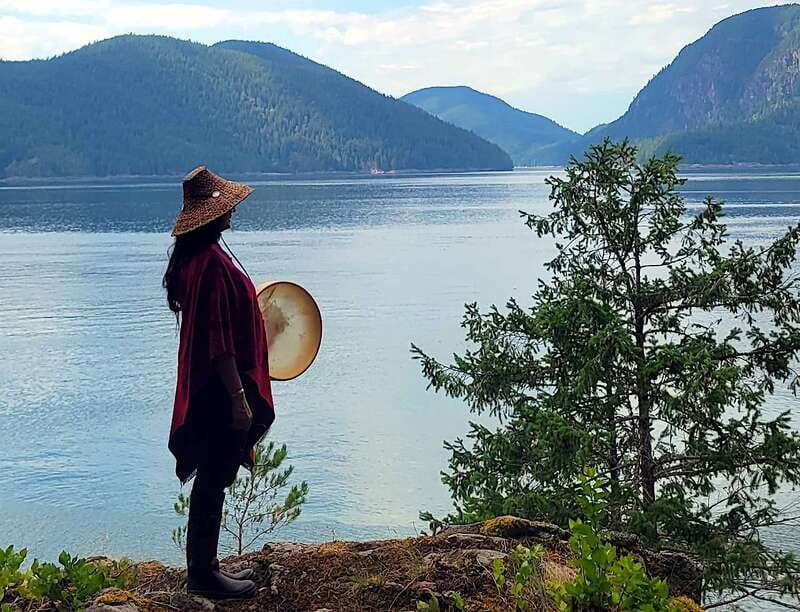
- Aupe gives the tour its purpose: You walk through a former Homalco village site where more than 250 people once lived.
- Wildlife viewing is flexible: Routes and timing change with weather and animal sightings, so a distant whale is still a normal outcome.
- The boat works in mixed weather: Heated covered seating lets you stay warm, while outdoor seats offer better views when wildlife appears.
- The cultural guide matters: A skipper and First Nations guide travel with each group, keeping the five-hour trip personal and informative.
- The walk requires steady footing: Expect about two kilometres on trails with uneven ground and slippery rocks.
- Your fee has a wider use: Part of the price supports whale research, salmon restoration, Homalco youth programs, and employment opportunities.
A five-hour journey from Campbell River
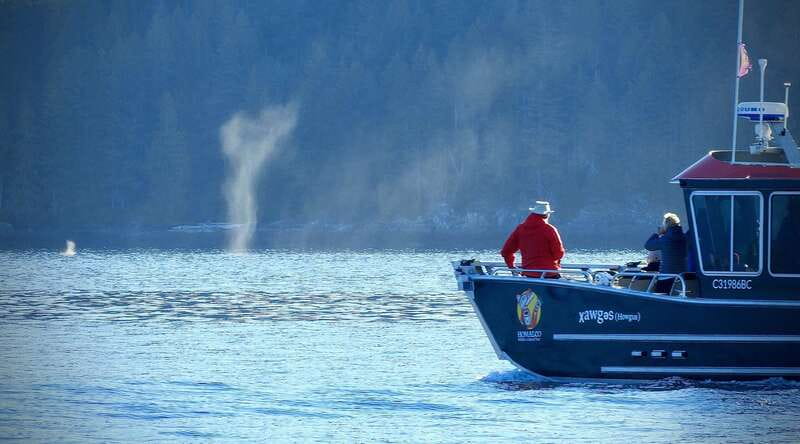
The tour begins at the marina area in Campbell River, with check-in shortly before departure. The instructions ask you to arrive 20 minutes early, though the excursion information also notes a 15-minute check-in before the 7:00 a.m. start. I would use the earlier time. You need room to park, find the meeting point, sign the activity waiver, and get ready without turning the morning into a sprint.
Parking is available in the Tyee Plaza Shopping Centre lot. Avoid spaces reserved for the Coast Discovery Inn. Pickup and drop-off are not included, so you are responsible for reaching the dock.
The early schedule, generally 7:00 a.m. to noon, makes practical sense. You get a full morning on the water and still have much of the day left in Campbell River. It also means you should dress for the coldest part of the outing, not the weather you hope will arrive later.
Before boarding, coffee is available at the tour office and gift shop. The boat crew gives a safety briefing, then the group heads out with a skipper and a Homalco guide. The small capacity is a real advantage here. Twelve people is enough for a social outing but small enough that the guide’s stories do not feel lost in a crowd.
More Whale Watching in Campbell River
- Campbell River: Whale & Wildlife Discovery Cruise
★ 4.8 · 143 reviews - Campbell River: 4 Hour Whale & Wildlife Zodiac Boat Tour
★ 4.7 · 133 reviews - Campbell River: Salish Sea Whale Watching Adventure
★ 4.6 · 64 reviews
Inside the covered boat and outside on the Salish Sea
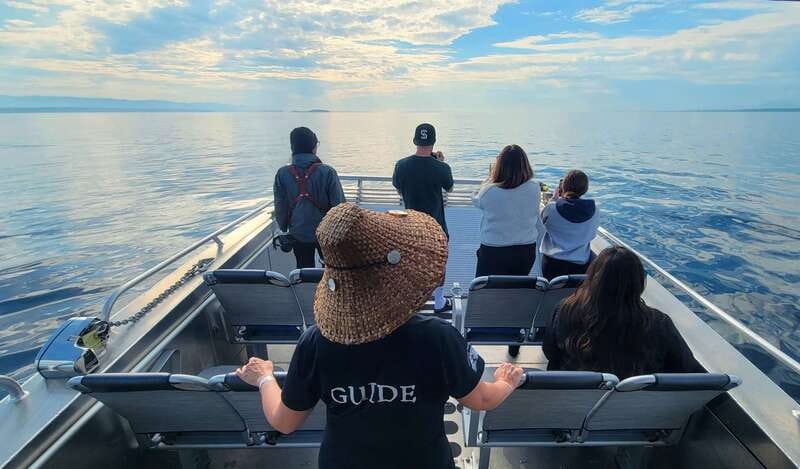
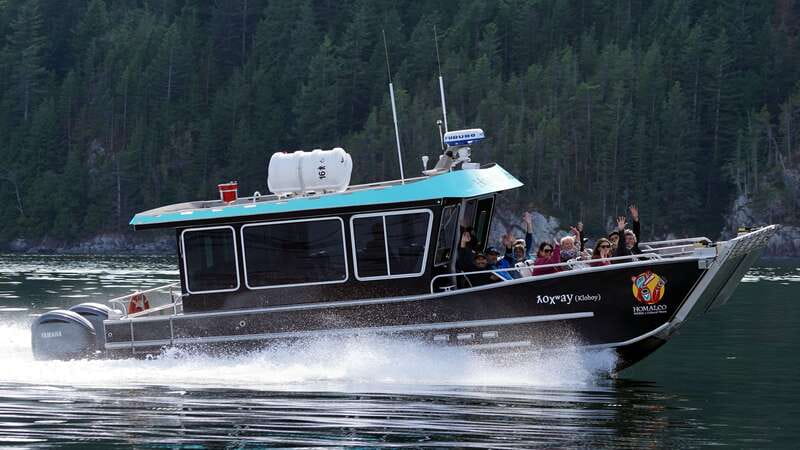
The custom landing craft vessels are built for comfort rather than speed alone. You have heated, covered indoor seating, outdoor open seats, and a toilet onboard. That combination is useful because whale watching requires patience. You can warm up during the longer stretches and step outside when wildlife appears.
Bring warm clothing, rain gear, hiking shoes, binoculars, and a camera. Wear closed-toe footwear with a firm sole. Sandals, flip-flops, high heels, and other open-toed shoes are not allowed, and the footwear rule is sensible once you reach the shore.
The outdoor seats provide the best chance of an unobstructed view, but coastal weather can change quickly. A waterproof layer is more useful than a fashionable jacket, and gloves may be welcome during the morning ride. Tripods are not permitted, so bring a camera that you can hold comfortably.
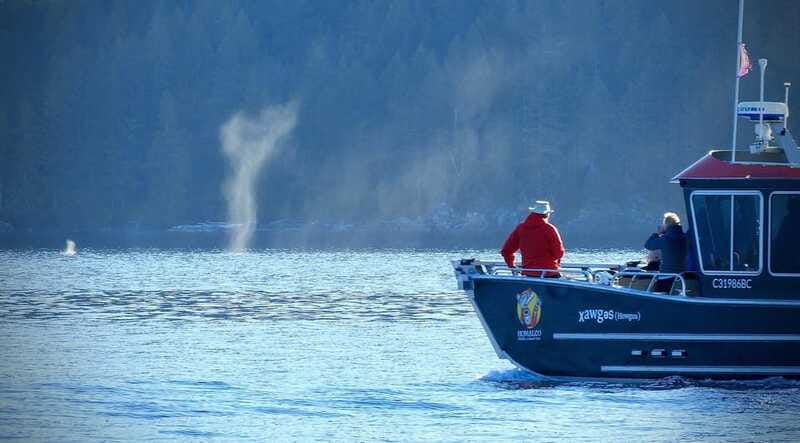
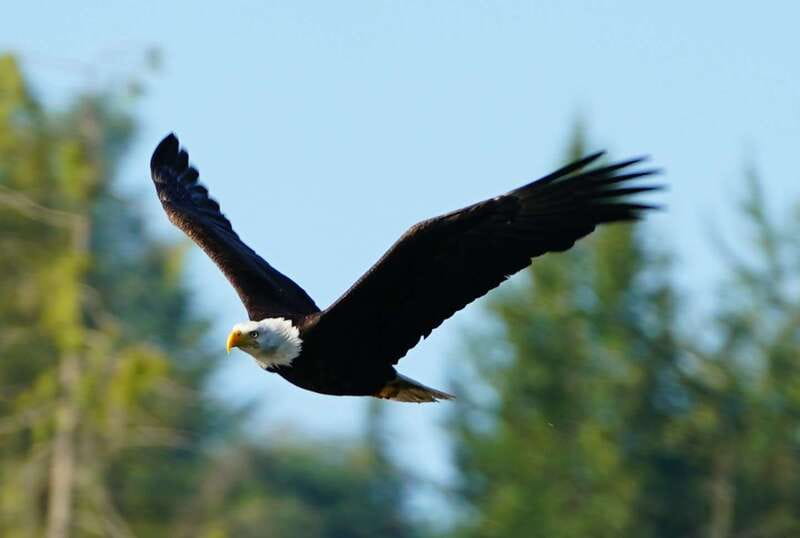
The boat leaves Campbell River and travels through the Salish Sea, with the route shaped by current conditions and reports of wildlife. You may look for orcas, humpback whales, white-sided dolphins, harbor seals, sea lions, bald eagles, and other coastal animals. A previous outing recorded dolphins, seals, orcas, eagles, and humpbacks, but no wildlife schedule can be promised.
That uncertainty is worth understanding before you pay $272. The tour is not a guaranteed whale performance. If a whale appears far away, that may be the best sighting the conditions allow. The value comes from the full combination of wildlife, boat time, cultural interpretation, and access to Aupe, not just from counting dorsal fins.
Wildlife watching without a false promise
The Salish Sea can deliver dramatic sightings, but animals move on their own terms. Your skipper may adjust the route to look for signs of whales or dolphins, and the timing of the trip can shift with those sightings. A calm stretch of water is not a failed outing. It is part of the real setting.
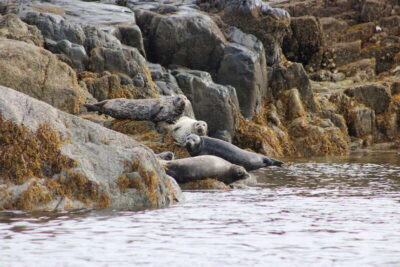
Orcas are among the most exciting possibilities, while humpback whales can offer a different kind of encounter. Dolphins may travel in groups, and bald eagles are often easier to spot than large whales. Harbor seals and sea lions add activity close to shore.
The tour description uses Homalco words for some of the animals. Qʷ̓ənɛs refers to whales, Q̓aykʷ to eagles, and Mɛxaɬ to the black bear that may sometimes be seen at Aupe. Taχəmay refers to cedar bark, which becomes important later in the visit. These words help connect wildlife and materials to the language of the people whose territory you are visiting.
Bring binoculars, but do not expect every animal to appear close to the boat. Keep your camera ready, yet give yourself permission to watch without it. Wildlife trips can become frustrating when every moment is spent trying to frame a perfect picture.
The possibility of a black bear at Aupe is a bonus, not a promise. The focus of the shore visit is the village site and the guide’s interpretation. If you see a bear, it will be a memorable addition. If you do not, the stop still has a clear purpose.
Stepping ashore at Aupe
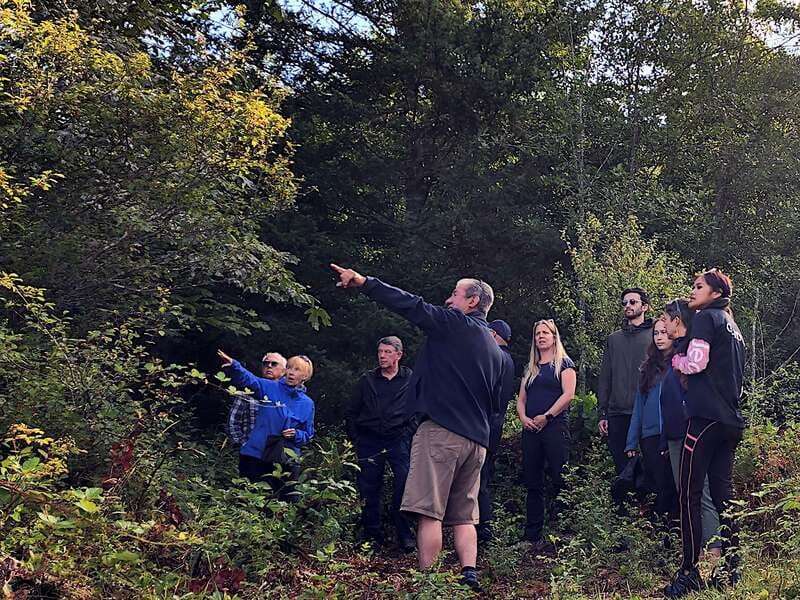
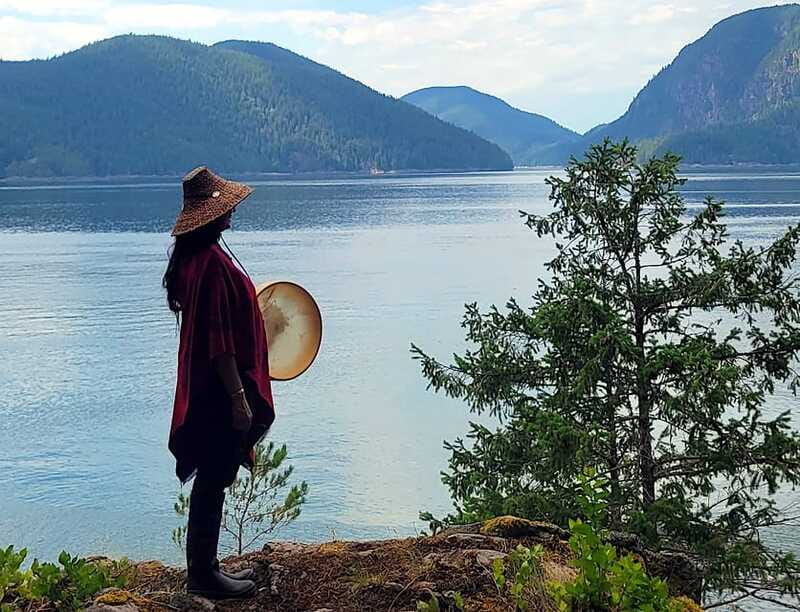
The boat ride leads to Aupe, also referred to as Schoolhouse or Church House beach in the tour information. This former Homalco village site once housed more than 250 people. You walk among the remains and natural growth while the guide explains what life was like in a remote coastal community.
This is where the experience gains weight. The village is not presented as a generic historic stop. The guide connects the place to Homalco families, everyday life, traditional practices, and the changes that led to the village being abandoned. Some parts of the past were good, and some were painful. You get a more honest sense of First Nations history than you would from a quick museum label.
Photographs of the village before it was abandoned help you picture the community as a lived-in place. Buildings have since been taken over by nature, so the walk requires some imagination. That is also its strength. You are not moving through a reconstructed display. You are seeing a real former village site, with the traces of the past set among the coastal surroundings.
Plan for about two kilometres on trails that may include slippery rocks and uneven ground. The walk is not described as a strenuous hike, but you need to be physically fit enough to manage the surface. People with back problems may find the outing unsuitable, and all participants need proper shoes.
The walking portion can be especially meaningful if you listen closely to the guide. Ask questions about the village, the names of places, and the meaning of the stories. The small group gives you a better chance to hear the answers and stay connected to the guide.
A completely different kind of day out on the same trip:
- Campbell River: Bute Inlet Grizzly-Watching Tour & Boat Ride
★ 5.0 · 61 reviews - Campbell River: 6-Hour Whale Watching Boat Tour
★ 4.9 · 46 reviews - Vancouver Island: Full-Day Grizzly Bear Tour at Toba Inlet
★ 4.5 · 37 reviews - Campbell River: Grizzly Bear-Watching Tour with Lunch
★ 4.7 · 33 reviews
Cedar bark, language, and living culture
The cedar bracelet activity is a simple but useful part of the day. You handle cedar bark and learn how to weave your own bracelet. This turns a cultural lesson into something you physically remember after the boat ride is over.
The activity also gives you a small window into the importance of cedar. The tour does not present the material as a craft-shop novelty. You learn through handling it, following the guide’s instructions, and seeing how a natural material can become part of daily and cultural practice.
The guide shares traditional stories, language, and legends during the visit. I appreciate that the cultural content is not squeezed into a short speech at the start or end. It is woven through the water journey, the shore walk, and the bracelet activity.
Homalco Wildlife & Cultural Tours is fully owned by the Xwémalhkwu (Homalco) First Nation. That ownership matters when you are deciding how to spend your money. The tour takes place in Homalco traditional territory, and part of the fee supports whale research, salmon restoration, youth cultural programming, and career opportunities for Homalco people.
That does not make the price irrelevant. At $272 per person, this is a major half-day expense, especially for a family. But the comparison should be with other guided wildlife and cultural outings, not with a simple boat transfer. Lunch, snacks, drinks, a skipper, a live English-speaking First Nations guide, a five-hour schedule, and a small group are included.
What the food and timing add
Lunch, snacks, and beverages are included, which keeps you from having to pack a full meal for a long morning away from town. Details about the exact menu are not provided, so contact the operator if you have dietary concerns.
The five-hour length gives the outing room to breathe. A shorter trip might offer wildlife viewing but leave little time for Aupe. Here, the boat ride and village visit support each other. The sea introduces the territory, and the walk gives you a better understanding of the people connected to it.
The early departure is the main tradeoff. You must wake up early, reach the meeting point on your own, and be ready for cool weather. In exchange, you get a full morning and avoid spending an entire day on one activity.
Routes and timing can change because of weather and sightings. That flexibility is necessary, but it means you should not schedule a tight appointment immediately after the noon return. Allow extra time for delays, particularly if wildlife keeps the boat out longer or conditions slow the journey.
Who will enjoy this tour most
This outing suits you if you want wildlife viewing with a strong cultural purpose. It is a good match for adults, older children, photographers who can work without a tripod, and anyone interested in First Nations history on Vancouver Island.
The minimum age is 10. Anyone aged 10 to 17 must travel with an adult aged 18 or older. Younger children cannot join, so this is not a preschool family outing.
You should also be comfortable with a small boat, a five-hour morning, and a shore walk over rough ground. The boat has indoor seating and a toilet, which improves comfort, but the excursion is still outdoors and subject to coastal weather.
It may not suit you if you have back problems, feel unwell, or cannot walk two kilometres on uneven and slippery trails. If you are sick before departure, the operator asks you not to participate in order to protect the crew and other people onboard.
Practical value at $272 per person
The price is high enough that you should know what you are buying. You are paying for a small-group experience, not a basic ferry ride or a short whale-spotting cruise. The cultural guide, access to Aupe, cedar work, meals, and support for Homalco programs make the package broader than wildlife viewing alone.
The strongest value comes when you care about the cultural side as much as the animals. If your only goal is to see a whale close to the boat, the price may feel risky because sightings cannot be guaranteed. If you want to understand the place you are visiting and support a First Nations-owned business, the cost is easier to justify.
The cancellation terms are fair. You can cancel up to two days in advance for a full refund, and you receive a full refund if poor weather or another unforeseen problem prevents the operator from running the tour.
The provider has operated for more than 20 years, and the experience is designed around a skipper and guide working together. That division helps: one person handles the boat and safety, while the other can focus on stories, questions, and the cultural setting.
Should you book People Water Land?
Book it if you want whale watching tied to place and people, not a wildlife ride with a few cultural comments added on. The visit to Aupe, Homalco language, cedar bracelet weaving, and First Nations ownership give this outing a clear identity.
Think twice if you need guaranteed close-up whale sightings, dislike early starts, or cannot manage uneven trails. Nature may offer only a distant whale, but the tour still has value through the village walk, the guide’s stories, the coastal journey, and the practical support built into the price.
For many people, that balance is the reason to choose it. You leave with more than a wildlife checklist. You gain a better sense of the Homalco connection to water, land, animals, and community.
FAQ
Where does the People Water Land tour depart from?
The tour departs from Campbell River. Meet at the marina area near the Tyee Plaza Shopping Centre, and do not park in spaces reserved for the Coast Discovery Inn.
How long is the experience?
The excursion lasts five hours. The stated schedule is generally 7:00 a.m. to 12:00 p.m., with check-in shortly before departure.
What is included in the price?
Lunch, snacks, beverages, and live commentary from a First Nations guide are included. The boat, skipper, and small-group experience are part of the tour.
How much does the tour cost?
The listed price is $272 per person.
What wildlife might I see?
Possible sightings include orcas, humpback whales, dolphins, sea lions, harbor seals, bald eagles, and other marine wildlife. A black bear may also be seen at Aupe, but sightings are not guaranteed.
Is the tour suitable for children?
The minimum age is 10. Participants aged 10 to 17 must be accompanied by an adult aged 18 or older.
How difficult is the walking portion?
You need to be fit enough to walk about two kilometres on trails that may contain slippery rocks and uneven ground. Hiking shoes or other suitable closed-toe footwear are required.
What should I bring?
Bring warm clothing, rain gear, hiking shoes, a camera, and binoculars. High heels, sandals, flip-flops, open-toed shoes, tripods, pets, alcohol, drugs, and smoking are not allowed.
What happens if the weather is too poor for the tour?
If the provider cannot operate because of poor weather or another unforeseen circumstance, you receive a full refund. You can also cancel up to two days in advance for a full refund.
Newest reviews from Campbell River
- Campbell River: Kayaking and Whale Watching Tour★ 4.6 · 8 reviews
- Campbell River: Grizzly Bear Expedition with Lunch★ 4.9 · 11 reviews
- Campbell River: 6 Hour Covered Whale Watching Tour w/ Lunch★ 3.8 · 11 reviews
- Campbell River: 4 Hour Whale & Wildlife Tour★ 5.0 · 13 reviews
- Campbell River: 7-Hour Big Animal Encounter Boat Tour★ 4.6 · 17 reviews
- Campbell River: Whale Watching Cruise with Lunch★ 4.9 · 20 reviews
- Campbell River: Whale Watching and Wildlife Viewing Day Tour★ 4.9 · 23 reviews
- Campbell River: 6 Hour Zodiac Whale Watching Tour w/ Lunch★ 4.6 · 31 reviews
Campbell River Tours, compared.
Campbell River: Whale & Wildlife Discovery Cruise
Read our review →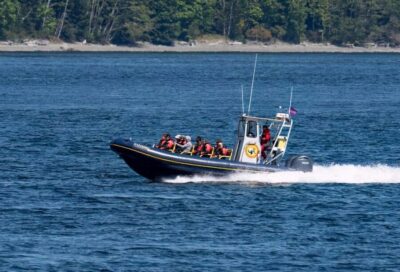
Campbell River: 4 Hour Whale & Wildlife Zodiac Boat Tour
Read our review →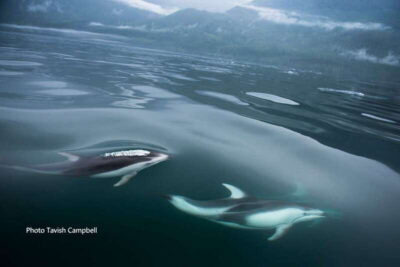
Campbell River: Salish Sea Whale Watching Adventure
Read our review →
Campbell River: Bute Inlet Grizzly-Watching Tour & Boat Ride
Read our review →
Campbell River: 6-Hour Whale Watching Boat Tour
Read our review →
Vancouver Island: Full-Day Grizzly Bear Tour at Toba Inlet
Read our review →
Campbell River: Grizzly Bear-Watching Tour with Lunch
Read our review →
Campbell River: Full-Day Grizzly Bear Tour With Lunch
Read our review →Browse the lists this tour appears in