
Reviewed · TORONTO TOURS
Toronto Essentials Tour: Old Town & Downtown Highlights (PWYC)
Toronto makes a fine first walk. This pay-what-you-can tour links Union Station, Old Toronto, and City Hall in a compact route, with useful city context rather than a string of photo stops. I like the strong mix of architecture and local stories, especially the Royal York, Brookfield Place, the financial district, and the contrast between old and modern City Hall. I also like the guides’ personal style. Michael, a retired history teacher, has been praised for his humor and clear storytelling, while Ulysses brings a sharp eye for architecture.
The main consideration is timing. The tour is advertised at about two hours, while the route is also described as taking about 90 minutes. Either way, it is a brisk introduction, not a full Old Toronto history lesson. Some places, including the Hockey Hall of Fame, are explained from outside rather than visited, and the route ends at City Hall instead of returning to Union Station.
In This Review
- Key points to know before you book
- Why this short Toronto walk works
- Finding the guide in Union Station’s Great Hall
- The CN Tower and the Royal York’s railway story
- Brookfield Place and Toronto’s underground PATH
- Hockey, the market, and useful pointers for later
- Berczy Park’s dog fountain
- St. James Cathedral and the old city
- Toronto’s banks and the Great Fire of 1904
- Nathan Phillips Square and modern City Hall
- Guides, group size, and walking pace
- Timing, price, and who should book
- Should you book the Toronto Essentials Tour?
- FAQ
- Where does the Toronto Essentials Tour begin?
- Where does the tour end?
- What time does the tour start?
- How long does the tour last?
- How much does the tour cost?
- Is the Hockey Hall of Fame included?
- What language is the tour offered in?
- What happens if I arrive late?
Key points to know before you book
- The meeting point is inside Union Station’s Great Hall, near the information booth under the central clock, not outside the station or in the food court.
- The CN Tower appears early as a skyline landmark, giving you a quick sense of Toronto’s scale and modern identity.
- Brookfield Place and the PATH add an unusual urban feature, with an introduction to Toronto’s underground pedestrian network.
- The route mixes old and new Toronto, from St. James Cathedral and railway hotels to glass towers and futuristic City Hall.
- The listed price is $4.50 per person, making this one of the cheapest guided ways to get oriented downtown.
- The group can reach 30 people, so expect a public walking tour rather than a private, intimate outing.
Why this short Toronto walk works
Toronto is a large city with a downtown that can feel disjointed at first. Railway buildings, office towers, underground corridors, old churches, sports attractions, and civic spaces all sit close together, but the connections are not always obvious when you are on foot.
This tour gives you that connection. You begin at the city’s major railway station and finish at Nathan Phillips Square, passing through the commercial core and Old Toronto along the way. I like this direction because it follows a sensible story: transportation helped build the city, money shaped its skyline, and public life gathers at City Hall.
The price is the clearest selling point. At $4.50 per person, the tour offers unusually good value if you want a quick overview without committing to an expensive sightseeing package. The guide’s commentary is the real product here. You are paying a small amount for orientation, background, and a few practical pointers that can save you time later.
You should keep your expectations in line with the price and length. This is not a museum tour, a food tour, or a detailed architectural study. It is a fast city walk with a guide who helps you notice what you might otherwise pass without understanding.
The tour is offered in English and uses a mobile ticket. It begins at 10:00 a.m., and the group may include as many as 30 people. That size is manageable, but you will need to stay close to the guide, especially in the PATH, where corridors and food courts can quickly become confusing.
A few more tours worth putting side by side
- Toronto: Niagara Falls Day Tour with Optional Boat Cruise
★ 4.6 · 3,178 reviews - Niagara Falls Day Tour from Toronto
★ 5.0 · 2,889 reviews - Toronto: Casa Loma Entry Ticket
★ 4.7 · 2,705 reviews
Finding the guide in Union Station’s Great Hall
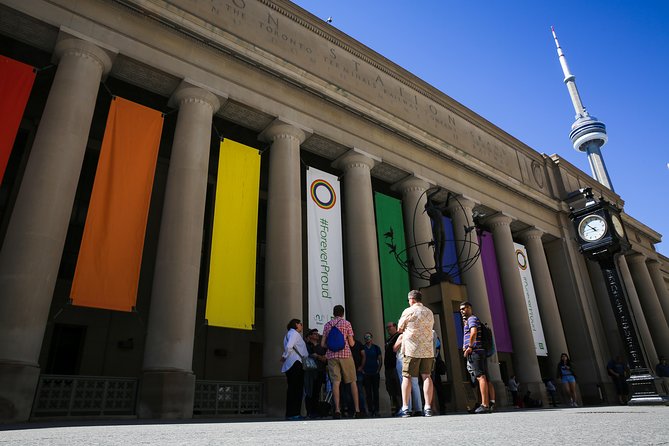
The starting point requires careful attention. Go inside Toronto Union Station from Front Street and find the Great Hall, a large above-ground room with a high ceiling and tall windows on both sides.
Look for the wall flags, the central information booth beneath a clock, and the names of railway destinations circling the upper interior. The guide meets near that information booth.
This detail matters because Union Station contains several spaces that could be mistaken for the meeting point. There is another tourist information centre, a food court, and a large clock outside on the sidewalk. None of those is the Great Hall. Arrive early enough to locate the correct room, especially if you do not know the station.
The tour leaves on time. If you arrive late, the guide cannot wait, so this is not a good activity to schedule immediately after a tight train connection. The station is near public transportation, which makes the start convenient if you are already downtown.
The Great Hall itself is a fitting place to begin. The railway names and grand proportions hint at Toronto’s role in connecting Canada from coast to coast. You get a sense of the old railway city before walking into the modern downtown.
The CN Tower and the Royal York’s railway story
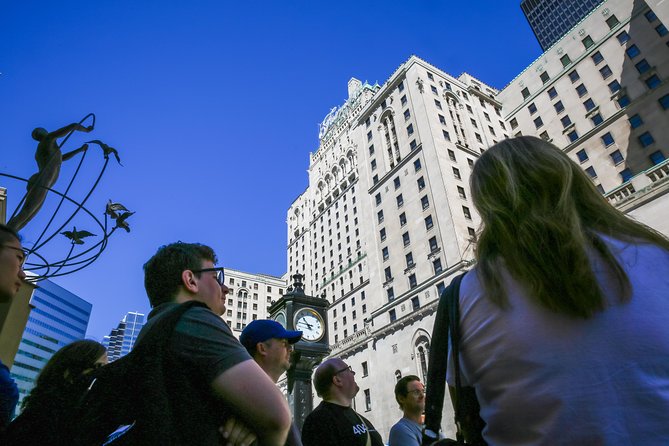
One of the first rewards is a view of the CN Tower. The guide explains how its great height improved television and radio reception in the 1970s, while also giving Toronto one of the most recognizable skylines in the world.
The tower was once the tallest free-standing structure on Earth, before Dubai’s Burj Khalifa took that title. The useful point is not just the record. From ground level, you begin to understand how the tower dominates Toronto’s identity and how strongly the city embraced modern engineering.
The walk also introduces the Fairmont Royal York, the grand railway hotel across from Union Station. It opened in 1929, an unfortunate moment just before the global economic crash. Railway companies built hotels like this near major stations to attract wealthy passengers to long journeys across Canada.
You will view the Royal York from outside. Tour groups are no longer welcomed into its lobby, so do not expect an interior visit. Even from the street, the building helps explain the close relationship between rail travel, luxury hotels, and Toronto’s growth.
I appreciate this part because it gives the city a practical frame. The CN Tower represents communications and modern ambition. The Royal York represents railways, wealth, and the older business city. Together, they make the skyline easier to read.
Brookfield Place and Toronto’s underground PATH
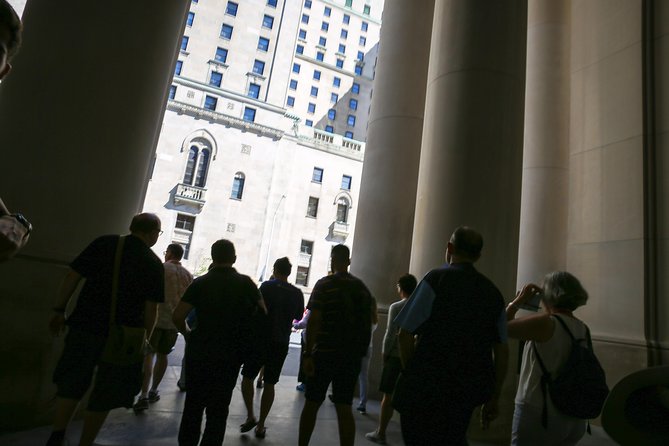
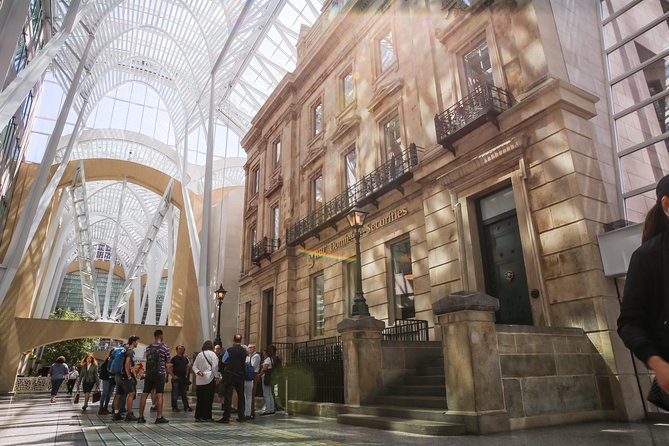
Brookfield Place is one of the walk’s most striking architectural stops. Santiago Calatrava designed the space, which is marked by high white steel arches and glass overhead. The result feels more like a grand indoor public hall than the basement of an office complex.
This is a good place to pause and look up. You may find that the building makes more sense as a public gathering space than as a simple passage between offices. It also gives the guide a chance to explain private public space in Toronto, where privately owned developments can provide areas used by the general public.
From here, you get an introduction to the PATH, Toronto’s underground network of corridors, shops, food courts, and connections to downtown buildings and nearby subway stations. The route includes part of the network rather than attempting to cover it all.
Stay close to the guide. The PATH is practical once you understand it, but it is not easy to navigate on a first visit. Corridors split, food courts blur together, and an underground walk can quickly turn into a small urban maze. The guide’s help is especially useful if you plan to use the PATH later in bad weather.
The underground route is also a reminder that Toronto has built a second downtown below the streets. You get only a taste of it here, but the introduction helps you see why office workers use this network and why visitors can lose their bearings inside it.
A completely different kind of day out on the same trip:
- Niagara Falls Canada Day Tour From Toronto + Boat Cruise Option
★ 5.0 · 2,576 reviews - Toronto: Harbor and Islands Sightseeing Cruise
★ 4.7 · 2,566 reviews - Toronto: City Sightseeing Hop-On Hop-Off Bus Tour
★ 4.3 · 2,544 reviews - Niagara Falls from Toronto: Skip-the-Line Boat & Skylon Tower
★ 5.0 · 2,406 reviews
Hockey, the market, and useful pointers for later
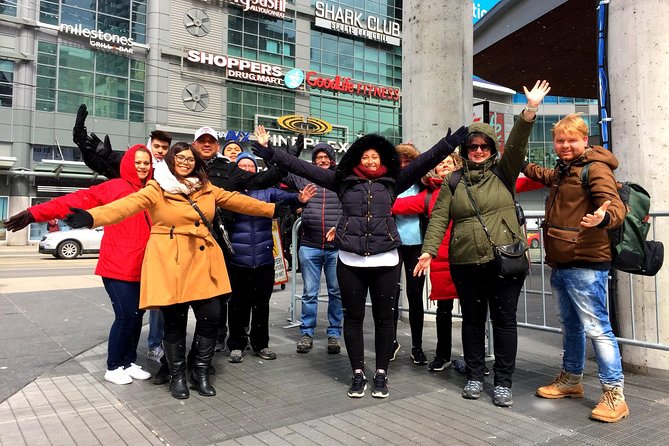
Hockey is part of Toronto’s civic identity, and the guide explains Canada’s official national winter sport along with the city’s long relationship with the Toronto Maple Leafs.
The tour does not visit the Hockey Hall of Fame itself. Instead, the guide helps you locate its entrance, which is surprisingly easy to miss, and gives you a reason to return if hockey interests you. One review specifically recommends viewing the Stanley Cup trophy, but that is not part of the walking route itself, so plan a separate visit if you want to see the museum.
The guide also gives pointers for visiting the market after the tour and explains its role in Toronto’s development. The supplied route does not provide a full market stop or tasting session, so treat this as practical follow-up advice rather than a market tour.
This is one of the tour’s better habits. A guide does not simply end the walk and send you away. You get suggestions for what to see next, including hockey and the market. Aaron was also praised for offering useful tips after the tour, which fits the experience’s wider purpose: help you make better choices with the rest of your time in Toronto.
Berczy Park’s dog fountain
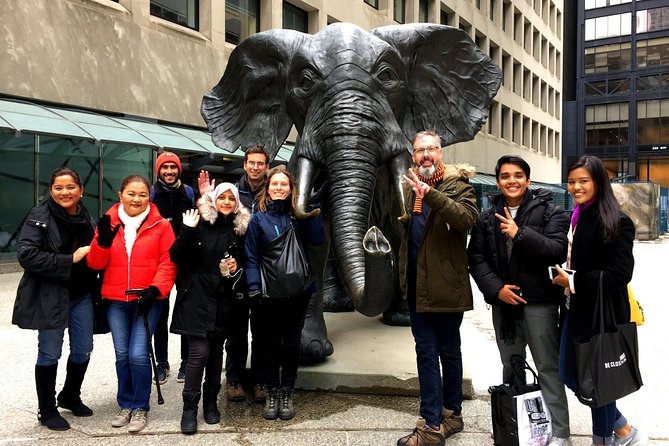
Berczy Park offers a change of pace from office towers and railway landmarks. Its famous dog fountain is playful, memorable, and easy to photograph.
The guide uses the fountain to explain why cities create public art and odd little attractions like this. It is a short stop, about five minutes, but that brevity works. You get a lighter moment between more serious discussions of finance, religion, and civic power.
I like including a small place such as Berczy Park on a city overview. Toronto is not only its tallest tower and largest banks. A public fountain with dogs gives you a glimpse of the city’s sense of humor and its interest in making downtown spaces enjoyable.
Do not expect a long park visit. This is a quick look and a story, not time to linger or explore every corner.
St. James Cathedral and the old city
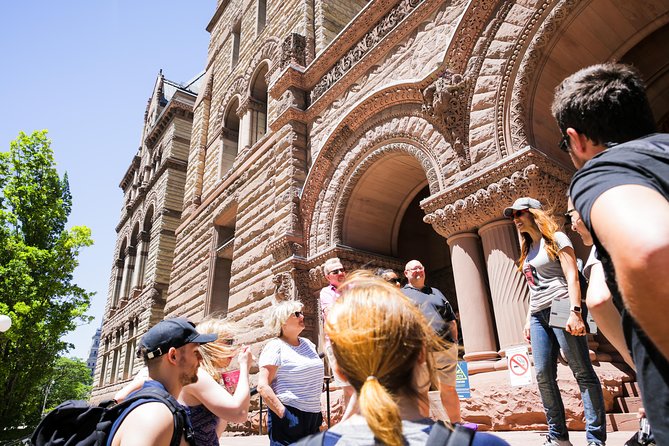
The Cathedral Church of St. James is the spiritual centre of Old Toronto and one of the route’s strongest historical stops. Its Gothic Revival design offers a sharp contrast to the surrounding glass and steel.
Here, the guide discusses the role of religion and politics in 19th-century Toronto, once known as Muddy York. That nickname points to a rougher, less polished city than the one you see today. St. James helps you picture the period when religious institutions and civic authority were closely linked.
The stop lasts about ten minutes. You will learn why the cathedral mattered, not simply that it is old. That difference is important. A quick architectural photo is easy to forget, but a story about power, belief, and city government gives the building a place in Toronto’s development.
You should not expect a full religious or architectural tour. The route gives you an introduction and moves on. For a first visit, that balance is sensible because the walk still needs to reach the financial district and City Hall.
Toronto’s banks and the Great Fire of 1904
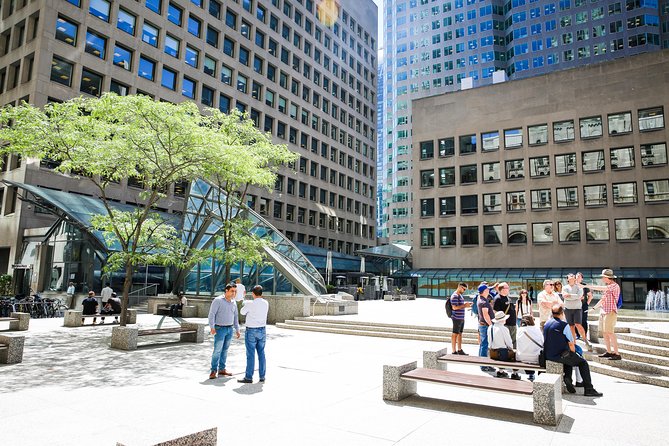
The financial district is where the tour’s city-building story becomes concrete. You walk among some of Canada’s largest skyscrapers and learn about the major Canadian banks, the people who work there, and the financial forces that shaped downtown.
The older bank buildings are a highlight. Their scale and decoration can make them feel almost like cathedrals, a comparison one guide used effectively. That description helps you look past the office function and notice the sense of ceremony built into these institutions.
The guide also covers the Great Fire of 1904, including the human story of John Croft. The event was not great for those caught in it, and the personal detail keeps the history from becoming a dry date in a timeline.
This is where the tour gives you a useful contrast with the earlier landmarks. The Royal York tells the story of railway wealth. St. James reflects religious and political authority. The bank district shows where much of modern Canadian money is organized.
The route may also point out Old City Hall, though the full story of that building is covered on another tour. You will likely receive a few extra facts, but this walk is not intended to give the building a complete treatment. If Old Toronto’s government buildings are your main interest, plan extra time or a separate history walk.
Nathan Phillips Square and modern City Hall
The final stop is Toronto City Hall and Nathan Phillips Square, a strong place to end. The 1965 building has two curved towers around a round council chamber, creating a futuristic form that was meant to announce Toronto as a modern provincial capital and national centre for culture and finance.
The building also reflects a mid-century love of concrete. That may sound blunt, but it gives the architecture a clear personality. You do not need to admire every detail to understand what the building was trying to say.
In front of City Hall, Nathan Phillips Square provides the public setting. It hosts New Year’s Eve gatherings, farmers markets, protests, public art, and other civic events. This is not just an open plaza for photographs. It is where Toronto presents itself as a city with a public voice.
The famous TORONTO sign makes an easy final photo. You can take a group picture or a selfie, then use the nearby public washrooms before continuing your day.
The contrast with Old City Hall is one of the tour’s central ideas. Old City Hall expresses an earlier era of stone, ceremony, and 19th-century civic confidence. Modern City Hall uses sweeping concrete and open space to signal a forward-looking metropolis. Seeing the two in the same downtown area helps you understand how Toronto changed its public image.
Guides, group size, and walking pace
The quality of a short walking tour depends heavily on the person leading it. The strongest feedback here focuses on clear explanations, humor, architecture, and enthusiasm.
Michael receives especially warm praise for combining light history, architecture, and entertaining stories. His background as a recently retired history teacher gives the walk a classroom feel without making it formal. David is also praised for explaining the city’s landmarks and for making the old bank buildings memorable.
Ulysses brings a different strength. His eye for architecture can help you notice details you might otherwise miss, and one review describes his commentary as useful beyond Toronto because it encourages closer attention in other cities. Aaron is praised for communication and for giving practical suggestions after the walk.
A group of up to 30 people is not tiny. You may need to position yourself near the guide to hear clearly, especially beside roads or in large public spaces. On the other hand, a group this size keeps the price low and makes the tour easy to join as a solo visitor, couple, or family.
Wear comfortable shoes and keep your hands free for the underground sections. The supplied information does not give a detailed accessibility assessment, so contact the provider if you need specific route information. Service animals are allowed, and most people can participate.
Timing, price, and who should book
The listed price is $4.50 per person, and that makes the value unusually strong. Even if you know a little about Toronto, it is hard to match that price for a guided walk connecting Union Station, the railway hotel, PATH, Brookfield Place, Berczy Park, St. James, the financial district, and City Hall.
The timing needs a little clarification. The overall description says about two hours, while the route is also described as 90 minutes. Allow up to two hours so you are not rushing to a lunch reservation or timed attraction afterward.
This tour suits you best if:
- You are visiting Toronto for the first time.
- You have only a morning or short stop downtown.
- You want city orientation before exploring on your own.
- You enjoy architecture, urban history, and practical local pointers.
- You want a low-cost activity near public transportation.
- You prefer a brisk walk instead of a long museum visit.
It is less suitable if you want entry into major attractions, a detailed visit to the Hockey Hall of Fame, a long market experience, or an in-depth Old Toronto history lesson. It also may not fit if you dislike fixed start times or group walks.
You can cancel for a full refund up to 24 hours before the 10:00 a.m. start. Changes or cancellations inside that window are not accepted, so keep the deadline in mind when planning.
Should you book the Toronto Essentials Tour?
Book it if you want a fast, inexpensive introduction to downtown Toronto. The route covers more ground than a simple landmark stroll, and the guides add the context that makes the city easier to understand.
The best reason to choose it is the combination of practical orientation and strong storytelling. You learn where the PATH runs, how to find the Hockey Hall of Fame, why the Royal York matters, how the banks shaped downtown, and why City Hall looks so different from Old City Hall.
Skip it if you need long visits inside attractions or a slow, highly detailed historical tour. For most first-time visitors, though, the $4.50 price and central start make this an easy choice, especially early in a Toronto stay. Finish at Nathan Phillips Square, take your photo by the sign, then use the guide’s pointers to plan the rest of your day.
FAQ
Where does the Toronto Essentials Tour begin?
It begins inside Toronto Union Station’s Great Hall at 55 Front Street West. Look for the guide near the information booth beneath the central clock.
Where does the tour end?
The walk ends at Nathan Phillips Square, in front of Toronto City Hall near the TORONTO sign.
What time does the tour start?
The scheduled start time is 10:00 a.m.
How long does the tour last?
The experience is described as approximately two hours, while the route is also described as taking about 90 minutes. Allow up to two hours.
How much does the tour cost?
The listed price is $4.50 per person.
Is the Hockey Hall of Fame included?
The tour does not visit the Hockey Hall of Fame. The guide points out how to find its entrance and shares information about hockey, so you can return on your own.
What language is the tour offered in?
The tour is offered in English and includes an English-speaking guide.
What happens if I arrive late?
The tour leaves on time, and the guide cannot wait for late arrivals. The meeting point is inside the Great Hall, not outside Union Station or in the food court.
Newest reviews from Toronto
- Toronto Landmarks★ 5.0 · 6 reviews
- Toronto: Niagara Falls Tour with Boat and Lunch★ 3.6 · 6 reviews
- Toronto: Muskoka Cranberry Farm and Hardy Lake Hike★ 5.0 · 6 reviews
- Niagara Falls Day Tour from Toronto w/ Tower, Journey & Boat Ride★ 5.0 · 6 reviews
- Travel Photo Session in Toronto★ 5.0 · 6 reviews
- The Toronto Wine Salon★ 5.0 · 6 reviews
- Paddleboard Eco Tour in Toronto Islands, Canada★ 4.5 · 6 reviews
- Ghosts of the Village at Black Creek★ 4.5 · 6 reviews
Toronto Tours, compared.
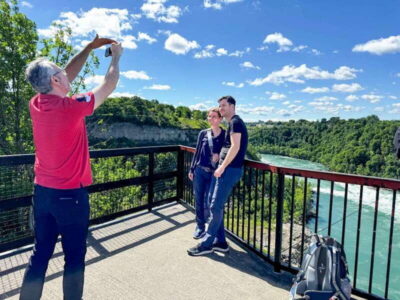
Niagara Falls Day Tour with Optional Boat Cruise
Read our review →


Niagara Falls Canada Day Tour From Toronto + Boat Cruise Option
Read our review →
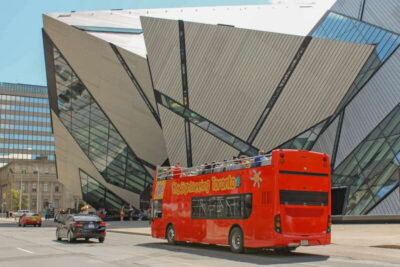

Niagara Falls from Toronto: Skip-the-Line Boat & Skylon Tower
Read our review →
Niagara Falls Tour + Boat Ride and/or Journey
Read our review →Browse the lists this tour appears in