
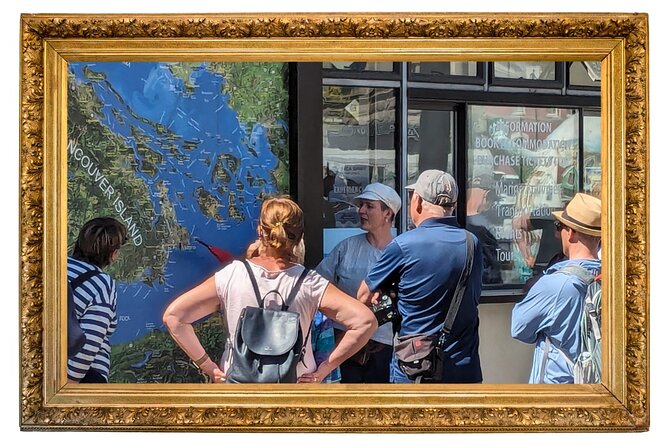
Reviewed · VANCOUVER ISLAND TOURS
Then & Now Walking Tour
Victoria hides its best stories in plain sight. This walking tour connects First Nations landmarks, colonial power, and Chinatown in a compact route through the city center. I like the sharp mix of memorable places and local storytelling, especially the contrast between Thunderbird Park and Fan Tan Alley. I also like that guides such as Helen and Claire add practical suggestions for restaurants, shopping, and entertainment.
The main drawback is the price: $220.32 per person is a serious spend for two to two and a half hours, especially since no attraction admission is included. The value depends on how much you want a personal introduction to Victoria rather than a quick stroll with a map.
At 9:30 a.m., you walk with a group of no more than 20 people, beginning near the Royal BC Museum and finishing in Chinatown. Bring water, dress for shifting West Coast weather, and allow extra time afterward to explore Fan Tan Alley and the surrounding streets.
In This Review
- Key details that shape the experience
- Why this walk makes sense for a first morning in Victoria
- Thunderbird Park and the Royal BC Museum opening
- The Empress Hotel and Victoria’s polished public face
- Trounce Alley, Morse code, and a little modern mischief
- Market Square and the city’s dividing line
- Bastion Square and the uncomfortable side of colonial law
- Fan Tan Alley and the final turn into Chinatown
- How the guides shape the walk
- Price, group size, and what you actually receive
- Weather, walking comfort, and timing
- Who should book the Then & Now Walking Tour?
- FAQ
- Where does the Then & Now Walking Tour begin?
- What time does the tour start?
- How long does the walking tour last?
- Where does the tour end?
- Is admission to the attractions included?
- Are children charged for the tour?
- What happens if the weather is poor?
- Should you book it?
Key details that shape the experience

- A six-stop walk through several versions of Victoria: The route moves from Indigenous cultural landmarks to British colonial institutions, then into Chinatown.
- The stories are the main attraction: Helen and Claire are praised for clear explanations, humor, improv, and tales of scandal, intrigue, gambling, and old city rivalries.
- The route ends in Chinatown: You finish near the Gate of Harmonious Interest or another preferred spot in the area, which makes it easy to continue exploring.
- No museum or attraction admission is included: The listed stops are viewed as part of the walk, so the price pays for the guided experience rather than entry tickets.
- Children 16 and under join free: This can make the total cost more reasonable for families.
- Weather matters: The experience may be canceled in poor weather, and you are expected to bring your own hydration and suitable clothing.
Why this walk makes sense for a first morning in Victoria
A good city walk should help you understand where you are, not just point at attractive buildings. This one gives you a useful framework for Victoria. You see how Indigenous culture, British colonial rule, commerce, law, immigration, and entertainment all shaped the small downtown core.
The route is short enough to fit into a morning, yet it covers several subjects that are often presented separately. At one point, you are looking at totem poles and a ceremonial building. Later, you are hearing about courthouses, jails, executions, gambling, and opium in Chinatown. That change of subject is part of the appeal.
I especially like the connection between past and present. Trounce Alley, for example, is not treated as a frozen historic lane. Its name ties to a practical old communication system, while its current shops and arcade show how the street has changed. The tour asks you to look at the modern city with a sense of what used to occupy the same space.
The walk is also a useful first-day choice because the guide can help you plan the rest of your stay. Helen is praised for offering restaurant, shopping, and entertainment ideas, and for being easy to talk with about many subjects. That sort of local orientation can save you from spending the rest of your visit circling the same few blocks.
More walking tours in Vancouver Island:
- Iconic & Obscure Walking Tour in Victoria
★ 4.5 · 29 reviews - Private Vancouver City Highlights Walking Tour
★ 5.0 · 22 reviews - Victoria Scavenger Hunt and City Highlights Walking Tour
★ 5.0 · 17 reviews
Thunderbird Park and the Royal BC Museum opening
The tour begins at 698 Government Street, close to the Royal BC Museum and the IMAX Victoria area. The first stop includes totem poles, Thunderbird Park, and the Ceremonial House, with about 20 minutes devoted to the location.
This is an important opening because it places Victoria in a wider cultural setting before the walk turns toward colonial buildings. The totem poles and ceremonial space offer a direct reminder that the city’s story did not begin with British settlement. A guide can give the setting more meaning than a quick photograph from the sidewalk.
The stop is listed with free admission, but that does not mean the tour includes entry to every museum facility or an IMAX screening. Think of this as an outdoor and orientation stop connected to the museum area. If you want a longer museum visit, plan that separately before or after the walk.
Twenty minutes is enough for an introduction, not a full examination of the museum’s collections. I see that as a sensible choice for a route covering six locations. You get context without spending the whole morning indoors.
The Empress Hotel and Victoria’s polished public face
From the museum area, the walk continues to the Empress Hotel National Historic Site of Canada. The stop lasts about 20 minutes and focuses on the hotel’s history and architect.
The Empress is one of the easiest places in Victoria to read as a symbol. Its grand exterior presents the city’s formal British identity, while the guide’s job is to explain how the building fits into Victoria’s growth and public image. You get more than a photo stop because the discussion covers both the building and the person who designed it.
The tour does not list a hotel admission, so you should not expect a full interior visit or a guided tour of private areas. The emphasis is on the site, its architecture, and its role in the city. If you want to see more inside, you can return on your own.
This is also a good place to notice the tour’s changing tone. Thunderbird Park introduces cultural traditions and Indigenous presence. The Empress then shifts to the city’s colonial and commercial presentation. That contrast is more useful than treating every landmark as an isolated photo opportunity.
Trounce Alley, Morse code, and a little modern mischief
Trounce Alley receives about 10 minutes, making it one of the briefest stops. The guide covers the reason for the name, Morse code, unusual shops, and an old-school arcade.
The details here sound small, but they are exactly the sort that can make a walking tour memorable. A street name becomes a clue. Morse code adds a communication angle. The shops and arcade show that old downtown lanes do not have to function as museum pieces.
I like this stop because it helps you notice the city at eye level. Major landmarks often get all the attention, but narrow lanes can reveal how people moved, traded, communicated, and spent leisure time. The arcade reference also adds a touch of humor after the formal Empress stop.
The time is short, so do not expect a long shopping break. If a shop catches your eye, note its location and return later. The walk is designed to keep moving.
A few more tours worth putting side by side
- Victoria Whale and Wildlife Cruise
★ 5.0 · 1,729 reviews - Cowichan Bay Half Day Whale & Wildlife Adventure
★ 5.0 · 393 reviews - Great Bears of Bute: Grizzly Bear Viewing & Indigenous Cultural Tour
★ 5.0 · 336 reviews - Vancouver Island Half-Day Whale Watching Tour – Telegraph Cove
★ 5.0 · 333 reviews
Market Square and the city’s dividing line
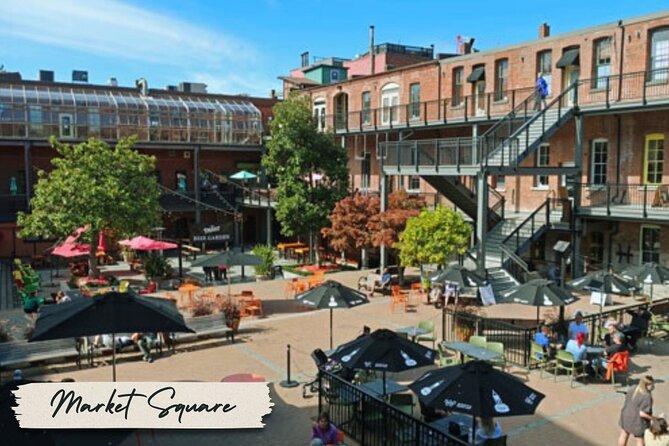
The next stop is Market Square, with roughly 10 minutes spent discussing the ravine that once divided European and Chinese colonists.
This is one of the most useful historical points on the route because it explains the city through geography. A ravine is not merely an old physical feature. It can become a social boundary, shaping who lived, worked, traded, and moved through an area.
Market Square today is a place to look around, but the guide’s account gives the surroundings a harder edge. You begin to see that Victoria’s neat historic center was also marked by separation and unequal power. That context matters when you later reach Chinatown.
Ten minutes will not cover every part of Market Square, and it is not meant to. The value is the connection between terrain and social history. Once you hear about the dividing line, nearby streets can look less random.
Bastion Square and the uncomfortable side of colonial law
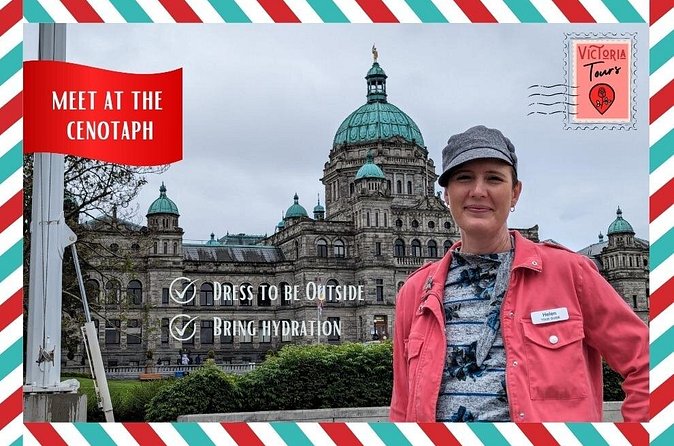
Bastion Square gets about 15 minutes. Here the focus turns to the courthouse, jailhouse, law offices, and public hangings.
This is where the tour moves away from postcard Victoria. Elegant streets and heritage façades can make the past look tidy. Stories about courts, jail, legal work, and hangings remind you that colonial government also relied on punishment and public control.
I appreciate this part of the route because it does not treat history as a string of pleasant anecdotes. The subject is darker, but it helps explain how authority worked in the growing settlement. A strong guide can keep the material engaging without turning it into a theatrical horror story.
The stop also gives you a chance to compare old institutions with the modern square around them. The buildings and street layout remain part of daily downtown life, even though their earlier uses were far more severe.
Fan Tan Alley and the final turn into Chinatown
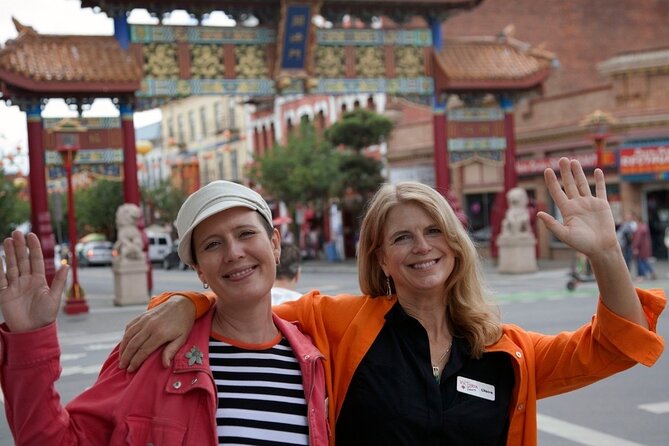
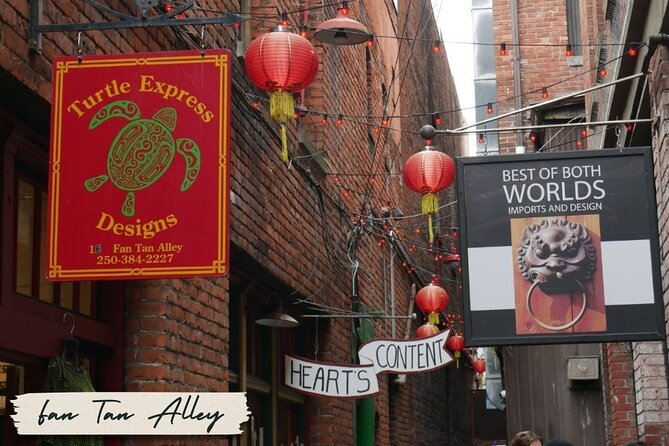
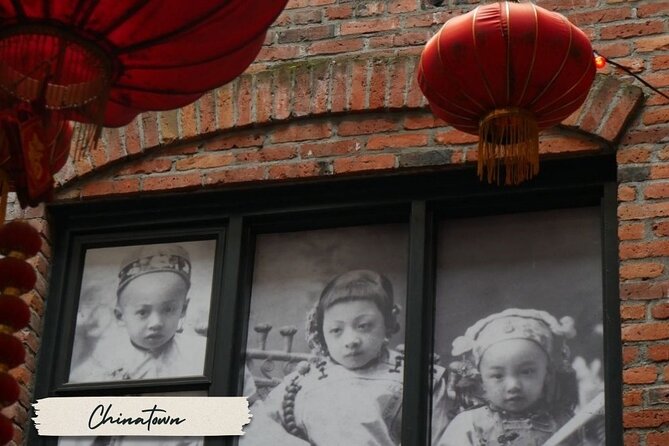
The tour ends with about 15 minutes in Fan Tan Alley, covering opium, gambling, and Chinatown’s place as the second-oldest Chinatown in North America.
Fan Tan Alley is a natural finale because it is physically distinctive and historically complicated. Its narrow passageway draws attention immediately, but the stories give it weight. You hear about businesses and activities that were part of Chinatown’s past, including gambling and opium, rather than receiving a simplified account of immigrant life.
The end point is 568 Fisgard Street, near the Gate of Harmonious Interest, or another preferred location in Chinatown. That is practical. You can finish the guided portion and keep walking through the area, look for food, or revisit the alley at your own pace.
Fifteen minutes is enough for a strong introduction, not a complete Chinatown tour. I would treat it as a starting point. Since the walk ends here, you do not have to rush away to reach another attraction. This is the place to slow down afterward.
How the guides shape the walk
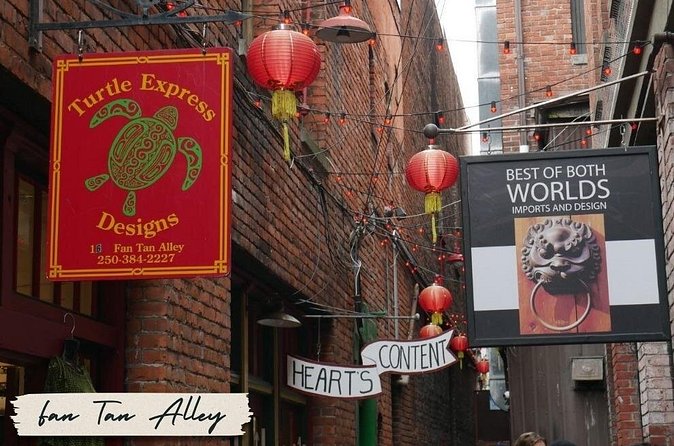
The strongest praise goes to the guides, particularly Helen and Claire. Helen is described as friendly, funny, easy to talk with, and highly informed about Victoria. Claire is praised for engaging explanations, unusual facts, and a little improv used to clarify a story.
That matters because the route includes several stops that could otherwise feel ordinary. A hotel exterior, a square, and a narrow alley do not explain themselves. The guide supplies the links between them and adds the scandals, local characters, and odd details that guidebooks often skip.
The tone also appears flexible. One account describes a dog enjoying the walk, and service animals are allowed. Another recommends the tour even for someone who had lived on Vancouver Island for years but usually avoided downtown congestion. That suggests the experience is not aimed only at first-time international visitors.
Still, guide-led tours vary by the person working that morning. The consistently warm descriptions of Helen and Claire are encouraging, but you should book this for the chance to learn from a local guide, not with the expectation that every story will be delivered in exactly the same way.
Price, group size, and what you actually receive
At $220.32 per person, this is expensive for a two-hour to two-and-a-half-hour walk. Since the stops list free admission, the cost is paying for the guide, planning, storytelling, and personal orientation rather than tickets.
For a solo visitor or couple on a tight budget, that may be too much. You can see many downtown landmarks without paying for admission. The case for booking is strongest if you want someone to connect the places, explain the difficult parts of the city’s past, and answer practical questions in real time.
The maximum group size is 20. That is not an intimate private walk, but it is small enough for a guide to keep the group together and respond to questions. If the group reaches its full size, your position near the guide may affect how easily you hear, so arrive ready to stay close.
Children 16 and under are free, which changes the calculation for families. A family with older children can receive a substantial amount of local context without paying four full adult prices. The content includes law, hangings, opium, and gambling, so parents should decide if those subjects suit their children.
Pickup is offered, yet the stated starting point is 698 Government Street. Confirm the pickup details when booking rather than assuming door-to-door service. The tour is offered in English, uses a mobile ticket, and confirmation arrives at booking.
Weather, walking comfort, and timing
The experience requires good weather. If poor conditions force cancellation, you are offered another date or a full refund. You can also cancel for a full refund up to 24 hours before the start time, but changes or cancellations inside that window are not accepted.
The practical advice is simple: bring water and dress for the weather. West Coast conditions can shift, and the route spends its time outdoors. A rain layer and comfortable shoes make more sense than dressing only for Victoria’s polished downtown appearance.
The start time is 9:30 a.m. That gives you an early look at the center and leaves much of the day open. Because the walk finishes in Chinatown, you can continue sightseeing from there instead of retracing the route to the beginning.
The route is near public transportation, and most people can participate. Service animals are allowed. No special fitness requirement is listed, but it remains a walking experience, so anyone concerned about distance or standing should check details before booking.
Who should book the Then & Now Walking Tour?
I would choose this walk if you are visiting Victoria for the first time and want the city’s main central districts to make sense quickly. It suits people who prefer stories, local context, and conversation over a checklist of photo stops.
It is also a good fit if you enjoy the less polished side of urban history. The route includes Indigenous cultural landmarks, colonial privilege, legal punishment, social division, Chinatown, gambling, and opium. The result is more honest than a tour that only celebrates grand hotels and pretty streets.
Families may find the free admission for children 16 and under useful. Dog owners may also appreciate the welcoming approach, though service animals are the only animals specifically confirmed in the tour information.
I would hesitate if you mainly want museum interiors, long shopping breaks, or a low-cost overview. The tour does not include attraction admission, and several stops last only 10 minutes. You are buying interpretation and access to a local guide’s stories, not a series of extended visits.
FAQ
Where does the Then & Now Walking Tour begin?
The stated starting point is 698 Government Street, Victoria, British Columbia V8V 2L8, near the Royal BC Museum and IMAX Victoria area.
What time does the tour start?
The tour starts at 9:30 a.m.
How long does the walking tour last?
The experience lasts approximately two hours to two hours and 30 minutes.
Where does the tour end?
It ends at 568 Fisgard Street in Chinatown, near the Gate of Harmonious Interest, or at your preferred location in the area.
Is admission to the attractions included?
The walking tour experience is included, and the listed stops have no admission charge. Separate admission to museum or other facilities is not included.
Are children charged for the tour?
Minors 16 years old and under are free of charge.
What happens if the weather is poor?
The experience requires good weather. If it is canceled because of poor weather, you are offered a different date or a full refund.
Should you book it?
Book the Then & Now Walking Tour if you want Victoria explained by a local guide who can connect its Indigenous, colonial, legal, commercial, and Chinese Canadian stories. Helen and Claire receive especially strong praise for warmth, humor, and unusual details, and the Chinatown finish gives you a useful place to continue on your own.
Skip it if $220.32 feels out of proportion to a short walk or if you prefer exploring independently. For the right visitor, though, the tour can turn a pleasant downtown stroll into a much clearer reading of Victoria, with practical advice for the rest of your stay.
Newest reviews from Vancouver Island
- Private Boat Charter Explore Southern Gulf Islands Tour★ 5.0 · 6 reviews
- Axe Throwing in Victoria★ 5.0 · 6 reviews
- Victoria Vistas and Views Progressive Food Tour★ 4.5 · 6 reviews
- Best of Victoria Group Tour w/ Malahat Skywalk & Butchart Gardens★ 5.0 · 6 reviews
- Wildlife, Waterfalls, Caves, Old Growth on Vancouver Island★ 4.5 · 6 reviews
- Sunset Zodiac Tour★ 5.0 · 7 reviews
- Victoria Alleyways and Ales Craft Beer Tour★ 5.0 · 7 reviews
- 5-Day Rocky Mountaineer Train Tour, From Vancouver to Rockies★ 4.5 · 8 reviews
Vancouver Island Tours, compared.
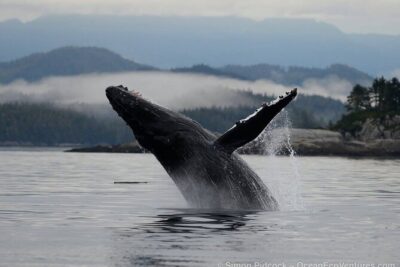
Cowichan Bay Half Day Whale & Wildlife Adventure
Read our review →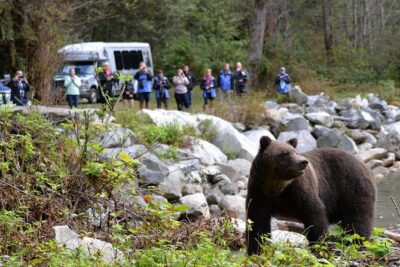
Great Bears of Bute: Grizzly Bear Viewing & Indigenous Cultural Tour
Read our review →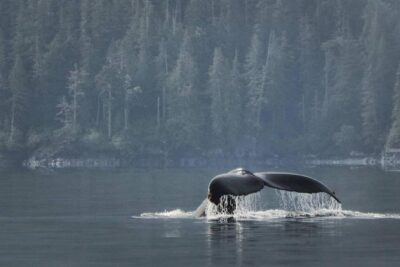
Vancouver Island Half-Day Whale Watching Tour – Telegraph Cove
Read our review →
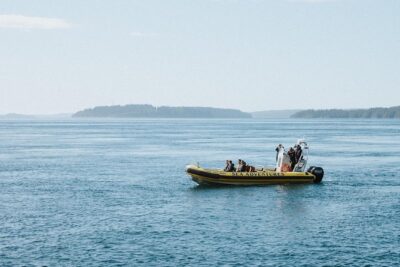
Vancouver Island Zodiac Whale Watching Adventure – Telegraph Cove
Read our review →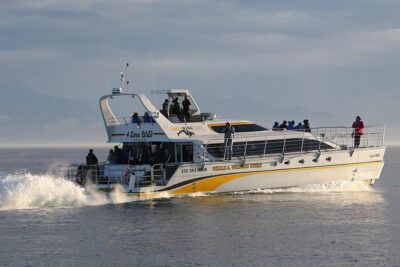
Browse the lists this tour appears in