
Reviewed · TORONTO TOURS
Sports, Street Skateboarding, Economics, History & Culture
Toronto rewards curious walkers. This 90-minute downtown tour links Nathan Phillips Square, the PATH, Bay Street, hockey landmarks, and Toronto’s street-skating culture in a way that gives familiar streets a fresh purpose. I especially like the mix of urban history and local stories, plus the personal touch from Duncan, a Toronto skateboarder who connects city life with the places you pass.
I also like the low price, $11.22 per person, and the useful Google Map of Duncan’s food, drink, and dessert picks. The main consideration is pace: you cover a lot in an hour and a half, and the tour depends on good weather, so this is not the right choice if you want long indoor visits or lots of time at each stop.
In This Review
- Key things to know before you book
- A short walk with a surprisingly broad subject
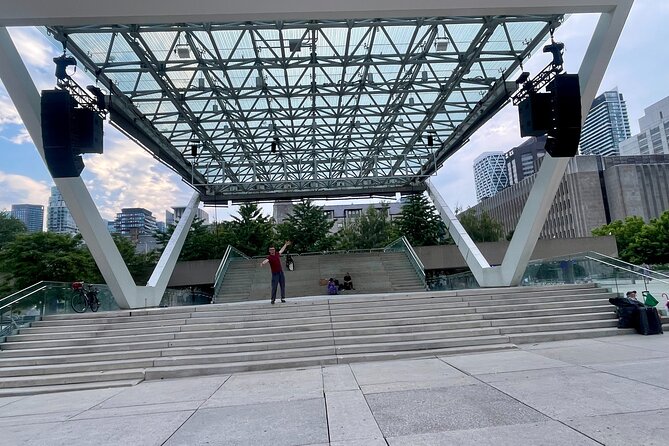
- Nathan Phillips Square and Toronto’s civic story
- Bay Street, Suits, and Toronto’s film problem
- Walking the PATH after the pandemic
- Bay Street and the financial district
- Street skateboarding and the city’s built form
- Brookfield Place and the NHL control room
- Legends Row, Raptors Way, and Toronto sports identity
- What the price and timing really mean
- Who will get the most from this Toronto walk
- Should you book Savant Tours?
- FAQ
- How long is the Toronto walking tour?
- How much does the tour cost?
- Where does the tour begin?
- Where does the tour end?
- Is the tour offered in English?
- How large can the group be?
- What happens if the weather is poor?
Key things to know before you book
- Toronto’s civic center opens the walk: Nathan Phillips Square brings together city history, the famous Toronto Sign, and the newer Reconciliation Garden.
- The PATH gets a real-world explanation: You learn how the underground network changed during the pandemic and how its shops now cope with hybrid work patterns.
- The film connection is specific: Bay Street includes the lobby used for Suits, along with stories about Meghan Markle’s time filming there.
- Skateboarding is central, not decorative: Duncan explains how downtown architecture helped launch professional careers and how street skating fits into Toronto today.
- The finish is sports-heavy: Brookfield Place, the NHL Situation Room, Legends Row, the Raptors’ 2019 title, and Raptors Way all appear before the walk ends.
- The group can reach 25 people: That keeps the price low, though a larger group may make it harder to hear every story in busy public spaces.
A short walk with a surprisingly broad subject
Savant Tours packs a lot into one compact route. You are not simply moving from one famous photo stop to another. The walk connects government, film, finance, public art, underground retail, skateboarding, hockey, and basketball.
That mix is the tour’s main appeal. One minute you are considering a public square and its civic meaning. Soon after, you are hearing about a television production, corporate towers, or the practical problem of finding your way through the PATH. The route feels designed for people who want to understand how downtown Toronto works, not just collect postcard views.
Duncan’s approach also matters. The information provided about the tour describes him as a local skateboarder with personal ties to Toronto. The praise around his guiding focuses on clear explanations, local anecdotes, personal memories, and a willingness to answer questions. That suggests a conversational walk rather than a formal lecture.
At $11.22, the value is easy to see. Even if you already know central Toronto, the Google Map of recommended places to eat, drink, and find dessert adds practical value after the walk. Duncan also offers travel advice at the end, which can help you shape the rest of your time in the city.
More Historical Tours in Toronto
- Toronto: Dark History Nighttime Walking Tour
★ 4.7 · 273 reviews - Toronto: Distillery District Historic Walking Tour
★ 4.8 · 267 reviews - Toronto Local Beer Tour: 2 Beers at 2 Unique & Historical Pubs
★ 5.0 · 154 reviews
Nathan Phillips Square and Toronto’s civic story
The walk begins at 100 Queen Street West, beside Nathan Phillips Square. This is a strong starting point because the square is both a major public gathering place and a useful introduction to Toronto’s present-day identity.
You learn about the square’s past and its role in hosting what is described as the largest event in Canadian history. The discussion also includes the well-known Toronto Sign by the ice rink. That sign is an obvious photo stop, but the explanation gives it more context than a quick snapshot would.
A particularly worthwhile detail is the attention to the Reconciliation Garden beside the square. One person who took the tour singled out this newer public space as a memorable part of the experience. That focus gives the opening stop more weight, since you are not hearing only about grand civic events and familiar symbols. You are also being pointed toward a place connected to how Toronto presents its values today.
You might also hear about overlooked details nearby, including the Law Society building and its fence. The appeal here is not architectural study in the traditional sense. It is Duncan’s habit of using small, easy-to-miss features to tell larger stories about the city.
The square can be busy, and the tour does not appear to include a long pause for independent exploration. If you want extensive time for photographs, arrive early or return later. For most people, the brief stop works best as an introduction to Toronto rather than a complete visit to the square.
Bay Street, Suits, and Toronto’s film problem
The Bay Street Corridor brings an unexpected change of subject. Here, the tour points out a lobby used for the television series Suits. The focus includes Meghan Markle, who played a paralegal on the show, and the attention she received from press, fans, and security while filming at the location.
This stop is listed as about 10 minutes, with no separate admission charge. That makes sense for a location-based film discussion. You are seeing the exterior setting and learning what happened there, rather than entering a studio or taking part in a production-related activity.
The story goes beyond celebrity trivia. You also hear about other productions filmed in the area and the difficulties facing Toronto’s film industry now. That broader angle is useful because it places a recognizable television location within the city’s working film scene.
I like this part for the contrast. The same downtown blocks serve as corporate offices, television backdrops, and everyday streets. You get a glimpse of how Toronto can represent other cities on screen while still dealing with the practical limits and pressures of its own film business.
If you have no interest in Suits, this will probably be a shorter part of the walk for you. The wider film-industry discussion should still give the stop some value, but the section clearly leans on the show’s popularity.
Walking the PATH after the pandemic
The PATH is one of the most useful parts of the route because it explains a system many people find confusing. You walk through a portion of Toronto’s underground network and hear how it developed, how its businesses were affected when the PATH closed during the pandemic, and how shops have adjusted to reduced foot traffic in a hybrid-work era.
This is practical city information, not just background. The PATH is built for movement between office towers, shops, and public spaces, but first-time users can struggle with its scale and changing directions. The tour also discusses the wayfinding technology used to help people navigate the network.
You should not expect to see the entire PATH. The walk covers only a portion, which is the sensible choice within a 90-minute schedule. Even so, the section can help you understand why the underground system matters to downtown workers and businesses, and why a change in office habits affects more than commuters.
The PATH may also be the most weather-friendly part of the route, but the tour as a whole requires good weather. That distinction matters. An underground section does not turn this into an all-weather activity, since other stops take place outside.
A completely different kind of day out on the same trip:
- Toronto: Niagara Falls Day Tour with Optional Boat Cruise
★ 4.6 · 3,178 reviews - Niagara Falls Day Tour from Toronto
★ 5.0 · 2,889 reviews - Toronto: Casa Loma Entry Ticket
★ 4.7 · 2,705 reviews - Niagara Falls Canada Day Tour From Toronto + Boat Cruise Option
★ 5.0 · 2,576 reviews
Bay Street and the financial district
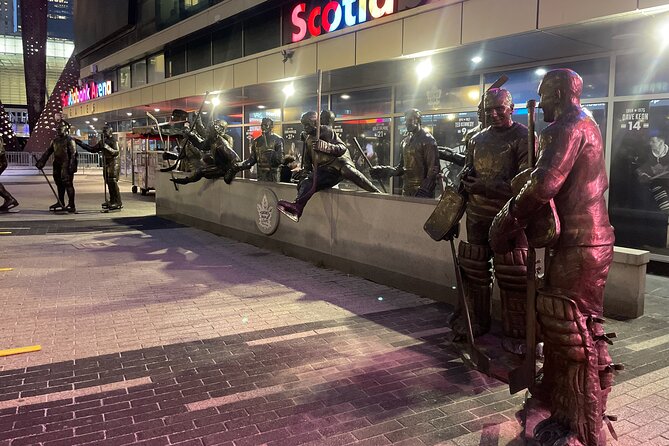
The financial district section adds economic context to the architecture around you. You learn about the district’s development, its importance to Canada’s economy, and the number of people employed there.
The value of this stop is the shift from looking at towers as scenery to considering what happens inside them. Toronto’s core is not only a collection of office buildings. It is a major employment center with a direct role in the national economy.
The tour also includes unusual visual details and public art. A striking example mentioned by someone who took the walk is the mesmerizing head sculpture installed in 2020. You may also hear stories about buildings and objects that are easy to pass without a second glance.
That is where Duncan’s style seems most useful. A standard sightseeing walk might identify a tower and move on. This tour tries to explain the small design choices, sculptures, and public spaces that give the financial district some personality.
The tradeoff is that the financial discussion may feel brief if economics is your main interest. The route has to make room for several other themes, so you receive a readable introduction rather than a detailed study of Canadian finance.
Street skateboarding and the city’s built form
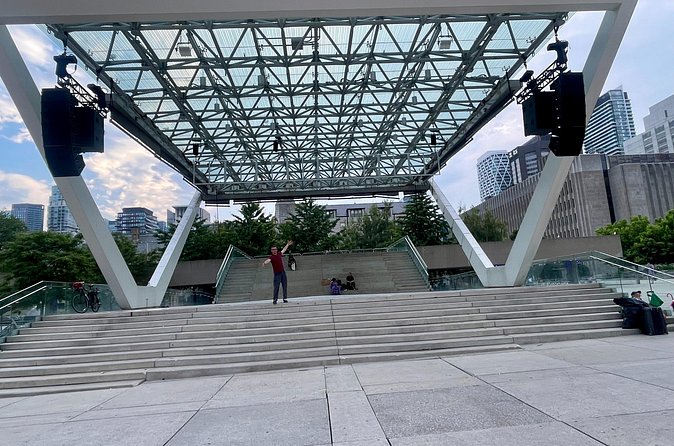
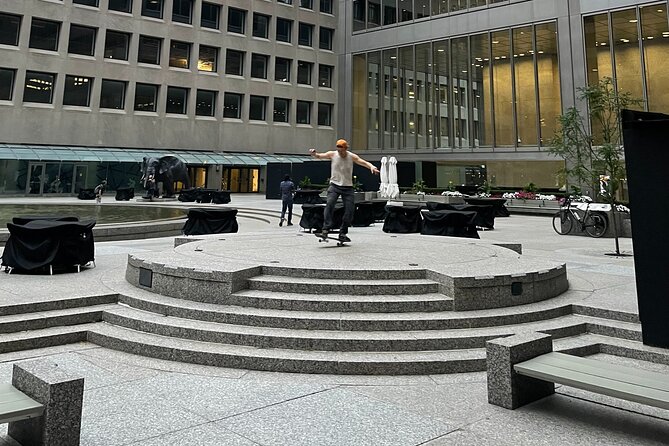
Street skateboarding is the feature that gives this walk its strongest personal identity. Duncan explains the history and development of downtown street skating, including professional skateboarders who began building careers by filming tricks on Toronto’s urban architecture.
This section helps you see downtown surfaces differently. Steps, rails, ledges, plazas, and other structures can be part of a city’s design for pedestrians, but they can also become places for athletic practice, filming, and self-expression.
The tour also looks at the current climate for street skateboarding downtown. That is important because the subject is not presented as a collection of old tricks and famous names. It includes the ongoing question of how a city shares public space among workers, shoppers, residents, skaters, and property owners.
You do not need to be a skateboarder to enjoy this section. The subject works as a way to discuss youth culture, public space, professional sport, and how people adapt the city to their own purposes.
This is also where the guide’s background makes the most difference. A general guide can point out a plaza, but a local skater can explain why a particular type of architecture matters and how filming in downtown Toronto shaped careers. The tour’s strongest praise centers on this connection between personal experience and city culture.
Brookfield Place and the NHL control room
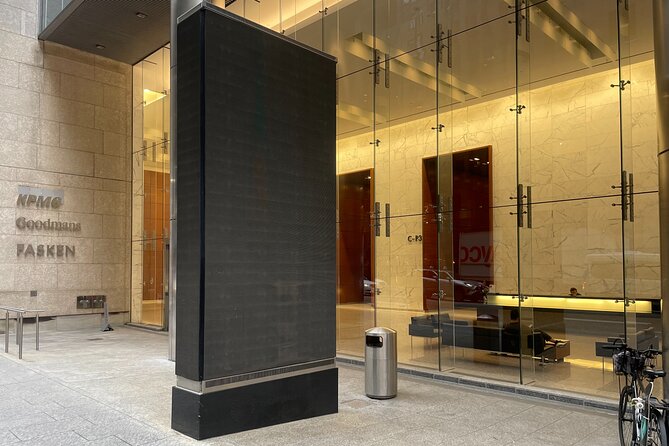
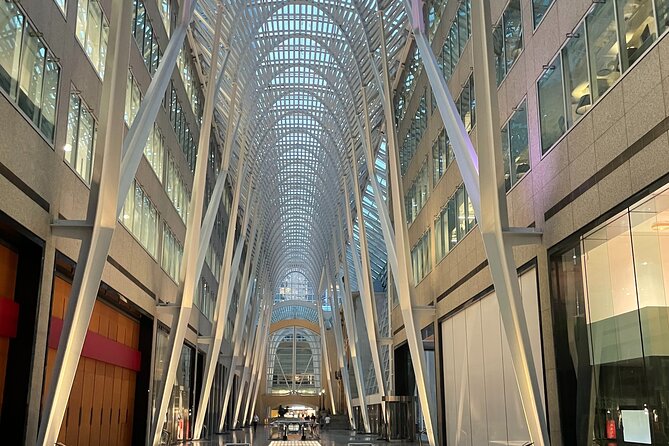
Brookfield Place is scheduled for about 20 minutes, making it one of the longer named stops. You learn about its architecture and history, then hear about the NHL Situation Room in the southwest tower.
The Situation Room gives the building a sports connection that many people would not expect. Its role in the National Hockey League helps explain how decisions and game-related matters are handled at the league level. You are not visiting the control room, but learning about its place in the NHL adds an insider detail to an otherwise architectural stop.
Brookfield Place also works visually. The building’s design gives Duncan material for discussing how old and new elements of downtown Toronto fit together. The stop is a useful bridge between the financial district and the sports landmarks ahead.
Since the tour is outdoors and moves through public areas, your experience will depend on how crowded the spaces are and how clearly you can hear. The maximum group size is 25, which is manageable, but it is still worth staying close to Duncan when he begins a story.
Legends Row, Raptors Way, and Toronto sports identity
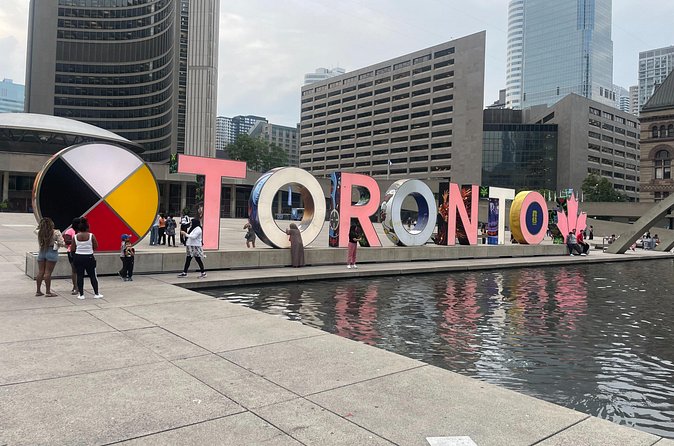
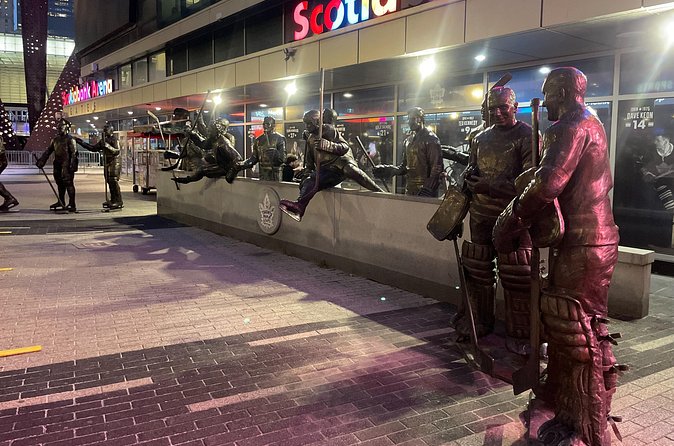
The walk ends at Legends Row outside Scotiabank Arena, at 19 The PATH in Maple Leaf Square. This finish brings together two of Toronto’s biggest sports identities: the Maple Leafs and the Raptors.
You learn about the artist behind the Legends Row sculpture and the former Maple Leafs players represented there. The sculptures offer an easy way to discuss hockey history without needing an arena ticket or a museum visit.
The basketball section covers the Raptors’ acquisition of Kawhi Leonard, the team’s 2019 NBA Finals win, and the renaming of Bremner Street to Raptors Way. It also addresses the challenge of attracting and signing top NBA talent when Toronto is the only Canadian team in the league.
That last point keeps the sports discussion from becoming pure celebration. The Raptors’ title is a major success story, but the team still faces a specific recruiting problem because of its location outside the United States. That kind of practical context is one reason the tour feels more thoughtful than a basic sports photo walk.
Ending at Legends Row is convenient if you plan to continue around Maple Leaf Square or Scotiabank Arena. It also gives the tour a clear finish, rather than leaving you in the middle of the business district wondering where the final story ended.
What the price and timing really mean
At $11.22 per person, this is one of the easier Toronto activities to justify. The price covers a guided walk of about 90 minutes, local stories across several subjects, end-of-tour planning help, and a personal Google Map with food, drink, and dessert recommendations.
The value is strongest if you use the guide as a starting point for the rest of your visit. The walk itself is short, but the recommendations may help you choose where to eat afterward or plan another part of the city.
The tour is often booked about 13 days ahead, so I would not leave it until the last morning if your schedule is tight. It is offered in English and uses a mobile ticket. Confirmation is provided when you book.
Free cancellation is available up to 24 hours before the start time. If you cancel later, you do not receive a refund, and changes made inside that 24-hour window are not accepted. Poor weather or failure to reach the minimum group size can lead to a new date or a full refund.
Service animals are allowed, public transportation is nearby, and most people can take part. The route is still a walking tour through downtown, so you should be comfortable walking for the full period and keeping up with the group.
Who will get the most from this Toronto walk
I would recommend this tour to first-time visitors who want a quick orientation with more personality than a standard downtown circuit. It is also a good fit for people who like public art, sports, film locations, city economics, or the way residents use public space.
It may be especially rewarding for Toronto locals. Several of the route’s details concern places that are easy to pass every day, including overlooked art, building features, and sections of the PATH. A local who wants new ideas about a familiar city could find plenty to take away.
Skateboarders and people interested in street culture have a clear reason to book. The skating material is not a side comment. It is one of the tour’s main threads and gives the whole route a point of view.
I would hesitate only if you want a slow architectural tour, a full PATH expedition, or lengthy stops inside attractions. This is a moving conversation across downtown, not a museum-style program with seats and extended viewing time.
Should you book Savant Tours?
Yes, if you want a low-cost, lively introduction to downtown Toronto that mixes major landmarks with details you could easily miss. Duncan’s local connection, skateboarding background, and personal stories give the route a clear voice, while the PATH, film, finance, hockey, and Raptors material keeps it varied.
Book it if you enjoy learning how a city functions and prefer stories about real streets, public art, work, sport, and local culture. Skip it if you need a fully indoor activity or want to spend most of your time at one attraction.
For the price, the combination of a 90-minute walk, planning help, and a food map is unusually useful. Just check the weather, wear comfortable shoes, stay near the guide in crowded areas, and leave room in your schedule to use the recommendations afterward.
FAQ
How long is the Toronto walking tour?
The tour lasts approximately 1 hour and 30 minutes.
How much does the tour cost?
The listed price is $11.22 per person.
Where does the tour begin?
It begins at 100 Queen Street West, Toronto, Ontario, M5H 2N2, Canada.
Where does the tour end?
The walk ends at Legends Row on Raptors Way outside Scotiabank Arena, at 19 The PATH, Maple Leaf Square, Toronto, Ontario, M5J 2J8, Canada.
Is the tour offered in English?
Yes, the tour is offered in English.
How large can the group be?
The tour has a maximum of 25 participants.
What happens if the weather is poor?
The experience requires good weather. If it is canceled because of poor weather, you can choose a different date or receive a full refund.
Newest reviews from Toronto
- Toronto Landmarks★ 5.0 · 6 reviews
- Toronto: Niagara Falls Tour with Boat and Lunch★ 3.6 · 6 reviews
- Toronto: Muskoka Cranberry Farm and Hardy Lake Hike★ 5.0 · 6 reviews
- Niagara Falls Day Tour from Toronto w/ Tower, Journey & Boat Ride★ 5.0 · 6 reviews
- Travel Photo Session in Toronto★ 5.0 · 6 reviews
- The Toronto Wine Salon★ 5.0 · 6 reviews
- Paddleboard Eco Tour in Toronto Islands, Canada★ 4.5 · 6 reviews
- Ghosts of the Village at Black Creek★ 4.5 · 6 reviews
Toronto Tours, compared.
Niagara Falls Day Tour with Optional Boat Cruise
Read our review →
Niagara Falls Canada Day Tour From Toronto + Boat Cruise Option
Read our review →
Niagara Falls from Toronto: Skip-the-Line Boat & Skylon Tower
Read our review →
Niagara Falls Tour + Boat Ride and/or Journey
Read our review →Browse the lists this tour appears in