
Reviewed · TORONTO TOURS
Private 2-Hour Walking Crime Tour in Toronto
Toronto has a darker side. This private walking tour pairs major downtown sights with stories of murder, riots, policing, corruption, and old Toronto scandals, led by a former detective. I like the personal insight from retired police guides and the way the walk connects crime to wider social change. I also like that your private group can shape the focus, which makes the experience more flexible than a standard city tour.
The main drawback is the brisk, two-hour walk. You cover roughly 6,500 steps, and the subject matter includes murder, violence, mental illness, executions, and a serial killer. This is not a gentle sightseeing stroll, but it is a strong choice if you want Toronto’s past served with a little grit.
In This Review
- Key things to know before you book
- Why this crime tour gives Toronto a different face
- From the Eaton Centre to the Year of the Gun
- Riots, the PATH, and Toronto’s criminal justice system
- Ambrose Small and the old courts of Toronto
- A wealthy murder and the Boyd Gang
- The Jarvis Duel and Toronto’s first gangland killing
- Circus clowns, firefighters, and a new police structure
- The Village murders and the debate over public morality
- Whiskey, ghosts, and bootlegging in the Distillery District
- Price, pace, and practical value
- Who should book this Toronto crime walk?
- Final verdict: A smart pick for curious city walkers
- FAQ
- How long is the Toronto Crime Tour?
- How much does the tour cost?
- Where does the tour begin?
- Where does the tour finish?
- What time does the tour start?
- Is this a private tour?
- Who leads the tour?
- What should I bring and wear?
Key things to know before you book
- The route links 15 stops: You walk from the Eaton Centre through Old Toronto and St. Lawrence Market to the Distillery Historic District.
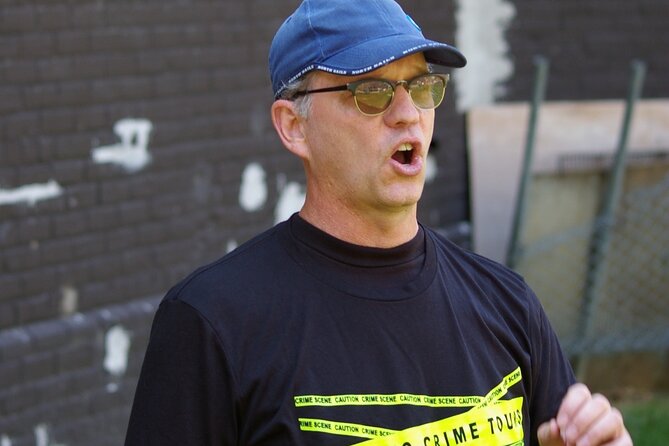
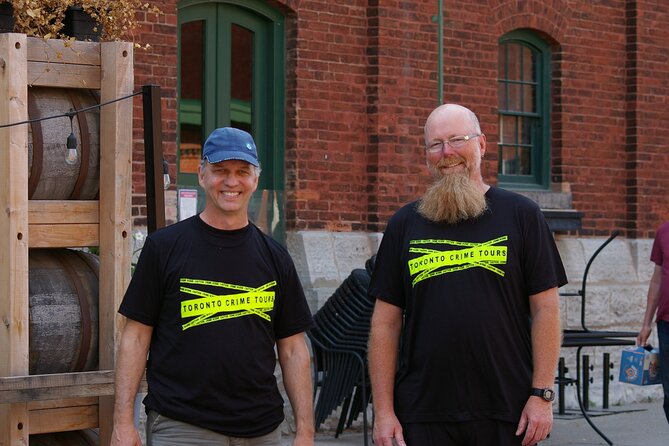
- Retired detectives lead the stories: Phil, Bob, and Dave have worked for Toronto Police Services, giving the tour a practical policing angle.
- It costs $28.21 per person: For a private two-hour-plus experience, that is a reasonable price, especially if your group wants a custom focus.
- The walk begins at 1:00 pm: Meet at 250 Yonge Street, beside the CF Toronto Eaton Centre, and finish at 55 Mill Street in the Distillery Historic District.
- The route is history through crime: You hear about the 1837 rebellion, the 2010 G20 riots, public executions, gangland killings, and changing police practices.
- Comfortable shoes matter: You must be able to walk for about two hours. Bring your own water, since bottled water is not included.
Why this crime tour gives Toronto a different face
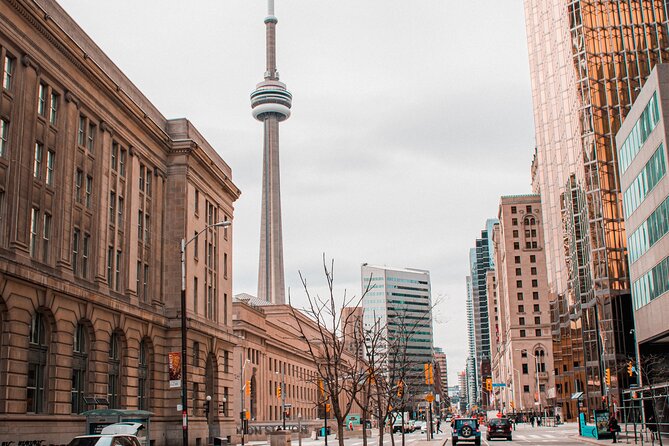
Toronto is often sold through its skyline, food, shopping, and polished downtown streets. This walk looks underneath that surface. You still see central Toronto, but each stop adds a story about how the city dealt with violence, disorder, law, prejudice, and public fear.
I like this approach because crime is not treated as a collection of shocking headlines. The stories show how Toronto changed after bad events. A murder helped push downtown cleanup. A riot led to changes in police organization. Court cases reveal which people had influence and which crimes once brought the death penalty.
The tour lasts about two hours and 15 minutes, although the listed stops are short, usually about five minutes each. Much of the time goes into walking between locations, listening as you move through downtown streets. One participant counted about 6,500 steps, so plan for a genuine walking tour rather than a series of quick roadside talks.
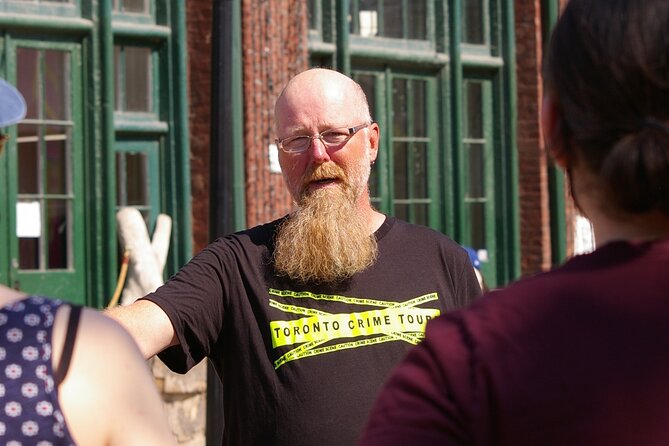
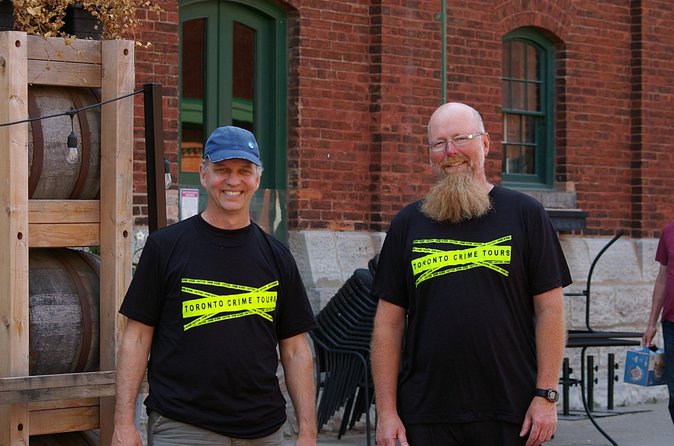
The guides may include Phil, Bob, or Dave. Their former work with Toronto Police Services is one of the tour’s strongest features. The stories have a direct connection to policing, criminal law, and the way cases affected the city. The style also seems friendly rather than grim. A brisk pace keeps the afternoon moving, and the full two hours can pass quickly if you enjoy crime and social history.
More Walking Tours in Toronto
- Show me the City! A Small Group Walking Tour of Toronto
★ 5.0 · 621 reviews - Toronto Distillery District Walking Tour
★ 5.0 · 327 reviews - Toronto: City Highlights Walking Tour | 3-Hour
★ 4.6 · 306 reviews
From the Eaton Centre to the Year of the Gun
The meeting point is 250 Yonge Street, at the CF Toronto Eaton Centre. This is a convenient place to begin because it is central and close to public transportation. It is also a useful reminder that modern Toronto grew from streets with a far rougher reputation.
The first story concerns the 1977 murder of a 12-year-old shoeshine boy. The killing shocked the city and helped spur a cleanup of the downtown core, which had become known for dirt and disorder. This is an important theme for the tour: crime does not happen apart from city planning and public policy. It can change the way residents see an entire neighborhood.
The route then continues along Yonge Street, where the guide discusses Toronto’s 2005 Year of the Gun. The focus includes the tragic death of a 15-year-old girl caught in crossfire during a Boxing Day street gang shooting. This stop brings the tour into recent memory and shows that Toronto’s crime story is not confined to old newspapers and forgotten courtrooms.
These early stops may feel emotionally heavy. The tour deals with real victims, not fictional mysteries, so it suits you best if you are comfortable with serious subject matter.
Riots, the PATH, and Toronto’s criminal justice system
Yonge Street also provides the setting for a wider look at Toronto’s riots. The stories range from the Upper Canada Rebellion of 1837 to the G20 riots in 2010. That long time span lets you compare political unrest in the 19th century with public disorder in a modern global city.
I find this kind of comparison useful because it keeps the tour from becoming a simple list of crimes. You hear how anger, politics, crowds, and authority can collide in different eras. The same streets have seen very different kinds of unrest.
A stop in the PATH shifts the subject from public disorder to the treatment of mentally ill people in the criminal justice system. The topic is more social than sensational, and it gives the walk some needed balance. You are asked to think about how institutions respond to people who need care, and how that response can overlap with policing and courts.
Because the stops themselves are brief, you should expect an overview rather than a detailed seminar on mental health policy. The value comes from the guide’s explanation and the chance to connect the topic with the city around you.
Ambrose Small and the old courts of Toronto
Downtown provides the setting for Toronto’s greatest unsolved mystery, the disappearance of wealthy theatre owner Ambrose Small in 1919. His vanishing is a classic mystery story, but the setting matters. Small’s money and public profile made the case especially gripping, and the lack of a final answer keeps it alive in Toronto’s memory.
You then reach Courthouse Square in Old Toronto, associated with the last public gallows in Canada. Here, the guide explains the strange range of offenses that once carried capital punishment, including stealing turnips and stealing cattle.
This stop is a useful correction to modern assumptions about crime and punishment. The law once treated property offenses with a severity that can seem startling today. A public gallows also turned punishment into a public event, rather than a closed legal procedure.
The short format works well here. You get the odd details that make the story memorable, but the guide can also explain how views of justice changed. If you prefer detailed legal history, you may want more time at each site. If you like sharp historical snapshots, the pace should suit you.
A completely different kind of day out on the same trip:
- Toronto: Niagara Falls Day Tour with Optional Boat Cruise
★ 4.6 · 3,178 reviews - Niagara Falls Day Tour from Toronto
★ 5.0 · 2,889 reviews - Toronto: Casa Loma Entry Ticket
★ 4.7 · 2,705 reviews - Niagara Falls Canada Day Tour From Toronto + Boat Cruise Option
★ 5.0 · 2,576 reviews
A wealthy murder and the Boyd Gang
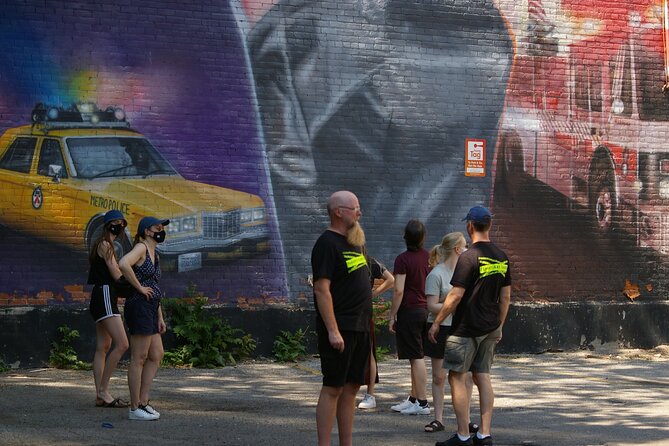
Old Toronto brings two very different crime stories. The first is the 1915 murder of Bert Massey, linked to the wealthy Massey Ferguson family. The case became known as the trial of the century, offering a look at how class, family reputation, and public attention shaped a major Canadian court case.
The subject is not only the murder itself. It also shows how Toronto reacted when a prominent family was connected to a criminal case. You get a glimpse of the city’s social divisions and the power that came with wealth.
Next comes the Boyd Gang, one of Toronto’s best-known criminal groups. The gang carried out bank robberies and escaped from the Don Jail twice. The story also includes the role of media sensationalism, which helped turn criminals into public figures while sometimes distracting from the harm caused by their crimes.
This is likely one of the more entertaining portions of the walk, but the guide does not present the gang as folk heroes. That balance matters. Crime stories can easily become glamorous when repeated as colorful local legend. Here, the escapes and robberies are placed alongside the way newspapers shaped public opinion.
The Jarvis Duel and Toronto’s first gangland killing

Near St. Lawrence Market, you hear about the Jarvis Duel of 1817. The event was the last duel of its kind in Toronto, at a time when personal disputes could lead to formal armed encounters.
The story helps explain how social status and personal honor once operated outside the modern court system. It also makes clear how much Toronto’s idea of acceptable behavior has changed. A duel may sound theatrical now, but it involved real danger and a very different view of justice.
In Old Town, the tour turns to Canada’s first gangland slaying in 1939. The guide also describes the sordid condition of The Corner, the area around Dundas and Jarvis. This stop adds a street-level view of crime, showing how certain corners gained reputations and how communities carried those reputations over time.
Since the route covers many centuries, some stops naturally receive only a quick treatment. I would pay close attention to the guide’s transitions, because the connection between the old neighborhood and the modern city is part of the point.
Circus clowns, firefighters, and a new police structure

One of the tour’s more unusual stories concerns a 1855 riot between circus clowns and the Hook and Ladder fire company. It sounds almost comic at first, but the aftermath had serious consequences. The conflict led to changes in the structure of Toronto Police, with effects that continued long afterward.
This is the sort of small, surprising incident that makes a city tour memorable. You learn that major institutions do not always change because of grand political plans. Sometimes a public fight exposes weaknesses in order and authority, forcing officials to respond.
The story also keeps the tour from becoming relentlessly grim. After murders, executions, and gang violence, a riot involving clowns offers a strange change of mood. Still, it remains tied to the larger question of how Toronto handled disorder.
The Village murders and the debate over public morality
Another serious stop concerns a serial killer who targeted gay men in The Village. Police initially said there was no proof or clear link among the victims. The case changed when eight victims were found buried in a ravine.
This is among the most difficult material on the route. It touches on murder, institutional failure, and the danger of ignoring a pattern because victims belong to a marginalized community. The subject calls for a respectful guide, and the former police connection gives the stop added weight.
The next story changes direction again: topless sunbathing in a park, and the question of whether it was illegal or immoral. This is not a murder mystery, but it fits the tour’s wider interest in changing ideas about behavior, public space, and social control.
Together, these two stops show how criminal law and public morality can overlap. Some acts create direct victims. Others become controversial because social standards change. The contrast makes the route more than a parade of shocking crimes.
Whiskey, ghosts, and bootlegging in the Distillery District
The final section reaches the Distillery Historic District at 55 Mill Street. This is a satisfying end point because the area has a strong connection to Toronto’s industrial past and to whiskey production.
The tour looks at the rapid growth of whiskey making at Gooderham & Worts in 1832. You also hear the question of whether Wort’s ghost still lingers in the area. The ghost story adds a touch of local atmosphere without changing the tour’s main focus on crime and history.
The last stop examines the Distillery complex’s rougher side, including bootlegging in 1922. That detail helps you see the district beyond its restored buildings and shops. Its past was tied to alcohol production, trade, and illegal activity, not just present-day dining and galleries.
Ending here is practical too. You finish in an area where you can continue your afternoon independently. The tour does not include bottled water, so bring your own drink, especially in warm weather.
Price, pace, and practical value
At $28.21 per person, this is fairly priced for a private experience lasting roughly two hours and 15 minutes. All fees and taxes are included, and only your group participates. That private format matters most if you want to ask questions, request more emphasis on a certain period, or avoid being folded into a large crowd.
The tour can be customized, but the available details do not spell out exactly how far that customization goes. I would treat it as a chance to discuss your interests, not a promise that the entire route can be replaced.
The walk begins at 1:00 pm and ends at the Distillery Historic District. Wear comfortable shoes and allow enough energy for a brisk route. Most people can participate, service animals are allowed, and the meeting points are near public transportation. You must be able to walk for about two hours.
Free cancellation is available if you cancel at least 24 hours before the start time. Changes or cancellations inside that window are not refunded. The experience requires good weather and a minimum number of participants, so poor weather or low enrollment can lead to a new date, another experience, or a full refund.
Who should book this Toronto crime walk?
I would choose this tour if you enjoy social history, police work, court cases, unsolved mysteries, and the macabre. It also suits locals who want to see familiar streets through a different lens.
The strongest reason to book is the guide connection. Phil, Bob, and Dave bring years of Toronto Police Services experience, and that background adds context you will not get from simply reading a plaque or walking past a courthouse.
I would skip it if you want light sightseeing, major architecture, or a slow photographic walk. The route is brisk, the stories can be upsetting, and the short stops leave little time to linger. You should also be comfortable walking 6,500 steps or so.
Final verdict: A smart pick for curious city walkers
Book the Private 2-Hour Walking Crime Tour in Toronto if you want the city’s difficult stories told by people with direct policing experience. The route covers an impressive span, from the 1817 Jarvis Duel and the 1837 rebellion to the G20 riots, the Boyd Gang, and recent Toronto violence.
The price is modest for a private walk, and the finish in the Distillery Historic District makes the route easy to fit into a downtown afternoon. Bring water, wear good shoes, and expect serious subject matter. If that sounds like your kind of sightseeing, this is a memorable way to understand Toronto beyond its polished surface.
FAQ
How long is the Toronto Crime Tour?
The experience lasts approximately two hours and 15 minutes. You should be prepared to walk for about two hours.
How much does the tour cost?
The listed price is $28.21 per person. All fees and taxes are included.
Where does the tour begin?
The tour starts at 250 Yonge Street, Toronto, Ontario M5B 2L7, near the CF Toronto Eaton Centre.
Where does the tour finish?
The tour ends at 55 Mill Street, Toronto, Ontario M5A 3C4, in the Distillery Historic District.
What time does the tour start?
The scheduled start time is 1:00 pm.
Is this a private tour?
Yes. Only your group participates, and the tour can be customized to suit your needs.
Who leads the tour?
The guides include former or retired detectives. Phil, Bob, and Dave are named as guides connected with Toronto Police Services.
What should I bring and wear?
Wear comfortable shoes because the tour involves about two hours of walking. Bottled water is not included, so bring your own beverage, especially on a warm day.
More 2-Hour Experiences
- Toronto: 2-Hour Downtown Walking Tour
★ 4.4 · 101 reviews - Toronto City Tour: 2-Hour Open-Top Experience
★ 4.4 · 64 reviews - Toronto: 2-Hour Kensington Market Chinatown Walking Tour
★ 4.2 · 37 reviews - 2 Hour Wilderness Adventure Snowmobile Tour in Whistler
★ 5.0 · 610 reviews
Newest reviews from Toronto
- Toronto Landmarks★ 5.0 · 6 reviews
- Toronto: Niagara Falls Tour with Boat and Lunch★ 3.6 · 6 reviews
- Toronto: Muskoka Cranberry Farm and Hardy Lake Hike★ 5.0 · 6 reviews
- Niagara Falls Day Tour from Toronto w/ Tower, Journey & Boat Ride★ 5.0 · 6 reviews
- Travel Photo Session in Toronto★ 5.0 · 6 reviews
- The Toronto Wine Salon★ 5.0 · 6 reviews
- Paddleboard Eco Tour in Toronto Islands, Canada★ 4.5 · 6 reviews
- Ghosts of the Village at Black Creek★ 4.5 · 6 reviews
Toronto Tours, compared.
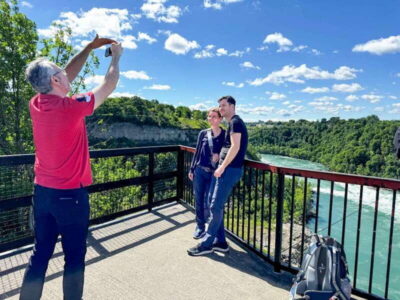
Niagara Falls Day Tour with Optional Boat Cruise
Read our review →

Niagara Falls Canada Day Tour From Toronto + Boat Cruise Option
Read our review →

Niagara Falls from Toronto: Skip-the-Line Boat & Skylon Tower
Read our review →
Niagara Falls Tour + Boat Ride and/or Journey
Read our review →Browse the lists this tour appears in