
Reviewed · QUEBEC CITY TOURS
Old Quebec Walking Tour with a Certified Local Guide
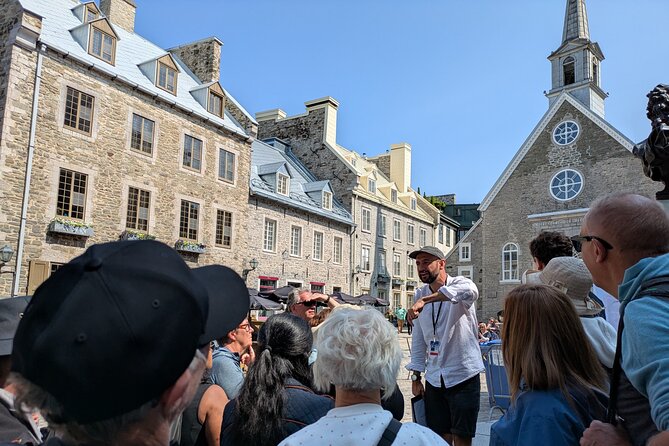
Old Quebec tells its story in stone. This two-hour walking tour links Parliament, fortified gates, Château Frontenac, and Place Royale with a local guide who adds the human details you would likely miss alone. I especially like the downhill route into Lower Town and the small group limit of 15, which should make it easier to hear, ask questions, and keep a comfortable pace. The main tradeoff is that the tour stays entirely outdoors, so rain, cold, or strong sun can affect your enjoyment.
I also like the price: at $18.78 per person, it is an inexpensive way to get your bearings before spending more time at museums, churches, restaurants, and viewpoints. Guide Jean-Simon receives repeated praise for his humor, clear storytelling, local roots, and passion for Quebec culture. Just remember that interior visits, transportation, bottled water, and weather gear are not included.
In This Review
- Key points at a glance
- Why this short walk works so well
- Starting at Fontaine de Tourny and Parliament
- Passing through Saint-Louis Gate
- The Ursulines and Quebec’s French foundations
- Old houses and layered architecture at Aux Anciens Canadiens
- Château Frontenac and Dufferin Terrace
- Three city icons near Quebec City Hall
- Reading the Quebec City Mural
- Ending at Place Royale in Lower Town
- What you get for $18.78
- Timing, weather, and group size
- Who should book this Old Quebec walk
- Should you book it?
- FAQ
- How long is the Old Quebec Walking Tour?
- Where does the tour begin?
- Where does the tour end?
- What language is the tour offered in?
- Is the tour entirely outdoors?
- How many people can join the tour?
- What should I bring?
- Can I cancel for a full refund?
Key points at a glance
- Starts beside Parliament: Meet at Fontaine de Tourny, in front of the Parliament Building, at least 10 minutes early.
- Walks downhill through Old Quebec: The route moves from Upper Town toward Lower Town and ends at Place Royale.
- Covers major sights in two hours: See the fortifications, Ursulines, Château Frontenac, Dufferin Terrace, City Hall, the Quebec City Mural, and more.
- Built around stories, not just photo stops: Expect background on politics, religion, architecture, colonial life, and Quebec identity.
- Small group format: The tour has a maximum of 15 people and is offered in English.
- Strong value for a first look: At $18.78, it gives you a useful introduction without taking up a full morning or afternoon.
Why this short walk works so well
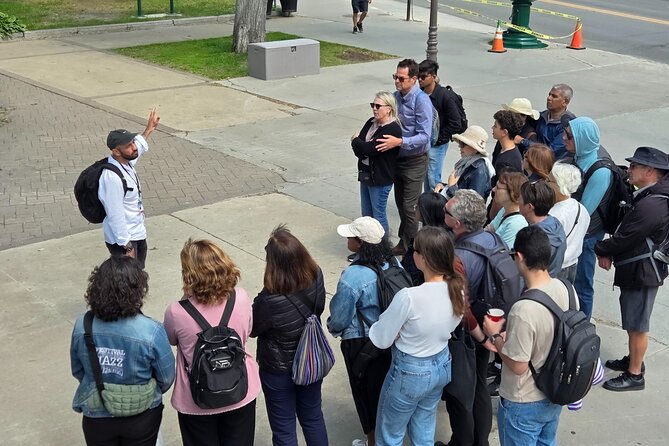
Old Quebec can feel compact on a map, yet its streets climb, drop, twist, and change character quickly. A first-time visitor can easily spend an hour admiring a handsome building without knowing why it matters. This tour gives you a basic framework, then leaves you free to return to the places that catch your eye.
I like the route because it begins in Upper Town near Quebec’s political center and finishes in the historic Lower Town. That direction matters. You are not simply marching from one attraction to another. You are moving through layers of the city, from provincial government and military defenses to religious institutions, grand hotels, public art, and the square tied to the beginnings of French settlement.
The format is efficient. You get about five to ten minutes at most stops, enough time for an explanation and a few photographs, but not enough for long interior visits. Think of it as a guided orientation walk rather than a museum tour or a full architectural study.
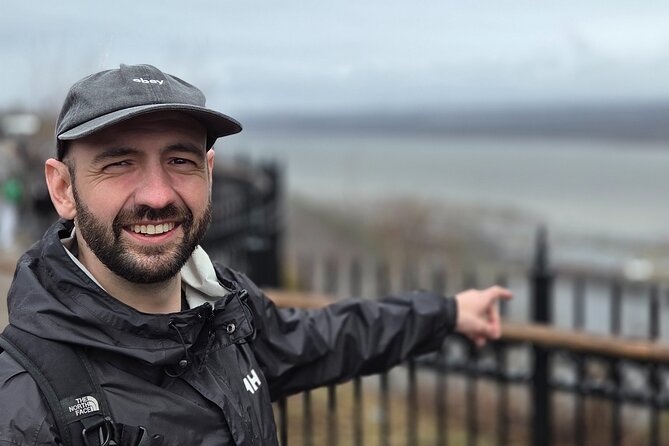
The guide is a major part of the experience. Jean-Simon is frequently praised for making dates and political events easy to follow, adding humor, and answering questions without making the walk feel like a classroom lecture. He is a native of Quebec and studied history at university, details that help explain the personal warmth and local perspective often associated with his tours. Guides can vary, so Jean-Simon is not guaranteed, but the experience is designed around a certified local guide.
More Walking Tours in Quebec City
- Quebec City Walking Tour
★ 5.0 · 4,716 reviews - Old Quebec City: Grand Walking Tour with Private Option
★ 4.8 · 2,609 reviews - Old Quebec Classique Walking Tour with Funicular
★ 5.0 · 1,317 reviews
Starting at Fontaine de Tourny and Parliament
Your meeting point is Fontaine de Tourny, on Place de l’Assemblée-Nationale, directly in front of the Parliament Building. Arrive at least 10 minutes early. That gives you time to locate the fountain, check in, and settle in before the walk begins.
The fountain is a practical landmark rather than a long stop. You will spend about five minutes here, then turn your attention to Parliament. Its French Second Empire design gives the opening of the tour a formal, grand look, with ornate details that reflect Quebec’s historic ties to France and the ambitions of the provincial government.
The Parliament Building is viewed from the outside. Your guide explains its role in Quebec’s political life and uses the building to set up the province’s larger story. This is a good opening because it connects the historic district to present-day Quebec rather than treating Old Town as a preserved stage set.
Do not expect to enter Parliament during this walk. The tour includes no interior visits, and all nine stops are outdoors. If you want more time for photographs or a closer look at architectural details, return after the tour.
Passing through Saint-Louis Gate
From Parliament, the walk continues toward Saint-Louis Gate, one of the main entrances through Quebec’s fortified town. The stop lasts about five minutes, but the subject is important: defense.
Quebec City’s walls are not just attractive stonework. They help explain why the city developed its particular shape and why Upper Town feels so distinct from Lower Town. At the gate, the guide discusses military defenses and the role of entrances in controlling movement through the city.
This is one of those places where a guide adds real value. You can walk through a gate on your own in seconds. With context, you begin to see it as part of a defensive system and a reminder that Quebec was once a contested colonial stronghold.
The route is generally described as easy and downhill, though the official advice calls for moderate physical fitness. You will be on your feet for two hours, so comfortable shoes make sense. The walk is not presented as difficult, but it is still a city walk over historic streets and should not be treated like a seated sightseeing excursion.
The Ursulines and Quebec’s French foundations
At the Pole Culturel du Monastere des Ursulines, you hear about the Ursuline nuns who arrived in the 1600s. The institution is one of the oldest in North America devoted to education, making this stop more than a quick religious-history note.
The Ursulines help you understand how French culture took root in Quebec. Their work involved education and community life, and their presence links the city’s colonial beginnings with the traditions that still shape Quebec society.
The stop lasts about 10 minutes, giving the guide enough time to explain the institution and its place in the city’s past. Again, you remain outside. If the subject interests you, treat the tour as a preview and consider returning later to explore the museum or interior spaces on your own, if open during your visit.
This is also where the tour’s balance between major landmarks and less obvious stories pays off. Château Frontenac may be the image you came to photograph, but the Ursulines offer a quieter look at how people lived, taught, worshipped, and built institutions.
More Old Quebec walks:
- Old Quebec City Food Tour with 10+ Autentic Local Tastings
★ 5.0 · 1,288 reviews - Old Quebec: Nordic Spa Thermal Experience
★ 4.8 · 914 reviews - Quebec City: Old Quebec Classic Walking Tour with Funicular
★ 4.9 · 695 reviews - Uncover Old Quebec: Fun Walking Tour of the City with Local Guide
★ 5.0 · 667 reviews
Old houses and layered architecture at Aux Anciens Canadiens
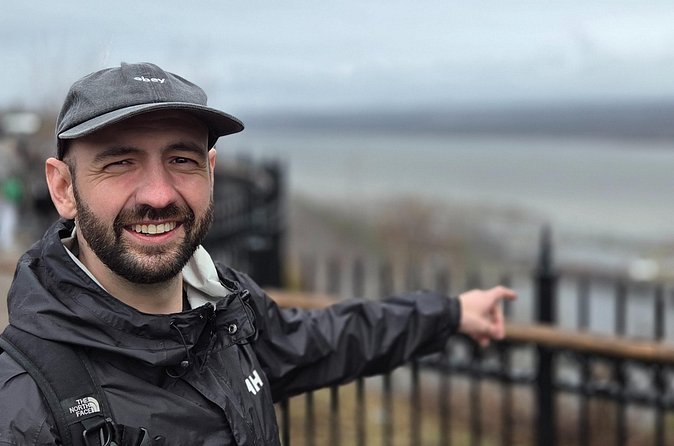
The corner near Aux Anciens Canadiens brings the focus back to domestic architecture. Your guide points out one of Quebec’s oldest houses and explains features shaped by both French and English colonial influences.
This kind of stop is easy to overlook. Old Quebec has so many attractive facades that the eye can slide over details such as rooflines, stone construction, windows, and the way buildings fit tightly along the street. A guide helps you read what you are seeing.
The stop is short, about five minutes, so you will not get an extended architectural lecture. That is probably a good thing. The tour keeps moving, and the stories remain connected to the street around you rather than turning into a list of dates and building names.
If architecture is your main interest, you may want to linger after the group moves on. The tour gives you a foundation, then you can examine the details at your own speed.
Château Frontenac and Dufferin Terrace
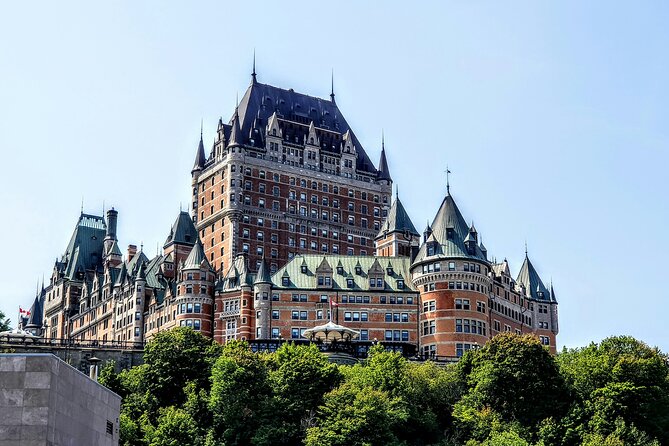
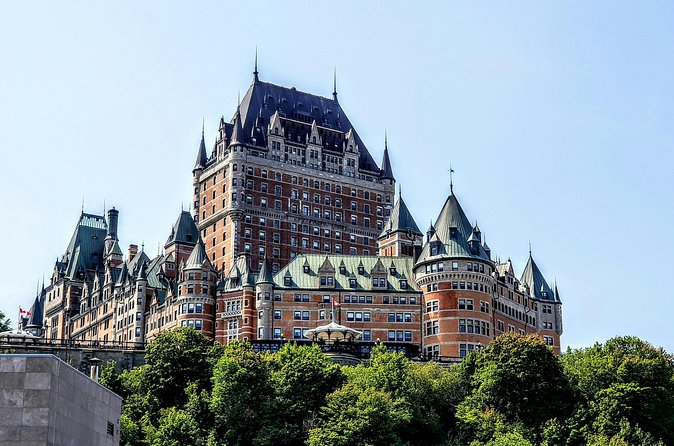
Château Frontenac is the visual centerpiece of the walk. The famous hotel dominates Quebec City’s skyline and has become one of the city’s best-known symbols. Your guide explains its history and why it matters to Quebec’s public image.
You view the hotel from outside, then continue along Terrasse Dufferin. This boardwalk provides views toward the St. Lawrence River and the city’s ramparts. It is one of the tour’s best photo opportunities, though the scheduled stop is only about 10 minutes.
Here is the one clear limitation to keep in mind. The tour gives you an introduction to Dufferin Terrace, but it does not allow much time to wander the full boardwalk or pause at every viewpoint. One review specifically wished for more time in this area. The guide’s practical approach is to show you the terrace, then let you return without the group if you want a slower look.
That advice makes sense. Group walks work best when they keep a steady rhythm. If you want long scenic pauses, plan to revisit Dufferin Terrace after the tour. You will already know where to go, and you can enjoy the river views without watching the clock.
Three city icons near Quebec City Hall
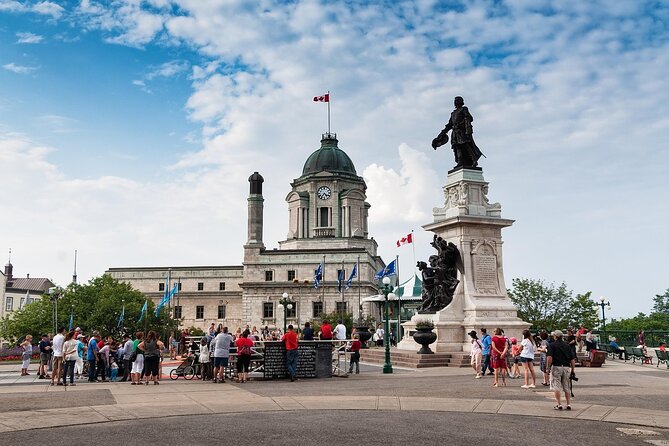
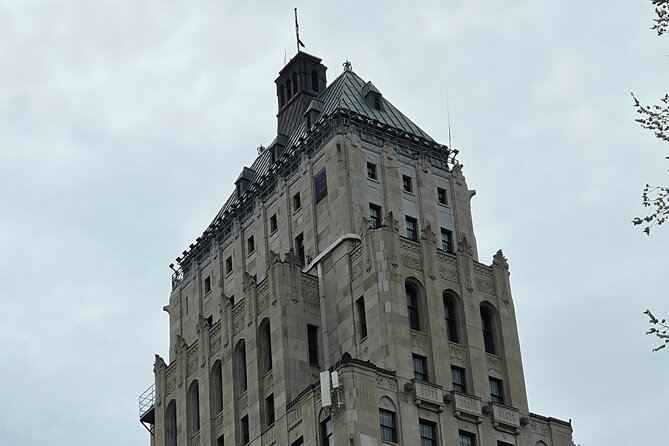
The next section brings together Quebec City Hall, the Art Deco Price Building, and Notre-Dame de Québec Basilica-Cathedral. Seeing these three in close succession gives you a compact lesson in the city’s changing styles and institutions.
City Hall represents civic government. The Price Building adds a twentieth-century Art Deco note. Notre-Dame de Québec Basilica-Cathedral points to the importance of Catholic faith in Quebec’s history and public life.
The contrast is useful. Instead of treating Old Quebec as one uniform historic district, the guide shows you how different periods sit side by side. Political power, business, religion, and modern design all appear within a short walk.
You see the buildings from the outside, and the stop lasts about 10 minutes. If the basilica is open and you want to enter, you will need to do that separately. The same applies to any museum or paid attraction along the route.
Reading the Quebec City Mural
The Mural des Québécois is a large trompe-l’œil artwork that brings famous figures and ordinary local people into one painted scene. The guide explains how it presents Quebec City’s story and culture through a single visual composition.
This stop adds welcome variety after the stone buildings, gates, and churches. You are not only looking backward at colonial history. You are also seeing how Quebec chooses to represent its identity in public art.
The planned visit lasts about five minutes. That is enough to understand the concept and take in the broad scene, but you may want extra time to inspect the painted figures and details. The mural rewards a closer look, especially if your guide points out people or references you would not recognize on your own.
Ending at Place Royale in Lower Town
The final stop is Place Royale, where the tour ends. This square is often described as the cradle of French civilization in North America, and its seventeenth-century stone buildings make a strong closing scene.
Ending here is practical. You finish in Lower Town, a different-feeling part of Old Quebec with narrow streets, historic buildings, and places to continue exploring. You can use the guide’s suggestions for dining, museums, and further walks, then choose what fits your schedule.
Place Royale also ties together the route’s larger themes. You have seen government, military defenses, education, religion, grand hotels, public art, and architecture. Here, those subjects come back to the early French colony and the growth of the settlement.
The guide can help you understand why the square mattered, but you should not expect a long free period at the end. If you want to sit, photograph the buildings, or explore nearby streets, plan to do so after the official two-hour walk.
What you get for $18.78
At $18.78 per person, this is a strong value if you want context without committing to an expensive private tour. The price covers about two hours with a certified local guide, and the route includes many of Old Quebec’s headline sights.
The real value is not the number of stops. It is the explanation connecting them. Without a guide, you can see Parliament, a gate, a hotel, a mural, and a historic square. With the right guide, you understand how politics, military strategy, religion, architecture, and local identity overlap.
The tour also offers practical suggestions for restaurants, museums, and places to explore later. That can save time, especially if you schedule it on your first full day. Several direct comments about the experience point to this strategy: use the walk to get your bearings, then return to the places that deserve more time.
The low price does come with limits. There are no admissions, drinks, transportation, or weather supplies. You are paying for the walking route and commentary, not a package of attractions.
Timing, weather, and group size
The tour is offered in English and accepts mobile tickets. It is capped at 15 people, a useful limit for an outdoor walk where street noise and passing crowds can make hearing difficult.
The route takes approximately two hours. It begins at Fontaine de Tourny and ends at Place Royale, so you should plan your day around the end point rather than assuming you will return to Parliament. Public transportation is nearby, but transportation to and from either meeting point is your responsibility.
Bring water, since bottled water is not supplied. Bring an umbrella or rain gear if the forecast is uncertain. The tour operates outdoors, and the provider does not supply umbrellas or other personal equipment.
The pace is intended to be comfortable, with time for rest and questions. Still, you should be able to walk for two hours and manage historic city streets. If you have mobility concerns, the walk may feel manageable based on the reported pace, but the official guidance is moderate physical fitness, so consider your own needs carefully.
Who should book this Old Quebec walk
I would choose this tour for a first visit, especially if you want a short introduction before exploring independently. It suits couples, families, and friends who prefer stories and context over a rapid checklist of photo stops.
It is also a good fit if you enjoy local perspective. Jean-Simon is repeatedly praised for humor, warmth, clear English, and pride in Quebec culture. That combination can turn a standard history walk into something more personal and easier to remember.
You may want a different format if you need interior access, extensive museum time, a private pace, or a full-day experience. The route gives you highlights, not every corner of Old Quebec, and Dufferin Terrace in particular deserves a separate visit if you want to linger.
Free cancellation is available up to 24 hours before the start time for a full refund. Cancellations or changes made less than 24 hours before the start are not accepted for a refund.
Should you book it?
Book this tour if you want an affordable, well-paced introduction to Old Quebec with strong local storytelling. The downhill route, small group limit, clear English commentary, and convenient Lower Town finish make it especially useful early in your stay.
I would not book it expecting a full sightseeing day or access inside the major buildings. Instead, use it as a smart first pass. Let the guide explain the city, note the places you want to revisit, then return to Château Frontenac, Dufferin Terrace, the basilica, the mural, or Place Royale on your own. At $18.78, that is a sensible way to begin.
FAQ
How long is the Old Quebec Walking Tour?
The tour lasts approximately two hours.
Where does the tour begin?
It begins at Fontaine de Tourny on Place de l’Assemblée-Nationale, in front of the Parliament Building in Quebec City.
Where does the tour end?
The tour ends at Place Royale in Lower Town.
What language is the tour offered in?
The tour is offered in English.
Is the tour entirely outdoors?
Yes. The tour is 100% outdoors, and interior visits are not included.
How many people can join the tour?
The tour has a maximum group size of 15 travelers.
What should I bring?
Bottled water, umbrellas, rain gear, and other personal equipment are not provided, so bring what you need for the weather and a two-hour walk.
Can I cancel for a full refund?
Yes. You can cancel at least 24 hours before the experience start time for a full refund. Changes or cancellations made less than 24 hours before the start are not accepted for a refund.
Newest reviews from Quebec City
- YQB Airport Transfer★ 5.0 · 41 reviews
- Immersion Quebec: Virtual Reality Experience of Quebec City’s History★ 4.5 · 51 reviews
- Quebec City – Regular Bike Rental on Ile d’Orléans★ 4.6 · 52 reviews
- Snowshoeing Tour in Jacques-Cartier National Park★ 5.0 · 55 reviews
- Québec: Fortifications-of-Québec Guided Walking Tour★ 4.7 · 60 reviews
- Christmas Magic in Old Quebec★ 4.5 · 61 reviews
- Quebec City: MNBAQ National Fine Arts Museum Entry Ticket★ 4.6 · 63 reviews
- Quebec: City Tour, Montmorency Falls & Île d’Orléans Tour★ 4.5 · 68 reviews
Quebec City Tours, compared.

Half-Day Trip to Montmorency Falls and Ste-Anne-de-Beaupré from Quebec city
Read our review →
Old Quebec City: Grand Walking Tour with Private Option
Read our review →
Montmorency Falls & Ile d’Orleans Half-Day Tour
Read our review →
Hop-on Hop-off Open-Top Double Decker Bus Tour
Read our review →Browse the lists this tour appears in