
Reviewed · TORONTO TOURS
Discover Toronto Like a Local
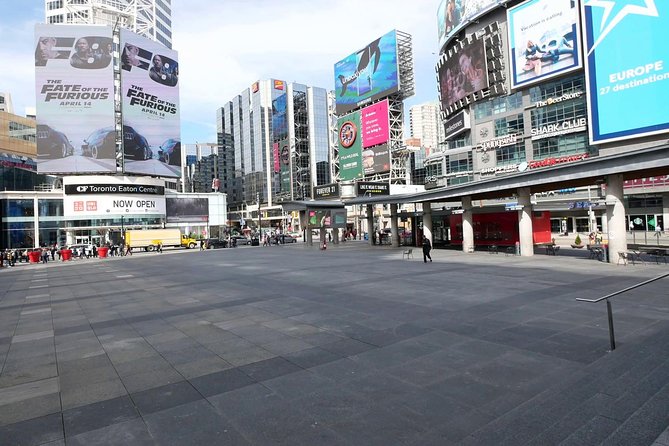
Toronto rewards a good first walk. This two-hour tour gives you a small-group look at downtown for $27.04, with a guide to connect the old buildings, modern towers, hockey culture, and food stops. I especially like the mix of famous sights and useful orientation, plus the way the PATH can keep you moving through bad weather.
Guide Leo receives repeated praise for his friendly, lively approach and clear answers. He has also adjusted routes for cold or rain and offered practical food advice at St. Lawrence Market. The main drawback is that two hours only provides a quick look, and the tour may be canceled if poor weather or low bookings interfere with the schedule.
In This Review
- Key points to know before booking
- Why this two-hour walk works as a first look at Toronto
- Starting at the Toronto Sign and Old City Hall
- The PATH: Toronto’s underground answer to winter
- Hockey Hall of Fame and Toronto’s sporting identity
- Brookfield Place and the Allan Lambert Galleria
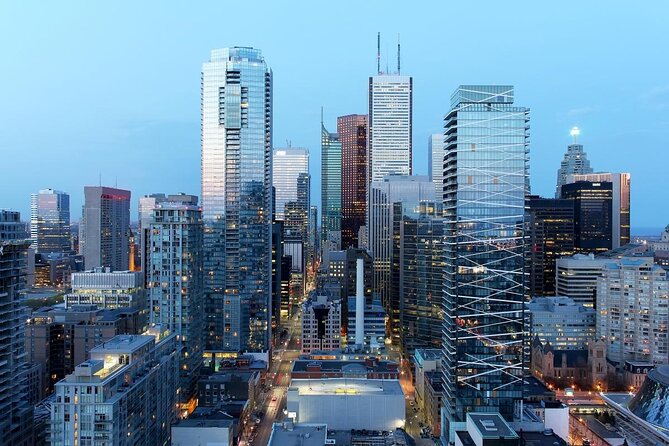
- The Financial District and Toronto’s tallest skyline
- Union Station: Toronto’s major downtown gateway
- Berczy Park and the dog fountain
- The Flatiron Building and Toronto’s older streets
- St. Lawrence Market: the best practical finish
- What the guide adds to the route
- Pace, weather, and practical comfort
- Who should book this Toronto walking tour?
- Should you book Discover Toronto Like a Local?
- FAQ
- How long is the Discover Toronto Like a Local tour?
- How much does the tour cost?
- Where does the tour start and end?
- What language is the tour offered in?
- How many people can join the tour?
- Does the tour include admission tickets?
- Is the tour suitable for someone with average fitness?
- Can the tour operate in bad weather?
- What is the cancellation policy?
Key points to know before booking
- The PATH adds real value: You may use Toronto’s underground walkway system to stay warm or dry while learning how downtown works below street level.
- Nine downtown stops fit into two hours: Expect a brisk but manageable introduction rather than long visits inside each landmark.
- Leo is a frequently praised guide: His style is friendly, animated, flexible, and open to questions.
- St. Lawrence Market is a useful final stop: You can finish with lunch ideas, including local peameal bacon.
- The group is capped at 18 people: That is small enough for conversation without promising a private tour.
- The tour is best early in your visit: It helps you understand downtown streets, transit points, food areas, and the mix of old and new Toronto.
Why this two-hour walk works as a first look at Toronto
Toronto can feel spread out when you first arrive. Its downtown core packs together City Hall, office towers, historic markets, major rail connections, public art, and underground passageways, but the connections are not always obvious from a map.
This tour solves that problem with a compact route through the lower downtown area. You are not simply pointed toward buildings and sent on your way. The guide explains how the places fit together, where they sit, and why each one matters.
I like the pace described by past participants: easygoing, with frequent stops and enough time for questions. You should still expect to walk for most of the two hours, but the route includes indoor sections and short pauses. It is a better choice for orientation than for deep visits to any one museum or landmark.
The price is $27.04 per person, which is fair if you want a human guide and useful city context without paying for a long excursion. All fees and taxes are included. Since admission tickets are not needed for the stops, you are paying mainly for the route, explanation, local suggestions, and convenience.
The group can include up to 18 people. That keeps it more personal than a large coach outing, though it may not have the quiet, tailored feel of a private walk. If the group is smaller, the guide may shape the conversation around your interests. Hockey fans, in particular, have received extra attention on this route.
A few more tours worth putting side by side
- Toronto: Niagara Falls Day Tour with Optional Boat Cruise
★ 4.6 · 3,178 reviews - Niagara Falls Day Tour from Toronto
★ 5.0 · 2,889 reviews - Toronto: Casa Loma Entry Ticket
★ 4.7 · 2,705 reviews
Starting at the Toronto Sign and Old City Hall
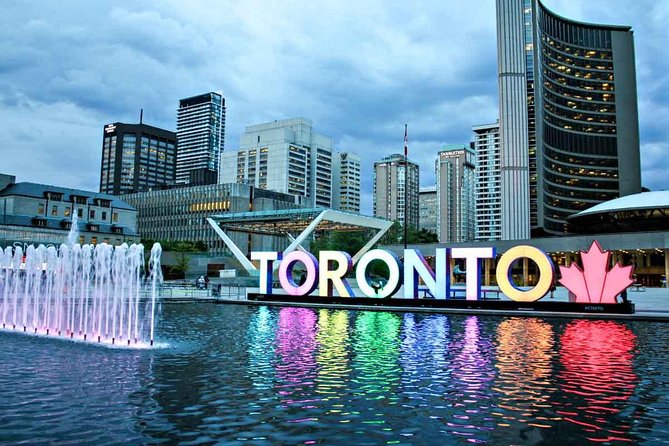
The walk begins in Toronto’s city hall square, where the colorful Toronto Sign provides an obvious meeting area and a classic first photo. It is a practical start because you are immediately in the heart of the downtown civic district.
Old City Hall comes next. This classic building gives the tour an early dose of Toronto’s older architectural character before the route turns toward office towers and transportation hubs. You spend about five minutes here, so expect an exterior explanation rather than a formal interior visit.
That short stop is enough to set up one of the tour’s main themes: Toronto is a city of layers. Historic civic buildings share the core with modern skyscrapers, underground walkways, major sports institutions, and new public spaces.
The City Hall square also helps you get your bearings. If you are staying downtown, this area can become a useful reference point for later walks, photos, and public transportation connections.
The PATH: Toronto’s underground answer to winter
The PATH is one of the most useful stops on the route. You spend around ten minutes learning about Toronto’s underground city and how it helps people move through the core when the weather turns cold.
This section is more than a novelty. It gives you a practical look at how Toronto functions in winter. The underground network connects shops, offices, food areas, and transportation points, though it can take some getting used to without guidance.
I especially like that the PATH can become part of the route when conditions are unpleasant. One tour continued through the underground system during a severe rainstorm, while another used it on a very cold day. That flexibility can make the difference between an enjoyable walk and two hours of wet shoes.
Do not expect to master every turn in ten minutes. The value is in understanding that this network exists and seeing how it fits into downtown life. If you want to explore more later, you will have a starting point and a reason to keep your eyes open for PATH signs.
Hockey Hall of Fame and Toronto’s sporting identity
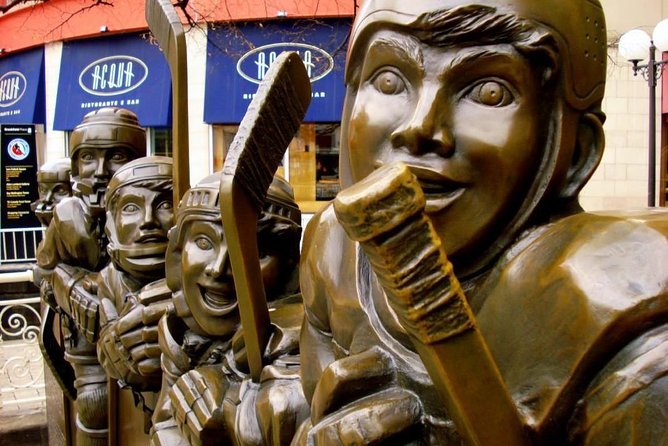
The Hockey Hall of Fame receives a brief five-minute stop. The tour does not include admission, so you will not be taking a full museum visit during the walk. Instead, the guide uses the building and its subject to explain why hockey matters so much in Canada.
This is a good place to ask questions if you follow the sport. The guide has tailored parts of the walk for hockey fans, including suggestions for other historic sports-related places to see if time allows.
If hockey is not your interest, the stop is still useful as a quick piece of Canadian culture. The guide’s enthusiasm helps keep it from feeling like a forced sports lecture. You will get the local context, take a look at the landmark, and move on without losing too much time.
For a serious hockey fan, I would treat this tour as an introduction, then return to the Hall of Fame separately if you want to see the exhibits. The walking tour does not replace that visit.
A completely different kind of day out on the same trip:
- Niagara Falls Canada Day Tour From Toronto + Boat Cruise Option
★ 5.0 · 2,576 reviews - Toronto: Harbor and Islands Sightseeing Cruise
★ 4.7 · 2,566 reviews - Toronto: City Sightseeing Hop-On Hop-Off Bus Tour
★ 4.3 · 2,544 reviews - Niagara Falls from Toronto: Skip-the-Line Boat & Skylon Tower
★ 5.0 · 2,406 reviews
Brookfield Place and the Allan Lambert Galleria
Brookfield Place is another short stop, lasting about five minutes. Its main attraction here is the Allan Lambert Galleria, an impressive covered space with a distinctive architectural design.
This is one of the places where the tour’s old-and-new contrast works well. You move from civic architecture and hockey history into a polished modern complex, then continue toward Toronto’s financial core.
The galleria also gives you an indoor break. That matters on a cold or wet day, especially because the tour is designed to continue in varied conditions. You can look up, take in the structure, and listen without standing on a windy sidewalk.
The stop is brief, so I would not book this tour expecting time for detailed architectural study or extended photography. Its role is to give you a quick sense of the building and show how downtown’s indoor spaces connect.
The Financial District and Toronto’s tallest skyline
The Financial District brings the route back outdoors for views of Toronto’s skyline, large office buildings, and public art. You spend about five minutes here, enough to discuss the core’s business role and see how the towers shape the city.
The tour also points out the biggest building in Canada. That detail gives you a simple way to read the skyline after the walk. You may not remember every tower, but you will have a better sense of the scale and purpose of the district.
I like this stop because it keeps the tour from becoming only a history walk. Toronto is a working city, and the financial center explains part of its present-day identity. The guide can also help you understand where major streets, transit points, and downtown attractions sit in relation to one another.
The brief timing is both a strength and a limit. You get variety, but not a long pause at each spot. If you enjoy street photography, keep your camera ready and listen for suggestions about public art and sightlines.
Union Station: Toronto’s major downtown gateway
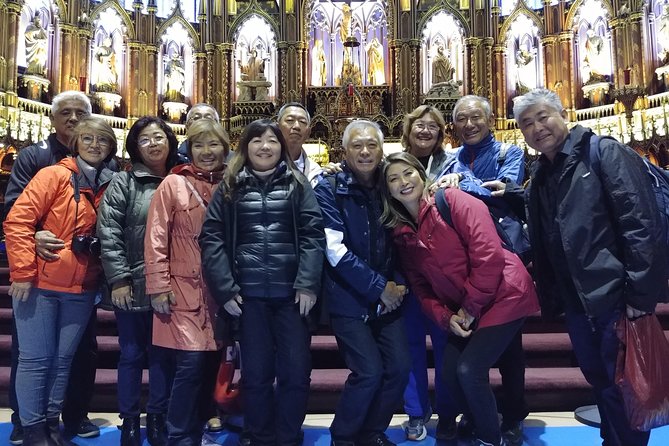
Union Station is one of the route’s most practical stops. It is a major transportation hub and Canada’s busiest passenger terminal, with Beaux-Arts design that gives the building a sense of ceremony.
The guide spends about five minutes here. That is enough to explain why the station matters and point out its architectural character, but you will not receive a full station tour.
For you, the main value is orientation. Union Station links downtown Toronto with rail and local transportation, so knowing where it is can simplify the rest of your stay. The tour also discusses local transportation systems, which is especially helpful if you are new to the city.
You might return later to explore the station at your own pace. During this walk, treat it as a key landmark and a useful marker between the financial district and the eastern part of downtown.
Berczy Park and the dog fountain
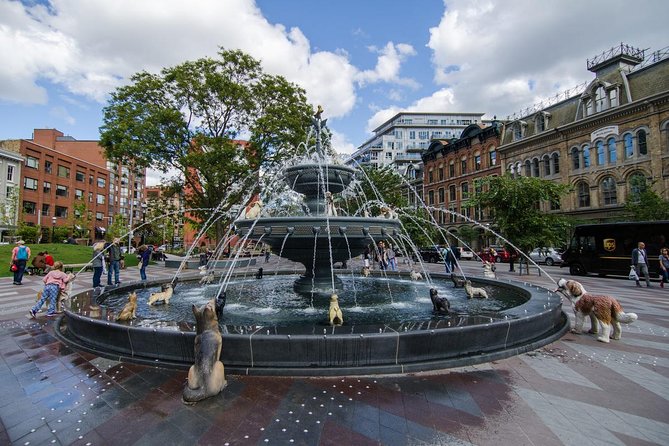
Berczy Park is a small, memorable stop. Its famous dog fountain gives the route a lighter moment after the office towers and transportation history.
You spend around five minutes here, which is enough to see the public artwork and hear why the park has become a popular downtown photo stop. It is also a welcome change in scale. Instead of grand buildings, you get a compact public space with a playful focus.
This is the sort of stop that helps a city walk feel personal. You are not only checking off major landmarks. You are also seeing places that people use for quick breaks, photos, and a little fun.
The park is not a major attraction that requires a long visit, so the brief timing makes sense. If you like urban art and public spaces, you may want to note it for a return visit.
The Flatiron Building and Toronto’s older streets
The Gooderham Building, often called Toronto’s Flatiron Building, is one of the route’s most photogenic landmarks. It sits at Front Street and offers a strong visual contrast with the towers behind it.
The building is known for its wedge-shaped form, which creates the narrow profile that makes flatiron buildings so memorable. Here, the tour brings you back to older Toronto while keeping the modern skyline in view.
You stop for about five minutes. That gives you time to appreciate the exterior and hear some city history, but not enough for a detailed architectural talk. I would use this moment to look both at the building and beyond it. The surrounding streets show how Toronto’s older commercial core meets the newer downtown.
This is another place where your guide’s ability to answer questions matters. Several parts of the walk connect past and present rather than treating them as separate subjects. That approach makes the city easier to understand.
St. Lawrence Market: the best practical finish
St. Lawrence Market is Toronto’s oldest food market and the final major stop. The tour allows about five minutes, but the market deserves far more time after the walk.
The short introduction is useful because it helps you decide what to do next. You can get suggestions for local food vendors, imported items, and lunch choices. The strongest repeated advice is to ask about peameal bacon, a Toronto specialty that comes up often in the guide’s recommendations.
I would plan your schedule around this stop if food matters to you. The tour can point you in the right direction, but you will need additional time to browse and eat. Since the walk ends in Toronto, the market is a convenient place to continue your afternoon rather than backtracking across the city.
This final stop also makes the route feel grounded. You finish among food stalls and daily city life, not just corporate towers and monuments. It is a good reminder that learning Toronto means eating in it, too.
What the guide adds to the route
The guide is the main reason to choose this experience instead of following the same route with a phone map. Leo is repeatedly praised for being friendly, clear, animated, and willing to answer questions.
His approach appears conversational rather than fixed. He has changed dates when rain made conditions unpleasant, used the PATH during extreme cold, and adjusted the focus for hockey fans. He has also remembered names and taken time to address individual interests.
That does not mean every departure will feel identical. A group of 18 can have a different rhythm from a small private party, and the guide on your date may not be Leo. Still, the consistent strength of the experience is its personal explanation of Toronto’s past and present.
I would ask questions as you go. Ask for food advice at St. Lawrence Market, local transportation tips, or extra hockey suggestions. The tour seems to work best when you treat it as a conversation rather than a lecture.
Pace, weather, and practical comfort
You should have a moderate level of physical fitness. The route is an easy walk by city-tour standards, with regular stops and indoor sections, but you will still be on your feet for roughly two hours.
Wear comfortable walking shoes. That advice matters even on an easy route because downtown sidewalks, station areas, and the PATH require steady movement. Bring weather protection as well, since the tour includes outdoor stops and depends on suitable conditions.
The PATH makes this a stronger option in uncertain weather, but it does not make the entire experience weatherproof. If poor weather forces cancellation, you are offered another date or a full refund. The same applies if the minimum number of bookings is not met.
One cancellation occurred on the morning of a scheduled tour because the guide had a medical problem. That was understandably frustrating for the people who had planned around it, but the operator explained that safety had to come first. Check your email before leaving for the meeting point, especially on the morning of the tour.
You can cancel for a full refund up to 24 hours before the start time. Changes or cancellations inside that window are not accepted for a refund.
Who should book this Toronto walking tour?
I would choose this walk if you are visiting Toronto for the first time and want a fast downtown orientation. It suits solo visitors, couples, families, and business visitors with only a spare morning or afternoon.
It is also a good fit if you want:
- A short introduction before exploring on your own
- A guide who can explain both old and modern Toronto
- Local food suggestions at St. Lawrence Market
- A route with indoor options in cold or wet conditions
- A small group instead of a large bus
- A simple introduction to downtown transportation
You may want something else if you prefer long museum visits, a slow photography walk, or a tour focused on one subject. The schedule moves through nine locations, so each stop is short. You will see and understand a lot, but you will not study every landmark in depth.
The tour is also less useful if you already know downtown Toronto well. In that case, the value comes mainly from the guide’s stories, local recommendations, and possible route adjustments.
Should you book Discover Toronto Like a Local?
Book it if you want a friendly, affordable first look at downtown Toronto. The route covers an impressive range in two hours: Old City Hall, the PATH, the Hockey Hall of Fame, Brookfield Place, the financial district, Union Station, Berczy Park, the Flatiron Building, and St. Lawrence Market.
I like the balance of practical help and city character. You learn where things are, how Toronto copes with winter, why hockey matters, and where to eat afterward. At $27.04, it offers good value for anyone who would rather hear the city explained than simply follow a blue dot on a map.
Just keep your expectations realistic. This is an overview, not a series of full attraction visits. Wear good shoes, leave room for questions, check your email for schedule updates, and save extra time for St. Lawrence Market. For a first day in Toronto, that is a smart way to get oriented.
FAQ
How long is the Discover Toronto Like a Local tour?
The walking tour lasts approximately two hours.
How much does the tour cost?
The listed price is $27.04 per person, including all fees and taxes.
Where does the tour start and end?
The tour starts and ends in Toronto, Ontario. The starting point is in the city of Toronto, with the city hall square and Toronto Sign included at the beginning.
What language is the tour offered in?
The tour is offered in English.
How many people can join the tour?
The maximum group size is 18 people.
Does the tour include admission tickets?
No admission tickets are included or needed for the listed stops. The tour includes visits and explanations at public locations and exterior landmarks.
Is the tour suitable for someone with average fitness?
You should have a moderate level of physical fitness. It is an approximately two-hour walking tour with stops along the way.
Can the tour operate in bad weather?
The experience requires good weather. If it is canceled because of poor weather, you will be offered a different date or a full refund.
What is the cancellation policy?
You can cancel up to 24 hours before the start time for a full refund. Cancellations or changes made less than 24 hours before the experience are not accepted for a refund.
Newest reviews from Toronto
- Toronto: Guided Donut Walking Tour with Tastings and Coffee★ 5.0 · 42 reviews
- Toronto Harbour and Islands Cruise★ 4.5 · 42 reviews
- Toronto: Toronto Maple Leafs Game Ticket at Scotiabank Arena★ 4.6 · 43 reviews
- Toronto: Winter Niagara Falls Tour with Attractions Package★ 4.7 · 43 reviews
- Toronto: Hollywood North Experience Film & TV Tour★ 4.9 · 49 reviews
- Niagara Falls Scenic Day Tour from Toronto Airport Pickup★ 4.6 · 52 reviews
- 14-Minute Helicopter Tour Over Toronto★ 4.5 · 53 reviews
- Toronto Highlights Walking Tour with Tower Entry★ 4.8 · 53 reviews
Toronto Tours, compared.
Niagara Falls Day Tour with Optional Boat Cruise
Read our review →
Niagara Falls Canada Day Tour From Toronto + Boat Cruise Option
Read our review →

Niagara Falls from Toronto: Skip-the-Line Boat & Skylon Tower
Read our review →
Niagara Falls Tour + Boat Ride and/or Journey
Read our review →Browse the lists this tour appears in