
Reviewed · BANFF TOURS
Columbia Icefield: Guided Glacier Hike
Ice is only the beginning. This three-hour walk puts you on the Athabasca Glacier, where you can look into crevasses, watch meltwater spill into the ice, and hear how this frozen river has changed over time. I like the close-up access and the calm, careful instruction from an ACMG-certified guide. You are not simply looking at the glacier from a bus window.
I also like that the $96 price includes transport to the trailhead, micro-spikes, and borrowed boots, gloves, hats, poles, and rain gear if needed. The main concern is the moderate uphill walk at about 2,000 meters, which can feel harder than the distance suggests. Shortness of breath is possible, and this is not a good choice if you have poor fitness, mobility limits, heart trouble, a cold, or another medical condition.
In This Review
- Quick Takeaways From the Ice
- Why Walking on Athabasca Glacier Feels Different
- Meeting at the Icefield Information Centre
- Getting Ready With Borrowed Boots and Micro-Spikes
- The 5-Kilometer Route Onto the Ice
- Crevasses, Mill Wells, and Meltwater
- Guides Who Make the Experience Work
- Glacier Views and the Big Bus Alternative
- Is $96 a Fair Price?
- Who Should Book This Glacier Walk?
- Should You Book the Athabasca Glacier Hike?
- FAQ
- How long does the Columbia Icefield guided glacier hike last?
- How far do you walk?
- Do I need technical climbing experience?
- Is equipment provided?
- What clothing should I bring?
- Is transportation included?
- Where is the meeting point?
- Can children join the hike?
- Is the tour suitable for people with mobility impairments?
- What happens if I need to cancel?
Quick Takeaways From the Ice
- Walk 5 kilometers onto the Athabasca Glacier: The round trip includes about 200 meters of elevation gain, so expect a real mountain walk rather than a short photo stop.
- Use micro-spikes on the ice: Traction is supplied for everyone, making the icy surface more manageable without technical climbing skills.
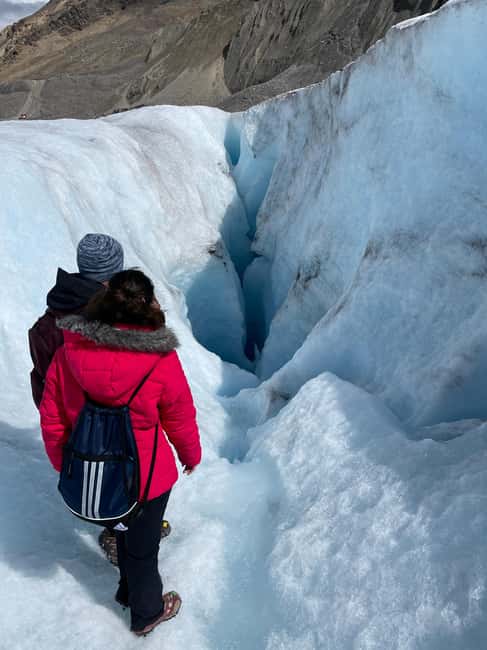
- Look into crevasses and mill wells: Meltwater streams, waterfalls dropping into the ice, and other formations make the glacier feel active and changing.
- Learn from ACMG-certified guides: Pete, Troy, Stu, Corin, Larry, and Ann have all been praised for clear teaching, humor, patience, and careful help on slippery ground.
- Borrow much of your outdoor kit: Boots, gloves, hats, poles, and rain gear are available if you do not bring your own, but warm layers are still your responsibility.
- Choose walking over a big vehicle visit: This is a more physical and personal way to see the glacier, though it demands more time and effort.
Why Walking on Athabasca Glacier Feels Different
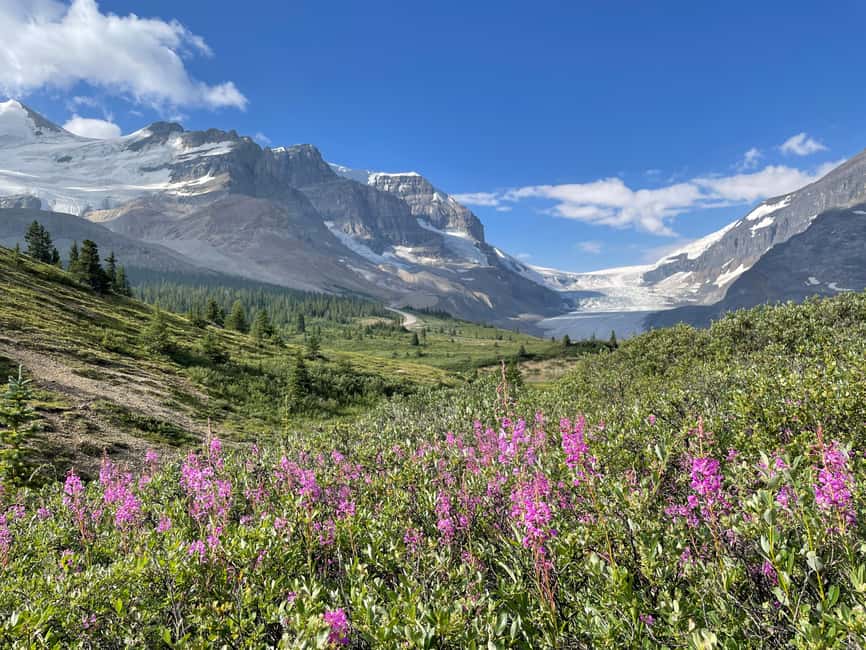
The Columbia Icefield is one of the defining mountain areas in Alberta, and Athabasca Glacier is a principal part of it. From a viewpoint or large vehicle, you can appreciate its scale. On foot, you notice the texture under your boots, the channels cut by meltwater, and the strange shapes made by moving ice.
That change in scale is the central reason to book this outing. You are close enough to inspect ice formations instead of simply photographing a white slope from a distance. The guide also gives the glacier a story, explaining its past and the forces shaping it now.
I would not treat this as a casual stroll. The route covers 5 kilometers round trip with 200 meters of climbing. The outing is classed as moderate, and the elevation can make the walk feel more demanding. Still, no technical climbing experience is needed. The focus is safe walking, observation, and interpretation, not ropes or difficult mountaineering.
More Hiking Trips in Banff
- Banff National Park Guided Hike with Lunch
★ 5.0 · 200 reviews - eBike and Hike Banff to Johnston Canyon small group guided program
★ 5.0 · 197 reviews - Banff National Park: Guided Signature Hikes with Lunch
★ 4.9 · 123 reviews
Meeting at the Icefield Information Centre
The meeting point takes a little care to find. From Highway 93, turn into the Icefield Information Centre and Glacier Gallery parking lot. Look for a black trailer and white vans carrying the IceWalks logo at the T-junction between the overflow RV parking and the visitor parking area.
The parking lot is on the north side of the highway, opposite the glacier. Do not go into the building, and do not use the Glacier View Hotel parking lot. Those instructions matter because the wrong turn could cost you time before a scheduled departure.
At the meeting point, staff organize the equipment and prepare the group for the walk. Transport from there to the trailhead is included. It is only a short shuttle ride, but it saves you from walking along the highway or trying to find your own way to the start.
Tours are usually offered in the morning and afternoon. A three-hour schedule leaves room to fit this into a full day along Highway 93, though you should allow yourself enough time to arrive, park, and sort out borrowed gear without rushing.
Getting Ready With Borrowed Boots and Micro-Spikes
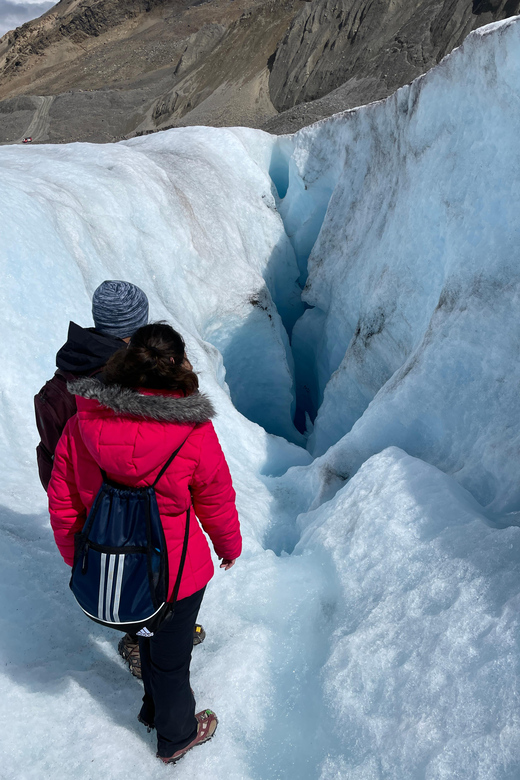
The equipment arrangement is one of the tour’s strongest practical points. Micro-spikes are provided for the ice, and you can borrow rain gear, hiking poles, hiking boots, gloves, and hats if you need them. This is useful for visitors who are touring Alberta without a full hiking kit.
The supplied gear does not replace warm clothing. Bring thermal clothing, including warm layers for your upper body and legs. The official guidance specifically excludes sweaters and pants from the included equipment, so do not arrive assuming a borrowed rain jacket will keep you warm.
Pack snacks as well. Three hours is long enough for a break to be welcome, especially after the uphill section. You will also be outside at high elevation, where the cold can feel sharper than expected even on a pleasant day.
The micro-spikes are especially valuable because they give you traction on the ice without requiring climbing experience. They do not turn the walk into an effortless outing, but they make the footing more secure. Hiking poles are also available, a helpful option on uneven or slippery sections.
One useful detail from the feedback is that borrowed equipment can be broader than the basic promise suggests. Corin was praised for a setup that included hats, gloves, boots, sunscreen, and traction for the group. The exact selection may vary, but the message is clear: ask about equipment before setting out rather than struggling with inadequate clothing.
The 5-Kilometer Route Onto the Ice
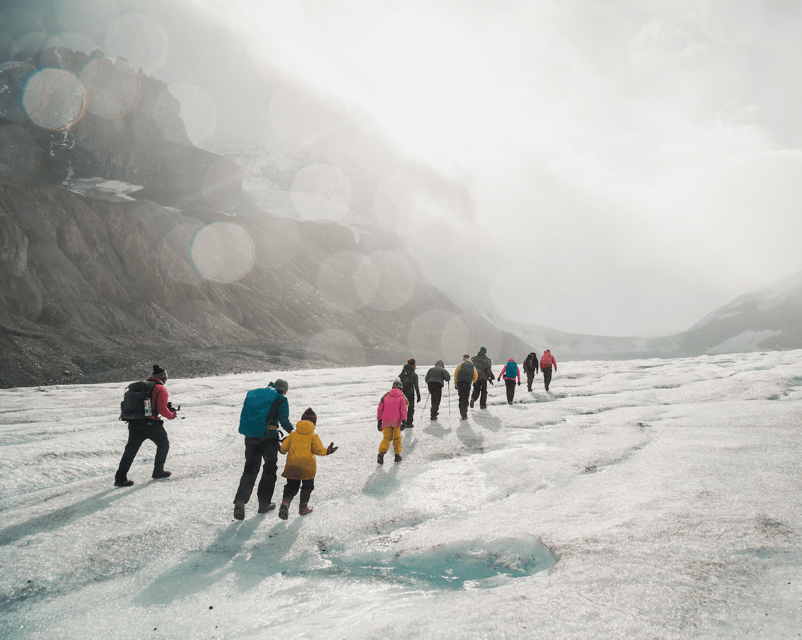
After the short shuttle, the walking portion leads toward Athabasca Glacier. The route gains about 200 meters and covers 5 kilometers in total, so you get time to settle into the mountain setting before reaching the most dramatic ice features.
The uphill gain gives this tour more substance than the nearby vehicle-based option. You must work a little for the access, but that effort is part of the experience. You see the glacier as a place reached by walking, not just as a backdrop arranged beside a road.
The pace is guided and moderate. A good guide can adjust attention and offer help on rough or slick areas. Corin, for example, was singled out for taking extra care on hills and slippery places. That sort of attentiveness matters if your group includes active older adults or children who are comfortable hiking but need occasional help.
The tour is suitable for children from age 7 to 16 who enjoy active outings. Children under 7 cannot join. The age guidance is sensible: young walkers need to manage several hours outside, uneven ground, cold conditions, and the elevation.
More Columbia Icefield trips:
- Columbia Icefield Tour with Glacier Skywalk
★ 4.5 · 1,860 reviews - Lake Louise, Moraine Lake and the Icefields Parkway Full-Day Tour
★ 5.0 · 836 reviews - Columbia Icefield Tour with Glacier Skywalk from Banff
★ 5.0 · 649 reviews - From Banff: Athabasca Glacier and Columbia Icefield Day Trip
★ 4.8 · 408 reviews
Crevasses, Mill Wells, and Meltwater
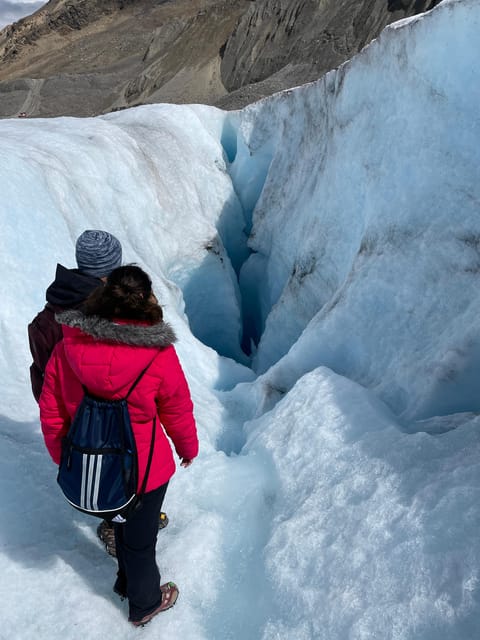
The glacier features are the payoff. You may peer into deep crevasses, where cracks reveal the depth and movement of the ice. These are not casual climbing features. You view them from a safe position under the guide’s direction.
Mill wells are another highlight. These are waterfalls or shafts where meltwater drops into the glacier. Seeing water pour over an edge and disappear into blue-white ice helps you understand that a glacier is not a frozen, motionless block. It is shaped by running water, pressure, weather, and time.
You can also expect meltwater streams and icefalls from a safe distance. The guide’s role is important here. Ice can look solid while hiding unstable areas, and the route is chosen to let you see the formations without wandering toward danger.
This is where a walking tour earns its price. You are not just given a view; you are shown what to notice. Guides explain the glacier’s story and the science behind its features in an accessible way. Troy was praised for making the history and science easy to understand, while Pete was repeatedly noted for combining clear instruction with humor.
Guides Who Make the Experience Work
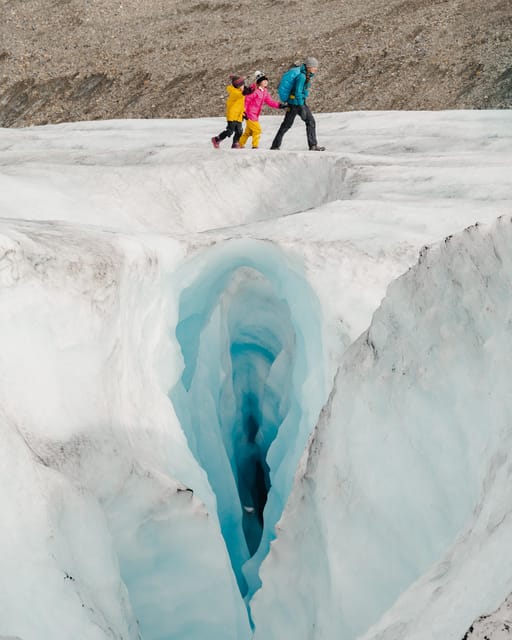
The strongest praise centers on the guides. Pete was described as funny, informative, passionate, and pleasant. Randy’s account placed special emphasis on Pete’s care for everyone in the group and his ability to make the glacier’s history engaging.
Troy received similar praise for patience, clear explanations, and attention to safety. Stu was appreciated for being professional, personable, accommodating, and funny. Corin’s strength was practical help on hills and slippery ground. Larry and Ann were also praised for thoughtful, interesting guidance.
That range of comments tells you what to look for in this experience. The guide is not there only to lead the way. You want someone who can explain what you are seeing, set a safe pace, and make people feel at ease on unfamiliar ice.
The interpretive part is especially useful if you want context beyond photographs. You learn about the Athabasca Glacier and the surrounding Canadian Rockies, not just the mechanics of walking with traction. The best guides connect the ice beneath your boots with the peaks around you and the glacier’s long record of change.
Glacier Views and the Big Bus Alternative
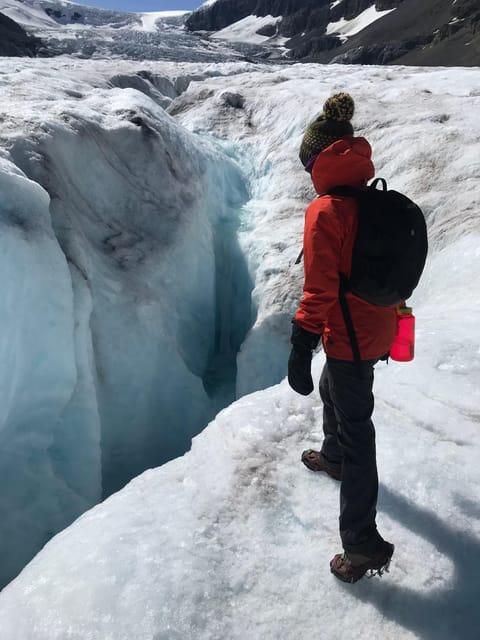
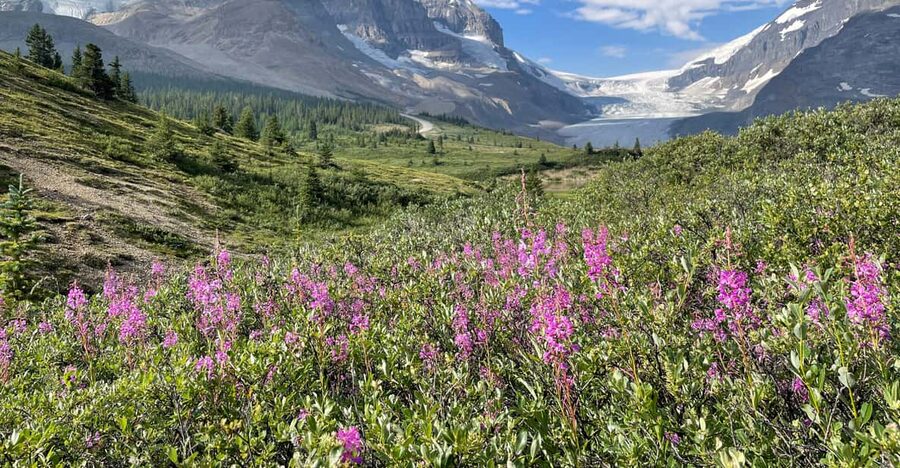
The surrounding views include ice-covered peaks and some of the highest mountains in the Rockies. On a clear day, the combination of glacier and high peaks is the visual centerpiece of the outing.
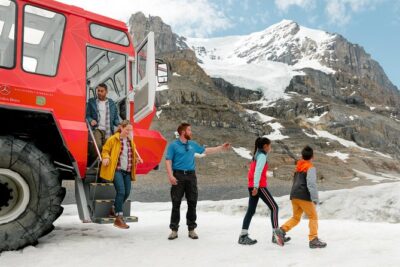
This walk is often chosen instead of the large vehicle experience, and that comparison helps explain its appeal. The bus option may suit someone who wants a shorter, less physical visit. The guided hike offers more contact with the ice and more time for interpretation, but you pay for it with exertion and several hours of outdoor exposure.
One visitor called the hike a better choice than the bus option and described the day as unforgettable. That preference will not apply to everyone. If you have limited time, low fitness, or difficulty walking on uneven ground, the vehicle-based visit may be more sensible. If you want to feel the glacier underfoot, the hike is the stronger choice.
Is $96 a Fair Price?
At $96 per person, the tour is not the cheapest way to see Athabasca Glacier. The value comes from what the price removes from your planning: a qualified guide, short transport to the trailhead, micro-spikes, and access to borrowed outdoor gear.
A self-guided walk would not provide the same safety framework around crevasses, mill wells, meltwater, and icefalls. You would also need to bring appropriate boots and traction. For visitors who already own all their equipment, the price is mainly paying for the guide and organized access. For visitors traveling with light luggage, the included gear adds real value.
The three-hour length also works in its favor. You get a substantial outing without committing to a full day on the ice. Morning and afternoon departures make it easier to combine with other stops in the Columbia Icefield area, though the walk itself should be treated as the main event during its scheduled time.
Free cancellation up to 24 hours before departure and the option to reserve without paying immediately add useful flexibility. Mountain weather can change plans, so those terms are worth noting when you are organizing an Alberta road trip.
Who Should Book This Glacier Walk?
I would choose this tour if you want active access, clear teaching, and a closer look at glacier features. It suits adults and children age 7 and older who are comfortable with a moderate hike and who enjoy learning while they walk.
Active seniors may also find it suitable, provided they are comfortable with the elevation and do not have medical restrictions. The guide can assist on difficult sections, but you should not expect a flat, easy path.
You should skip it if you have a mobility impairment, use a wheelchair, have heart problems, a cold, another pre-existing medical condition, or a low fitness level. The activity is not suitable for people over 75 according to the stated restrictions. At 2,000 meters, even a moderate route can cause shortness of breath.
Bring thermal clothing, pants, warm upper layers, snacks, and any personal items you need for three hours outside. Borrowed gear helps, but it does not remove the need to dress properly.
Should You Book the Athabasca Glacier Hike?
Book it if your priority is to walk on the glacier, study crevasses and meltwater up close, and learn from a guide who can make the science interesting. The repeated praise for Pete, Troy, Stu, Corin, Larry, and Ann points to a well-supported guiding program, with humor and personal care adding to the safety briefing.
Do not book it simply because the glacier is famous. The route requires a moderate level of fitness, 200 meters of climbing, and comfort at high elevation. For the right person, $96 is a fair price for gear, guidance, transport, and direct contact with Athabasca Glacier. For someone seeking a quick scenic stop, it is more effort than necessary.
FAQ
How long does the Columbia Icefield guided glacier hike last?
The tour lasts three hours, with morning and afternoon departures usually available.
How far do you walk?
The route covers 5 kilometers round trip and includes about 200 meters of elevation gain.
Do I need technical climbing experience?
No. Technical climbing experience is not required.
Is equipment provided?
Micro-spikes are provided. Rain gear, hiking poles, hiking boots, gloves, and hats are available if you do not have your own.
What clothing should I bring?
Bring thermal clothing, including warm sweaters or other upper-body layers and suitable pants. Warm layers are not included.
Is transportation included?
Short transport from the meeting location to the trailhead is included. Transportation to the meeting location is not included.
Where is the meeting point?
Turn from Highway 93 into the Icefield Information Centre and Glacier Gallery parking lot. Find the black trailer and white IceWalks vans at the T-junction between the overflow RV parking and visitor parking.
Can children join the hike?
Children age 7 and older may join if they enjoy hiking and active outings. Children under 7 are not permitted.
Is the tour suitable for people with mobility impairments?
No. The tour is not suitable for people with mobility impairments or wheelchair users.
What happens if I need to cancel?
You can cancel up to 24 hours in advance for a full refund. You can also reserve now and pay later.
Newest reviews from Banff
- Banff: Sightseeing, Lake Minnewanka Cruise and Banff Gondola★ 4.7 · 41 reviews
- Banff/Canmore Moraine Lake & Lake Louise-Hike/Canoe/Sightsee★ 5.0 · 44 reviews
- Grotto Canyon Icewalk★ 4.5 · 49 reviews
- Banff |Canmore| Kananaskis to Calgary YYC Airport–Private Shuttle★ 5.0 · 50 reviews
- Banff : Lake Louise, Moraine, Emerald & Johnston Canyon tour★ 4.8 · 51 reviews
- Banff National Park Big Canoe Tour★ 5.0 · 52 reviews
- Banff: Grizzly Bear Refuge Tour with Lunch★ 4.6 · 53 reviews
- Banff: Sightseeing Chairlift Ride High Above Banff★ 4.6 · 57 reviews
Banff Tours, compared.
Lakes Moraine, Louise, Emerald, Johnston Canyon & Yoho Tour
Read our review →
Lake Louise, Moraine Lake and the Icefields Parkway Full-Day Tour
Read our review →
Lake Louise, Moraine, Emerald Lake & Johnston Canyon
Read our review →
Banff Highlights & Wildlife | Award-Winning Small Group Adventure
Read our review →Browse the lists this tour appears in