
Reviewed · TORONTO TOURS
Bata Shoe Museum Admission Ticket
Shoes tell bigger stories. Toronto’s Bata Shoe Museum turns everyday footwear into a lively look at history, culture, religion, fashion, and craft. I like the clear journey through time, from artifacts dating to ancient Egypt, and I like the changing exhibitions, which give you a reason to return. The main drawback is size: you may finish the museum in 45 minutes, though a slower visit can take 90 minutes or more.
This is a self-guided stop, so you set the pace and choose where to linger. I especially appreciate the attention given to artisans and Indigenous pieces, along with the playful displays, including an entertaining look at 1980s footwear. The museum is not ideal if you expect a large institution or a guaranteed display of famous celebrity shoes, since exhibitions change and some objects may not be on view.
In This Review
- Key points to know before you go
- Why Toronto’s shoe museum deserves your time
- Start with All About Shoes
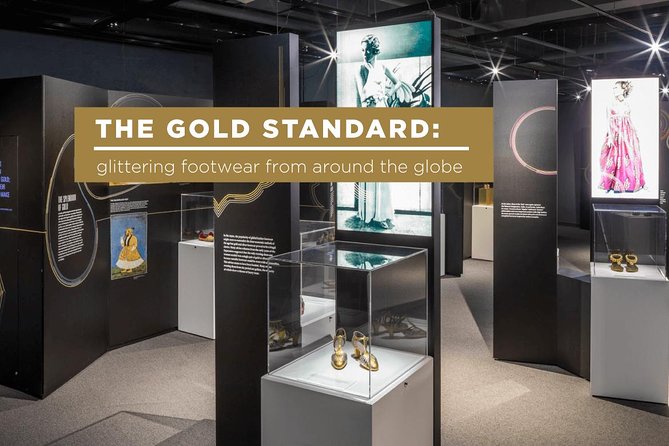
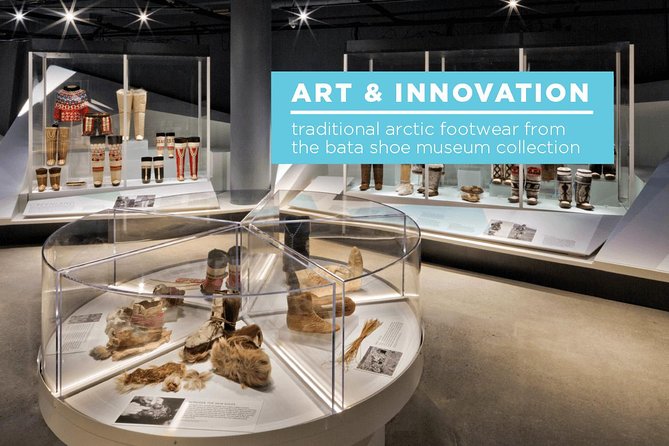
- Three galleries that change with each visit
- The cultural meaning behind the footwear
- A museum that works well without a guide
- How long should you allow?
- Who will enjoy this museum most?
- Timing, access, and practical planning
- Is the admission ticket good value?
- My verdict: should you book the Bata Shoe Museum?
- FAQ
- How long does a visit to the Bata Shoe Museum take?
- What can I see at the Bata Shoe Museum?
- Is the museum self-guided?
- What are the museum’s opening hours?
- Is transportation or parking included?
- Can I cancel my admission ticket?
Key points to know before you go
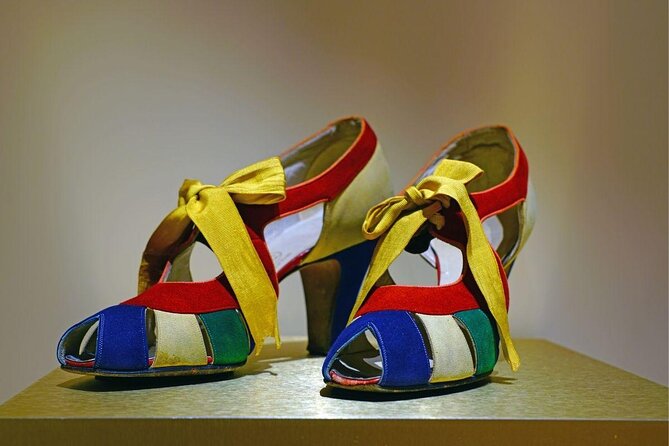
- Ancient Egypt begins the story: You can see footwear and related artifacts dating back as far as ancient Egypt.
- Four floors reward a curious eye: The museum’s displays range from historical shoes to fashion, cultural traditions, religion, and modern styles.
- All About Shoes is the main anchor: This semi-permanent exhibition gives the visit its broad timeline and central structure.
- Changing galleries keep things fresh: Three galleries host temporary exhibitions, with one or two new shows generally opening each year.
- Plan for 45 to 90 minutes: A quick visit works, but readers who enjoy labels, design, and cultural context may want closer to two hours.
- It is self-guided and easy to fit into a city day: Transportation, parking, lectures, workshops, and guided group visits are not included.
Why Toronto’s shoe museum deserves your time
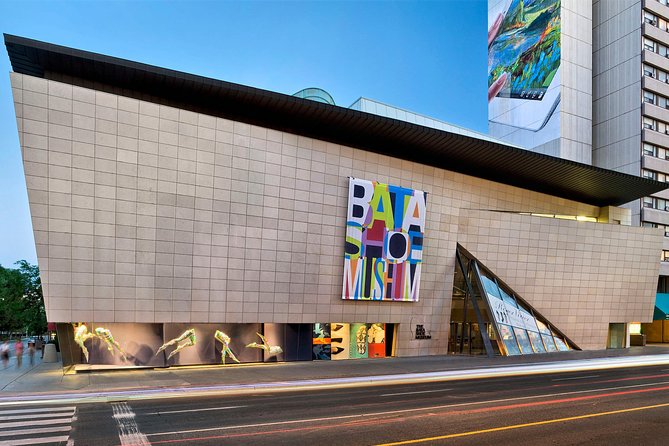
The Bata Shoe Museum is one of those places that sounds narrow until you see how much a shoe can reveal. A shoe can show where someone lived, what work they did, what their society valued, how wealth was displayed, or how religious and cultural customs shaped daily life.
That wider focus is the museum’s great strength. You are not simply walking past rows of footwear. You are following human choices through clothing, status, ceremony, technology, and fashion. The subject stays familiar because everyone wears shoes, yet the examples can be surprisingly strange and inventive.
I also like the museum’s balance of education and play. The displays are designed to entertain younger visitors without making the material feel childish for adults. The building itself has clever touches, and the exhibition design uses visual variety rather than relying only on long blocks of text.
You should still set your expectations correctly. This is a small specialty museum, not a full-day institution with room after room of major collections. Many people will see the principal displays in about 45 minutes. If you read carefully and spend time with the temporary shows, allow 90 minutes to two hours.
More Museums in Toronto
- Toronto: Royal Ontario Museum Admission Ticket
★ 4.6 · 1,237 reviews - Royal Ontario Museum Admission
★ 4.5 · 411 reviews - Toronto: Art Gallery of Ontario General Admission Ticket
★ 4.6 · 251 reviews
Start with All About Shoes
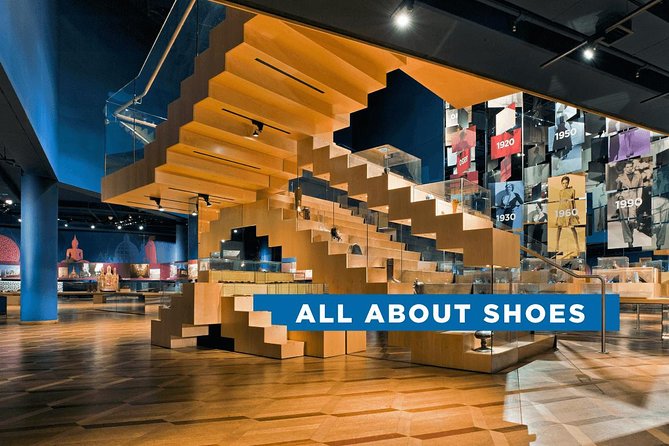
The main semi-permanent exhibition, All About Shoes, provides the museum’s broadest look at footwear. It is the place to begin because it gives you the basic framework for everything else you will see.
The collection reaches back to ancient Egypt, giving you an early reminder that shoes are not merely modern accessories. From there, the displays show how footwear has changed across periods and societies. The details matter: materials, shape, decoration, construction, and intended use all carry meaning.
I suggest taking your time with the labels instead of treating the exhibition like a quick fashion display. The most rewarding material connects an object to the people who made it and the people who wore it. You may find that a simple-looking shoe raises questions about work, class, climate, faith, or ceremony.
The exhibition also helps explain why footwear is such a useful historical subject. Clothing can disappear, but shoes often preserve clues about movement and daily life. A pair made for labor tells a different story from one made for celebration or religious use.
This is where the museum is strongest for first-time visitors. You get a broad tour through footwear history without needing specialist knowledge. If your interest begins with fashion, you will find plenty to enjoy. If your interest is history or anthropology, the wider cultural context gives the collection more weight.
Three galleries that change with each visit
Alongside All About Shoes, the museum has three galleries for changing exhibitions. These shows usually run for about a year, and one or two new exhibitions generally open each year.
That schedule matters because the museum is not exactly the same every time you return. A temporary exhibition may focus on a period, a style, a cultural subject, or a design idea. The changing galleries also make the museum feel less fixed than its name might suggest.
One temporary display that made a strong impression on visitors focused on 1980s footwear. For anyone who remembers that decade, it can feel like a walk through school days and old fashion choices. Even if you do not have personal memories of the period, the show offers a useful look at how quickly style can change.
Do not assume that every object described in older promotional material will still be displayed. One visitor expected footwear associated with figures such as Madonna, Marilyn Monroe, Elton John, and the Dalai Lama, but those pieces were not on view at the time. Since the temporary galleries change, it is wise to confirm the current exhibitions if a particular famous shoe is the main reason you want to go.
A display can also be closed during renovation. That happened to one section during a recent visit, and it is a reminder that a museum experience can vary from one date to the next. The broader collection still offers plenty to see, but you should leave room for that possibility.
The cultural meaning behind the footwear
The museum becomes most rewarding when it moves beyond fashion. Shoes can carry religious meaning, signal social position, or reflect cultural identity. The displays connect those themes to the objects rather than presenting footwear as decoration alone.
This is especially important in the presentation of Indigenous pieces. The museum gives attention to the artisans and collaborators connected with the works, which adds human context to the display. You are encouraged to think about who made an object, how it was made, and why it mattered, not only how it looks behind glass.
That approach helps prevent the collection from becoming a parade of unusual shapes. A clever shoe may catch your eye first, but the supporting information explains why it was created and what it meant in its original setting.
I found this cultural angle more valuable than a simple list of dates and designers would be. It gives the museum a reason to exist beyond novelty. You leave thinking differently about the shoes you wear and the choices built into their design.
For families, this can be a good discussion museum. Ask children why a shoe might be shaped a certain way or made from a certain material. Older visitors may connect with the fashion displays, while history-minded visitors can focus on changing customs and practical needs.
A completely different kind of day out on the same trip:
- Toronto: Niagara Falls Day Tour with Optional Boat Cruise
★ 4.6 · 3,178 reviews - Niagara Falls Day Tour from Toronto
★ 5.0 · 2,889 reviews - Toronto: Casa Loma Entry Ticket
★ 4.7 · 2,705 reviews - Niagara Falls Canada Day Tour From Toronto + Boat Cruise Option
★ 5.0 · 2,576 reviews
A museum that works well without a guide
The Bata Shoe Museum is designed to be self-guided. That gives you freedom, but it also means the quality of your visit depends partly on how much attention you give the displays.
You do not have to move as part of a fixed group or follow a timed route. You can spend extra time with a display that catches your eye and move quickly past one that does not. This works well for solo visitors, couples, families, and anyone fitting the museum between other Toronto plans.
The tradeoff is that lectures, workshops, and guided group visits are not part of the admission ticket. If you want a formal talk or a scheduled educational program, you will need to arrange that separately.
The museum has received praise for friendly and helpful front desk staff. One practical example involved a visitor who had bought tickets ahead of time and needed assistance locating them. Staff also helped with access to a recorded talk. That kind of help is useful in a small museum, where a quick question at the desk can save time.
The ticket is mobile, and confirmation is provided at booking. GST is included. Transportation to and from the museum, parking, lectures, workshops, and guided group visits are not included, so factor those costs and plans into your day.
How long should you allow?
The official estimate is one to two hours, and that is a sensible range for most people. A quick reader can see the main displays in about 45 minutes, while someone who reads labels and studies the changing exhibitions may want the full two hours.
I would allow at least an hour if this is your first visit. Forty-five minutes can work if you have a busy day and mainly want to see the collection. Two hours makes sense for visitors with a strong interest in art, fashion, design, history, or cultural traditions.
The museum’s manageable size is an advantage in Toronto. You can make it a focused stop rather than committing half a day. It also pairs well with other city activities because you are unlikely to feel trapped by a long route or a fixed tour schedule.
School groups can affect the atmosphere. A quiet visit may be easier when large groups are not present, especially if you want to read every label. The maximum group size attached to this activity is nine travelers, but school visits and general museum activity can still change how calm the galleries feel.
Who will enjoy this museum most?
I recommend the museum most strongly to people who enjoy fashion, art, design, social history, and unusual collections. It is also a good choice for anyone who wants a short indoor attraction with a clear subject and plenty of visual material.
Families can get a lot from the displays because the subject is familiar and easy to discuss. Older visitors may enjoy the way historical and modern footwear connects with personal memories. The 1980s material, in particular, can turn into a pleasant trip through styles many people remember wearing or seeing.
Solo visitors should find the self-guided format comfortable. You can read at your own pace without worrying about holding up a group. Couples and friends can also use the displays as conversation starters, especially in the fashion and cultural sections.
I would be less likely to recommend it to someone who wants a huge museum with famous masterpieces at every turn. It is a specialty museum, and its appeal depends on your willingness to look at ordinary objects in a new way.
If you are mainly coming to see one celebrity-owned pair of shoes, check what is currently displayed before booking. Temporary exhibitions change, and a named object may not be available on your visit.
Timing, access, and practical planning
The stated opening schedule is Monday through Saturday, 10:00 a.m. to 5:00 p.m., for the listed period from January 1, 2024, through February 16, 2027. Sunday hours are not provided, so you should confirm the schedule before planning a Sunday visit.
The museum is near public transportation, which makes it easier to add to a Toronto day without relying on a car. Parking is not included, and no parking details are provided, so public transport may be the simpler choice.
Service animals are allowed, and most people can participate. The activity has a maximum of nine travelers, which may suit visitors who prefer a smaller booking arrangement, although the museum itself can also receive school groups and other visitors.
Free cancellation is available if you cancel at least 24 hours before the experience start time. A cancellation within 24 hours is not refundable, and changes within that period are not accepted. The cut-off follows local Toronto time.
Is the admission ticket good value?
No ticket price is provided here, so I cannot judge the exact cost in dollars. I can still assess what you receive for the admission.
The value is strongest if you appreciate thoughtful displays rather than judging a museum by size. You get access to the permanent All About Shoes exhibition plus three changing galleries, with GST included. The museum can also fit neatly into a wider Toronto itinerary because the visit usually takes less than two hours.
The value is weaker if you expect a guided experience, workshops, or transportation. Those are not included. It is also weaker if you are paying mainly for one advertised famous object that may have moved out of display.
I would think of this as a focused city attraction. You are paying for a compact collection with a surprising range of subjects, not an all-day museum pass. For a short visit that combines history, design, and a little fashion nostalgia, that can be a fair trade.
My verdict: should you book the Bata Shoe Museum?
I would book it if you want a smart, unusual Toronto stop and you enjoy learning through objects. The ancient Egyptian material, the cultural and religious context, the Indigenous pieces, and the changing exhibitions give the museum more substance than its playful name suggests.
Allow an hour at minimum, and closer to 90 minutes if you want to read and compare the displays. Go with an open mind, since the best part is not simply seeing strange shoes. It is understanding why people made and wore them.
Skip it if you need a large museum, a guided tour, or a guaranteed collection of celebrity footwear. Otherwise, the Bata Shoe Museum offers a compact and memorable visit, especially for families, design lovers, history fans, and anyone ready to reconsider the shoes already on their feet.
FAQ
How long does a visit to the Bata Shoe Museum take?
The suggested duration is one to two hours. A quick visit may take about 45 minutes, while a slower visit with time for labels and changing exhibitions can take closer to 90 minutes or two hours.
What can I see at the Bata Shoe Museum?
You can see the semi-permanent All About Shoes exhibition, artifacts dating as far back as ancient Egypt, and displays in three galleries devoted to changing exhibitions.
Is the museum self-guided?
Yes. The museum is designed to be self-guided. Lectures, workshops, and guided group visits are not included with admission.
What are the museum’s opening hours?
The stated hours are Monday through Saturday, from 10:00 a.m. to 5:00 p.m., for the period from January 1, 2024, through February 16, 2027. Sunday hours are not provided.
Is transportation or parking included?
No. Transportation to and from the attraction and parking are not included. The museum is near public transportation.
Can I cancel my admission ticket?
Yes, you can receive a full refund if you cancel at least 24 hours before the experience start time. Cancellations or changes made less than 24 hours before the start time are not accepted for a refund.
Newest reviews from Toronto
- Toronto: Guided Donut Walking Tour with Tastings and Coffee★ 5.0 · 42 reviews
- Toronto Harbour and Islands Cruise★ 4.5 · 42 reviews
- Toronto: Toronto Maple Leafs Game Ticket at Scotiabank Arena★ 4.6 · 43 reviews
- Toronto: Winter Niagara Falls Tour with Attractions Package★ 4.7 · 43 reviews
- Toronto: Hollywood North Experience Film & TV Tour★ 4.9 · 49 reviews
- Niagara Falls Scenic Day Tour from Toronto Airport Pickup★ 4.6 · 52 reviews
- 14-Minute Helicopter Tour Over Toronto★ 4.5 · 53 reviews
- Toronto Highlights Walking Tour with Tower Entry★ 4.8 · 53 reviews
Toronto Tours, compared.
Niagara Falls Day Tour with Optional Boat Cruise
Read our review →

Niagara Falls Canada Day Tour From Toronto + Boat Cruise Option
Read our review →

Niagara Falls from Toronto: Skip-the-Line Boat & Skylon Tower
Read our review →
Niagara Falls Tour + Boat Ride and/or Journey
Read our review →Browse the lists this tour appears in