
Reviewed · BANFF TOURS
Banff: Introduction to Ice Climbing for Beginners
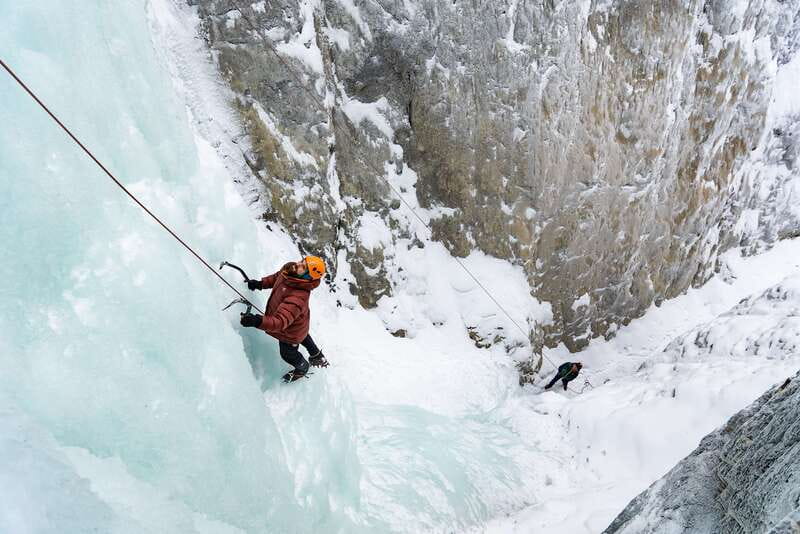
Ice climbing turns winter into a playground. This seven-hour Banff course takes you to a frozen waterfall, where you learn the basics of crampon walking, top-rope belaying, and climbing movement under the care of certified mountain guides. I like the hands-on format and the chance to use all the key technical gear without buying it first. I also like that the course treats safety as part of the fun, not as a dull lecture.
The main drawback is simple: you must drive yourself to the climbing area, and the exact location can change between Banff, Lake Louise, or Field, British Columbia. A very cold day is another real consideration. On one reported outing, the temperature reached minus 20 degrees Celsius, yet guide Shea kept the group moving, offered useful tips, and set up two ropes at different difficulty levels.
In This Review
- Key points to know before booking
- What a beginner ice-climbing day really involves
- Starting at the Alpine Air Adventures office
- Getting dressed for a day at minus 20 degrees
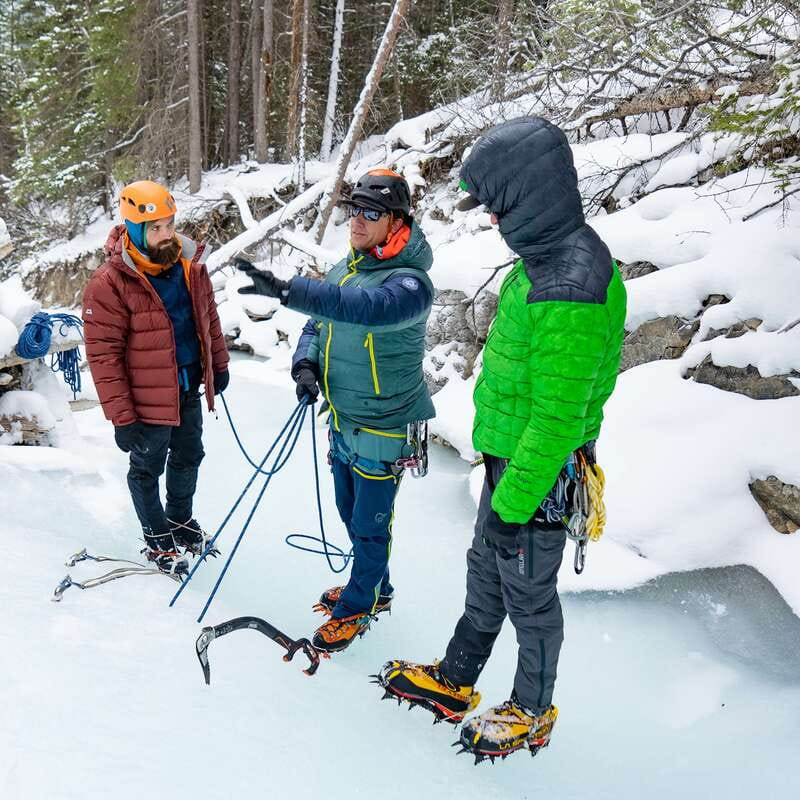
- Learning to walk on crampons
- Handling the rope and learning top-rope belay
- Climbing a frozen waterfall at two levels
- How much value you get for $179
- Who should book this course
- Planning the day without surprises
- Should you book Banff ice climbing for beginners?
- FAQ
- How long does the ice-climbing course last?
- Where does the ice-climbing day take place?
- Where do I meet the guide?
- Do I need to arrange transportation?
- What climbing equipment is included?
- What should I bring?
- Is the course suitable for children?
- Can I cancel the booking?
Key points to know before booking
- Seven hours on the ice: Plan to meet around 8 or 9 a.m. and finish around 3 or 4 p.m.
- Three possible climbing regions: The course may run near Banff, Lake Louise, or Field, depending on conditions.
- Technical equipment is included: You receive a helmet, harness, climbing boots, crampons, and an ice axe.
- Certified instruction: Guides hold ACMG and/or IFMGA certification, along with Canadian Avalanche Association certification.
- Two-rope options can add useful variety: Guide Shea used easier and more challenging ropes so climbers could get more attempts.
- Bring your own transport and lunch: Food, drinks, and transportation to the climbing site are not included.
What a beginner ice-climbing day really involves
This is an introduction to ice climbing, not a sightseeing stop with a short photo opportunity. You spend the day learning how to move safely on frozen ice, handle climbing equipment, and work with a rope system.
The pace begins with the basics. Your guide explains the activity, checks the equipment, and covers safety before you start climbing. That matters because ice climbing has its own feel. Your boots, crampons, ice axe, body position, and rope all need to work together.
You do not need to arrive as an experienced climber. The course is built for beginners, with a safety-first approach and instruction from certified guides. You will still need to be ready for a physical outdoor day in winter conditions.
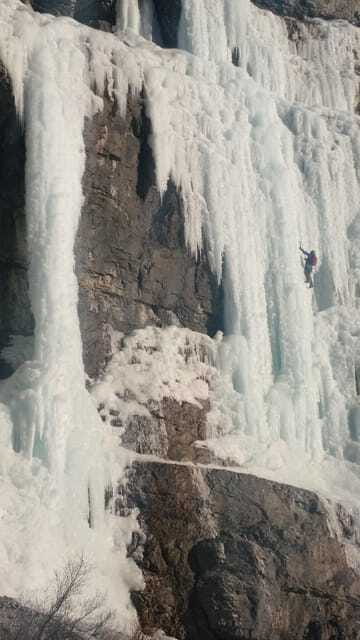
The setting is part of the appeal. Instead of spending the whole day inside a gym, you climb beside a frozen waterfall in the Banff, Lake Louise, or Field area. The exact site depends on snow and ice conditions, so the final location is not fixed when you book.
That flexibility is useful for safety and climbing quality, but it makes planning a little less tidy. You will receive a detailed course package by email three days before the course begins. Read it carefully, since it should confirm the final logistics and any location change.
More Ice Walks and Canyoning in Banff
- Johnston Canyon Icewalk
★ 5.0 · 502 reviews - Banff: Mount Norquay 2.5 or 4-Hour Guided Via Ferrata Climb
★ 4.9 · 305 reviews - Banff: Morning or Afternoon Johnston Canyon Icewalk
★ 4.8 · 253 reviews
Starting at the Alpine Air Adventures office
Your meeting point is the Alpine Air Adventures office at 229 Bear Street in Banff. It is on the lower level, beneath the movie theatre.
This is where you meet your guide before driving to the climbing area. The office is not the climbing site, so do not arrive expecting to walk straight onto the ice. You need your own transportation for both the meeting point and the later drive to the selected location.
The early start can feel demanding on a holiday, especially if you have been enjoying Banff evenings. Still, a full day on the ice requires daylight and enough time for instruction, equipment setup, climbing, and breaks.
Plan to meet around 8 or 9 a.m. and finish around 3 or 4 p.m. The exact starting time depends on availability. Since the activity lasts about seven hours, treat it as your main event for the day rather than something to fit between other attractions.
You should also confirm that the group has enough bookings to run. The group booking requires at least four bookings before it can move forward, and the provider does not guarantee the departure until that minimum is reached. Ask Alpine Air Adventures to verify this before you build your day around it.
Getting dressed for a day at minus 20 degrees
Warm clothing is not a minor suggestion here. You should bring a jacket, gloves, snow clothing, and enough food and drinks for the day.
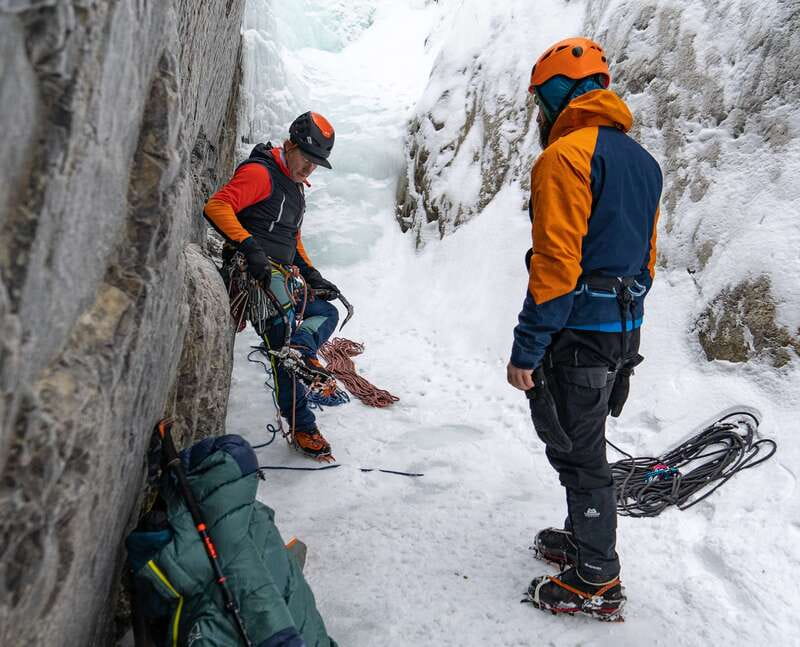
Ice climbing is active, but there are also pauses while the guide manages ropes, checks the climbing line, or helps other people. Those standing periods can feel very cold. A reported outing reached minus 20 degrees Celsius, and guide Shea worked hard to keep the group warm and active.
That account points to a useful lesson: cold can affect the quality of your day as much as climbing ability. Bring clothing suited to a full winter day, not just a warm walk through town. Keep your food and drinks easy to reach, since you do not want to abandon warm layers or equipment to search through a vehicle.
The provider supplies climbing boots, but you are responsible for your general winter clothing. The included boots, helmet, harness, crampons, and ice axe cover the main technical needs, while your jacket, gloves, and snow clothing keep you comfortable between climbs.
Food and drinks are not included. Pack enough for a seven-hour outing. You should also be prepared for the possibility of changing conditions, since the course location may shift according to the ice and weather.
Learning to walk on crampons
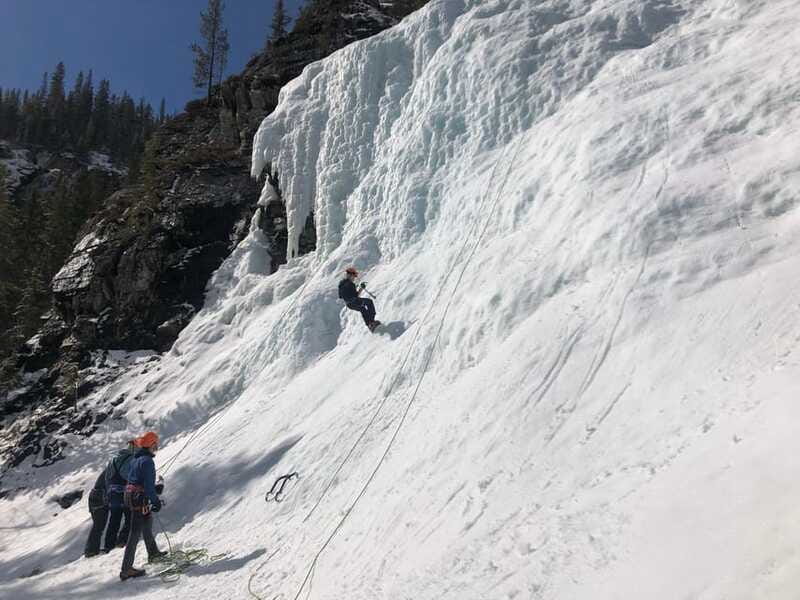
One of the first useful skills is walking in crampons. These metal devices attach to your boots and give you grip on ice, but they also change how you move.
The guide introduces the basic technique and helps you become aware of where your feet and body are positioned. You learn to place your feet with care rather than walking as if you were on a pavement.
That body awareness is one of the best reasons to take an introductory course. Ice climbing is not simply a matter of pulling yourself upward with your arms. Your feet, hips, balance, and posture all affect how efficiently you move.
The course also introduces movement skills for climbing. You work on positioning your body against the ice and learn how small changes can make a climb easier or harder. For a first outing, this coaching can save you from wasting energy.
You should expect to work physically. The activity is suitable for people who can manage a demanding winter day, but it is not designed for people with mobility impairments or wheelchair users. Pregnant women and children under 14 are not permitted to take part.
A completely different kind of day out on the same trip:
- Banff: Banff Gondola Admission Ticket
★ 4.7 · 3,698 reviews - Banff Gondola Ride Admission
★ 4.5 · 2,688 reviews - Columbia Icefield Tour with Glacier Skywalk
★ 4.5 · 1,860 reviews - Lakes Moraine, Louise, Emerald, Johnston Canyon & Yoho Tour
★ 4.8 · 1,023 reviews
Handling the rope and learning top-rope belay
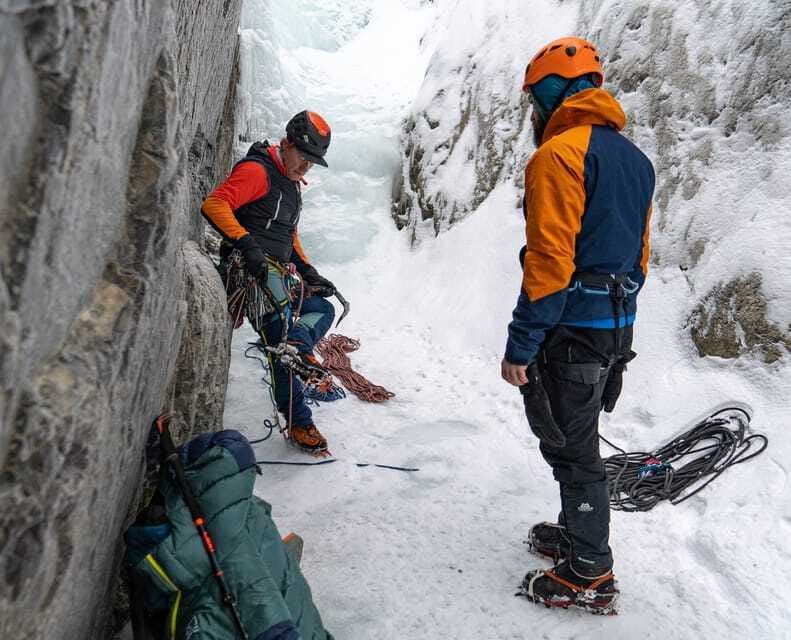
The course teaches you how top-rope belaying works. In plain terms, the rope runs from the climber up through an anchor and back down to the person managing the rope below.
Learning this system gives you a clear view of how a beginner climbing session is organized. You are not simply handed an ice axe and sent upward. You learn how the rope supports the climb and how communication and attention help keep the system safe.
The safety briefing comes before the climbing practice. That order is important. You get a chance to understand the equipment and basic procedures before dealing with the extra challenge of frozen ice.
The guide remains central throughout the session. All guides are ACMG and/or IFMGA certified, with Canadian Avalanche Association certification. Those qualifications do not remove the need for you to listen and follow instructions, but they are an important reason the $179 price has real value.
For someone curious about ice climbing, this is a sensible way to test the sport before spending money on personal equipment or committing to more advanced instruction. You get a full day of guided practice and access to technical gear in a controlled learning setting.
Climbing a frozen waterfall at two levels
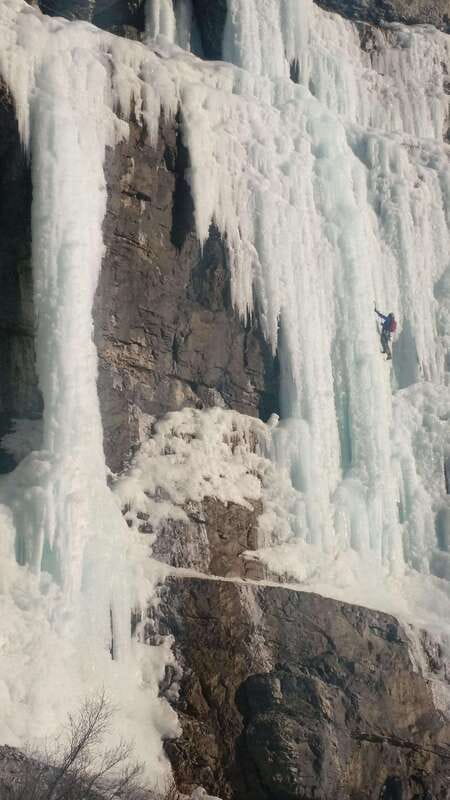
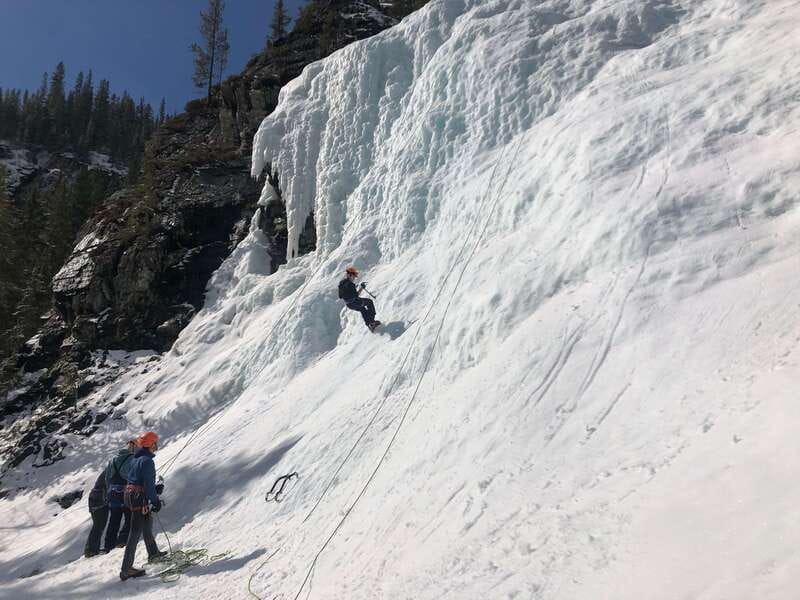
The main reward arrives when you start climbing the frozen waterfall. The ice gives the day a strong sense of place, and you get to practice the skills instead of only hearing about them.
The difficulty level can matter a lot on a first attempt. A particularly helpful detail from one cold-weather outing was the use of two ropes, one easier and one more challenging. That gave the group more choice and allowed people to take extra turns while staying active.
This setup is useful for mixed groups. Friends or family members may have different strength, confidence, or prior climbing experience. An easier line can help a cautious beginner learn the rhythm, while a harder option gives a stronger participant a reason to keep progressing.
It also helps with warmth. More climbing attempts mean less time standing still in the cold. On a day near minus 20 degrees Celsius, that is not a small benefit.
You should not expect the same difficulty for every departure. Ice conditions and the chosen location affect the day, and the guide decides what is suitable. The point of this course is to build a foundation, not to promise a specific route or grade.
The experience is best approached with a flexible attitude. You may have a strong climbing session, or you may spend more time on basic movement and safety depending on conditions and group needs. That is appropriate for an introductory course.
How much value you get for $179
At $179 per person, the price is reasonable if you want a serious first look at ice climbing. The fee includes the climbing experience, safety instruction, an ACMG-certified mountain guide, helmet, harness, boots, crampons, and ice axe.
Those equipment costs can add up quickly if you try to arrange an independent first outing. The course lets you learn with the main technical items supplied, which reduces the risk of buying gear before you know if the sport suits you.
You also receive a full seven-hour day rather than a brief activity lasting an hour or two. That longer format gives you time to learn, practice, make mistakes, adjust your movement, and try again.
The value is weaker if you want a simple winter attraction with no physical effort. You must pay for your own food, drinks, and transportation, and you need to spend a full day managing winter clothing and outdoor conditions.
I would compare the cost with the price of other guided mountain activities in the Banff area, but the key question is what you want from it. If you want to learn a new skill and use real equipment, the fee covers a useful package. If you mainly want views and photographs, a less demanding winter activity may suit you better.
Who should book this course
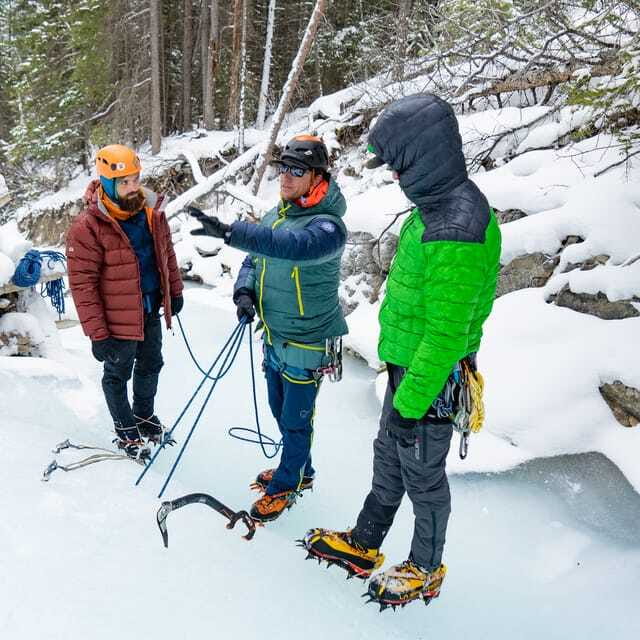
This course suits adults and families with children aged 14 or older who want an active winter experience. It also works well for friends who would like to try something unusual together without needing prior ice-climbing experience.
You should book if you enjoy learning physical skills and do not mind repeating basic movements. The day rewards patience. Your first attempts may feel awkward as you learn to trust the crampons, coordinate the ice axe, and keep your body in a useful position.
It is also a good match for people considering more climbing in the future. You can use the day to decide if frozen waterfalls appeal to you before looking at more advanced courses or personal equipment.
This is not the right choice if you need accessible facilities, cannot drive to the site, dislike cold outdoor conditions, or want a guaranteed location. It is also not suitable for children under 14, pregnant women, people with mobility impairments, or wheelchair users.
Planning the day without surprises
Watch your email for the course package, which arrives three days before the course starts. It should provide the final details and may explain a location change within the Banff, Lake Louise, or Field regions.
Keep your schedule open for the entire day. You may meet at 8 or 9 a.m. and finish around 3 or 4 p.m., but the exact timing depends on availability and the final plan.
Bring warm clothing, a jacket, gloves, snow clothing, food, and drinks. Do not assume that the technical equipment list includes ordinary winter wear or lunch.
Cancellation is flexible enough for most careful planners: you can cancel up to 24 hours before the activity for a full refund. You can also reserve now and pay later, which helps if your wider Banff plans are still shifting.
English is the listed instruction language. If you have questions about transport, group numbers, or the final site, contact Alpine Air Adventures before departure rather than waiting until the morning of the course.
Should you book Banff ice climbing for beginners?
I would book this if you want a real introduction to ice climbing rather than a quick winter thrill. The full-day format, supplied technical gear, certified guides, and chance to use different rope levels give you room to learn properly.
The strongest practical reason to choose it is the instruction. Guide Shea’s reported approach, using two difficulty levels and keeping climbers active in severe cold, shows the kind of detail that can make a demanding day work well.
I would skip it if you want an easy outing, cannot supply your own transportation, or are not prepared for serious cold. Check the minimum group requirement and final location before committing.
For the right person, $179 buys more than a climb. It buys a careful first test of a sport that is exciting, physical, and far easier to appreciate after you have learned how the equipment and movement fit together.
FAQ
How long does the ice-climbing course last?
The experience lasts seven hours. You should expect to meet around 8 or 9 a.m. and finish around 3 or 4 p.m., with the exact starting time dependent on availability.
Where does the ice-climbing day take place?
The field day takes place in the Banff, Lake Louise, or Field, British Columbia, regions. The location can change depending on conditions, and the final details are sent in the course information email three days before the course.
Where do I meet the guide?
Meet your guide at the Alpine Air Adventures office at 229 Bear Street in Banff. The office is on the lower level beneath the movie theatre.
Do I need to arrange transportation?
Yes. You must drive to the meeting location and to the climbing site. Transportation is not included in the price.
What climbing equipment is included?
The course includes a helmet, harness, climbing boots, crampons, and an ice axe. Safety instruction and the guided climbing experience are also included.
What should I bring?
Bring warm clothing, a jacket, gloves, snow clothing, food, and drinks. Food and beverages are not included.
Is the course suitable for children?
The course is suitable for children aged 14 and older. Children under 14 cannot take part.
Can I cancel the booking?
You can cancel up to 24 hours before the activity for a full refund. The reserve-now, pay-later option is also available.
Newest reviews from Banff
- Banff Cave & Hot Springs Audio Walking Tour (Not a Ticket)★ 3.0 · 6 reviews
- Banff: Vintage Car Legendary Open-Top Touring★ 5.0 · 6 reviews
- Banff to Calgary Private Shuttle★ 4.5 · 6 reviews
- Banff: Guided Nature Walk with Bear Country Safety Tips★ 4.5 · 6 reviews
- All-Inclusive Private Banff Tour with Hotel Transfer★ 5.0 · 6 reviews
- Sunshine Meadows Daily Guided Hike with Gondola★ 4.9 · 6 reviews
- Taste of Banff Food Tour★ 5.0 · 6 reviews
- Louise, Moraine/Johnston Canyon, Minnewanka & Banff Town★ 5.0 · 7 reviews
Banff Tours, compared.
Lakes Moraine, Louise, Emerald, Johnston Canyon & Yoho Tour
Read our review →
Lake Louise, Moraine Lake and the Icefields Parkway Full-Day Tour
Read our review →
Lake Louise, Moraine, Emerald Lake & Johnston Canyon
Read our review →

Banff Highlights & Wildlife | Award-Winning Small Group Adventure
Read our review →Browse the lists this tour appears in