
Reviewed · VANCOUVER TOURS
Ancient Trees of Vancouver Walking Tour
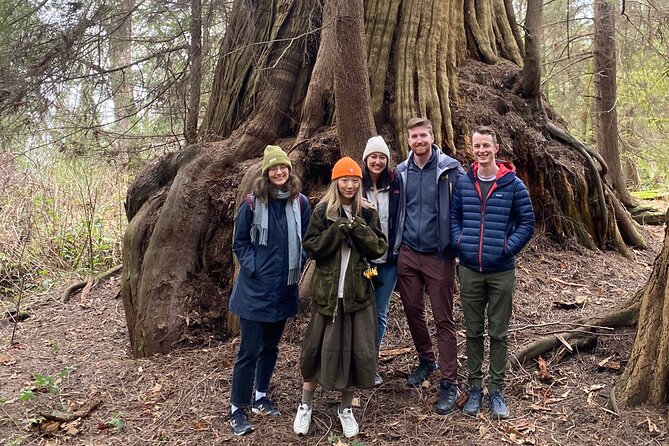
Trees can make a city feel wild. The Ancient Trees of Vancouver Walking Tour leads you into Stanley Park’s remaining old-growth forest, where enormous cedars, Douglas firs, and maples reveal stories about ecology, Vancouver, and the Coast Salish people who lived here long before the park became urban green space. I especially like the small groups of no more than 10 and the use of old maps, postcards, and photographs. One consideration: this is a three-hour walking tour, so it will suit you best if you enjoy a slow, story-filled walk rather than a quick park visit.
I also like that the tour is led by Colin Spratt, an experienced big-tree seeker and member of the BC Big Tree Committee. His subject is wonderfully specific, but the walk reaches beyond tree facts into conservation, Indigenous uses of cedar, logging, and the changing story of Stanley Park. The only practical drawback is that you must make your own way to Ferguson Point, since transport is not included.
In This Review
- Key points about the Stanley Park tree walk
- Why ancient trees feel different in Stanley Park
- Meeting Colin at Ferguson Point
- What you see on the three-hour route
- The historical story told through old photographs
- The science behind the wonder
- How difficult is the walk?
- Is the $56.33 price good value?
- Who will enjoy this experience most?
- Practical planning before you book
- Should you book the Ancient Trees of Vancouver Tour?
- FAQ
- Where does the Ancient Trees of Vancouver Tour begin?
- Where does the tour end?
- How long is the tour?
- How many people can join the tour?
- What language is the tour offered in?
- Are morning and afternoon departures available?
- Is transportation included?
- Can I cancel for a full refund?
Key points about the Stanley Park tree walk
- Ancient western red cedars: See trees described as 1,000 years old, including the famous grandfather tree and massive hollow trunks.
- Huge Douglas firs: The route includes towering firs reported to be roughly 600 to 800 years old.
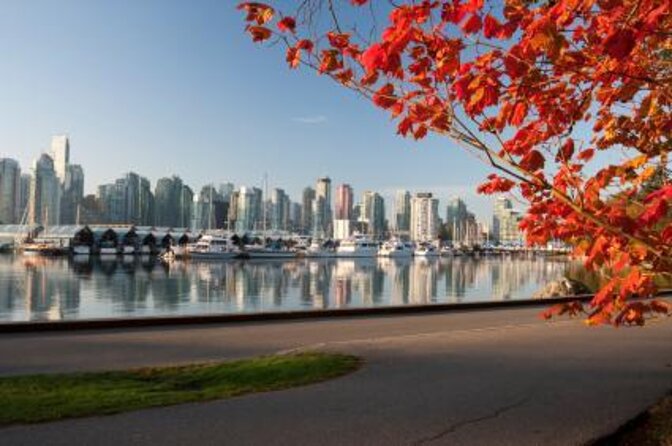
- A rare urban old-growth setting: Stanley Park preserves some very old forest almost in the middle of Vancouver.
- Colin Spratt’s personal expertise: His work with big-tree identification gives the walk a clear focus and a strong conservation message.
- Useful historical visuals: Old maps, 120-year-old postcards, and archival photographs help connect the trees to Vancouver’s past.
- Flexible small-group schedule: Morning and afternoon departures make it easier to fit the walk into a city stay.
Why ancient trees feel different in Stanley Park
Stanley Park is easy to treat as a pleasant city park, a place for seawall views, bike rides, and a quick breath of fresh air. This tour asks you to slow down and notice what is older, stranger, and more fragile beneath the familiar name.
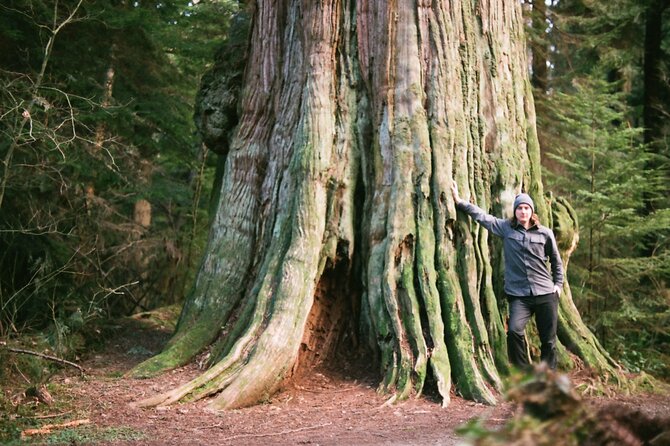
The forest here is not simply a collection of large trees. It is a living record of time. Some cedars are described as around 1,000 years old, while the Douglas firs can reach 600 to 800 years. The walk also points out the largest known maple tree in Canada, giving you several kinds of impressive trees rather than one repeated photo stop.
I like this focus because size alone can become a little empty. Colin explains how tree age is estimated, how old-growth forests function, and why ancient trees matter even when they are damaged, hollow, or partly dead. You begin to see fallen trunks and broken limbs as part of the forest’s work, not as signs that the woods are failing.
The tour also places the park in its human setting. The Coast Salish peoples called this area home for thousands of years before it became an urban park. Cedar was central to daily life, with wood used for canoes and longhouses and bark used for clothing, rope, and other textiles. That context gives the trees a significance beyond their height.
More Walking Tours in Vancouver
- Gastown Historic Walking Food Tour
★ 5.0 · 1,863 reviews - Vancouver Lost Souls of Gastown Walking Tour
★ 5.0 · 1,273 reviews - A Wok Around Chinatown: Culinary and Cultural Walking Tour Led by a Chef
★ 5.0 · 610 reviews
Meeting Colin at Ferguson Point
The tour begins and ends at Ferguson Point, at 7501 Stanley Park Drive. You do not receive pickup or drop-off, so plan your route to the meeting point before the start time. The booking information does not include a transfer service, and that matters in a park as large as Stanley Park.
Colin Spratt is the main reason this walk feels more focused than a standard nature outing. He is described as an expert big-tree seeker and a member of the BC Big Tree Committee. His enthusiasm comes through in the way he links tree science with Vancouver history and conservation.
The strongest praise for the tour centers on his presentation. He is described as patient, entertaining, passionate, and able to handle a steady stream of questions from children aged 7 to 11. That makes the outing a good option for families who want something more meaningful than a playground stop, although the three-hour length may still require some patience from younger children.
The group limit of 10 is another real advantage. A small party makes it easier to hear the guide, see the archival images, and ask questions without turning the walk into a moving crowd. It also keeps the experience personal, which suits a subject that rewards close attention.
What you see on the three-hour route
The published route lists Stanley Park as the sole stop, but that does not mean you spend three hours looking at one tree. The experience follows park trails and uses several old-growth examples to explain the forest as a whole.
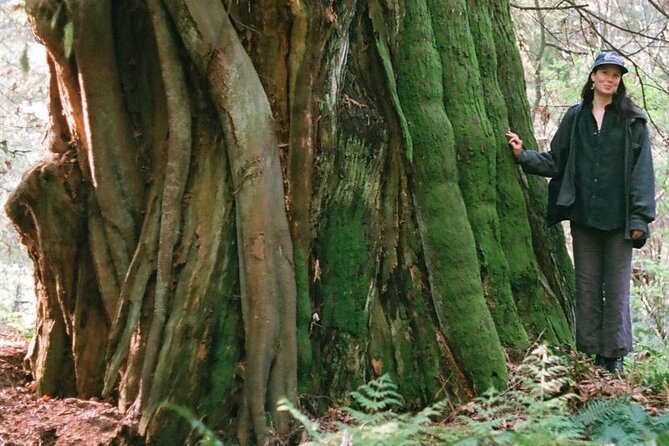
You can expect to see giant western red cedars, tall Douglas firs, and major maple trees. Some cedars are wide enough to make their age feel visible. Others are hollow or partly decayed, showing how an ancient tree can remain useful to the forest long after its living wood begins to fail.
One especially memorable lesson concerns nurse logs. A fallen tree can become a place where new plants take root, allowing fresh growth to rise from older wood. The forest becomes a cycle of birth, decay, and renewal. A seedling and a 1,300-year-old tree can belong to the same continuing system, even though their sizes and ages are worlds apart.
The tour also explains why old cedars can have hollow centers. The outer living layer continues to carry water and nutrients, while the inner wood may decay over time. Hollow trees can provide shelter for wildlife, including bears, according to the stories shared on the walk. You do not just see a large trunk. You learn to read its missing pieces.
Ancient cedars may also have unusual crown shapes, including the candelabra-like spikes associated with great age. Details like this give you something specific to watch for as you move through the forest. After the tour, a giant tree is less likely to be just a giant tree.
The historical story told through old photographs
Colin brings old maps, 120-year-old postcards, and photographs to help explain how Stanley Park and Vancouver changed. These visuals are a smart addition. A forest can feel timeless, but the images remind you that the park has been shaped by people, city growth, logging, and conservation decisions.
This historical layer is one of the tour’s best features. You learn about the park’s past while standing among trees that were already growing long before modern Vancouver existed. The contrast is powerful: the city around you is relatively young, while some of the cedars began life many centuries ago.
The walk also addresses why certain ancient trees remain. Their survival was not automatic. The story includes logging and conservation efforts, along with the particular conditions that allowed old trees to remain in Stanley Park. That makes the experience useful for anyone interested in how protected urban forests come into being.
The Coast Salish connection deserves careful attention, too. Cedar was not merely a building material. It was woven into everyday life and treated as a tree of life. The discussion of testing wood with antlers before carving canoes offers a practical glimpse into Indigenous skill and respect for the material.
These stories are not added as decoration. They help you understand the forest as both an ecological system and a place with a long human history.
A completely different kind of day out on the same trip:
- Vancouver Half-Day Whale Watching Adventure with Free Photos
★ 5.0 · 5,000 reviews - Big Bus Vancouver Hop-On Hop-Off Sightseeing Tour
★ 3.5 · 3,028 reviews - Victoria & Butchart Gardens Tour with Ferry from Vancouver
★ 4.5 · 2,703 reviews - Vancouver: Covered Whale Watching Adventure with Free Photos
★ 4.8 · 2,260 reviews
The science behind the wonder
The tour’s science is accessible rather than classroom-heavy. You learn about old-growth forests, tree age, decay, fire resistance, rot resistance, and regeneration in ways that connect directly to what you see.
One striking idea is that much of a tree is technically dead material. That dead wood can still protect the living parts of the tree and support insects, plants, and new seedlings. A hollow cedar, a rotting stump, or a fallen trunk is not simply wasted timber. Each can have a role in the next stage of forest life.
This is also where the conservation message becomes clear. Ancient trees grow slowly and face threats that do not disappear simply because a forest is inside a city. The tour explains the ecological importance of old growth and the pressure these forests face today.
I appreciate that the experience appears to balance admiration with concern. You get the pleasure of seeing huge trees, but you also learn why their survival matters and why replacing an old-growth tree is not as simple as planting a new one. A young seedling may be hopeful, but it cannot quickly replace centuries of habitat and structure.
If you already love forests, this may change the way you look at them. If you usually walk past trees without noticing them, the tour gives you a useful vocabulary for paying attention.
How difficult is the walk?
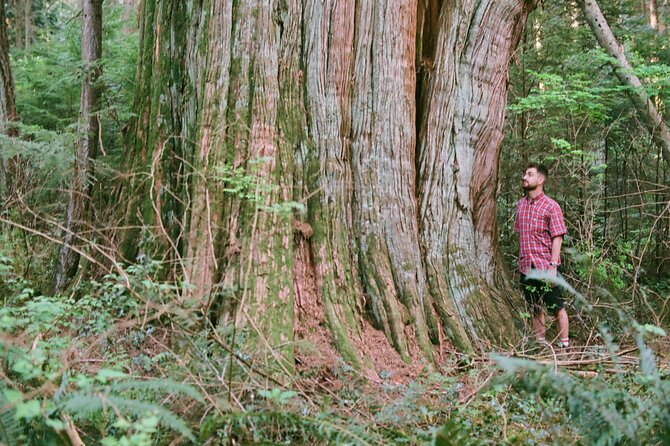
The walk uses park trails and is described in the experience information as suitable for most people. Several descriptions characterize the trails as easy, though the tour still lasts about three hours. That means the main challenge is duration, not technical hiking.
You should be prepared to walk outdoors for the full session and to focus on the guide’s explanations along the way. This is not a ride through Stanley Park or a short stop beside a single landmark. You are moving through the forest at a thoughtful pace.
Service animals are allowed. The available information does not provide detailed trail measurements, elevation figures, or specific wheelchair conditions, so anyone with mobility concerns should confirm those points before booking. Most people can participate, but the broad statement that most travelers can join is not a substitute for checking your own needs.
Morning and afternoon departures add useful flexibility. A morning booking can leave the rest of your day open for the seawall or downtown. An afternoon walk may work better after a slower start. Since the tour is commonly booked well ahead, around 46 days in advance on average, it is sensible to reserve early if your Vancouver dates are fixed.
Is the $56.33 price good value?
At $56.33 per person, this is not the cheapest way to enter Stanley Park. You can walk through the park on your own for free. The value comes from access to a trained guide’s interpretation, the small group, and the research behind the route.
A self-guided visit can show you beautiful trees, but it may not tell you which ones are several centuries old, how those ages are estimated, or why a hollow trunk is important. You would also miss the old maps, postcards, photographs, and the connections between the forest, Vancouver, Indigenous culture, and conservation.
The price makes the most sense if you want context. It is also a strong choice for a repeat visitor who has already seen the seawall and wants a different side of the park. Families can get good value if children are curious about nature and enjoy asking questions. Couples and solo visitors may appreciate the calm pace and the chance to spend three hours on a focused subject.
For someone who only has a short time in Vancouver, the decision is harder. If you have just half a day and want many major sights, a three-hour specialist walk uses a large part of your schedule. If old trees and environmental history appeal to you, that time is well spent.
Who will enjoy this experience most?
I would recommend the tour to you if you like nature, local history, conservation, or unusual city experiences. It is particularly well suited to people who prefer learning through stories rather than simply taking photographs.
It also works for:
- Families with children who ask questions and can manage a three-hour walk
- Couples seeking a quiet break from urban sightseeing
- Solo visitors who want a structured way to explore Stanley Park
- Tree lovers interested in giant cedars, Douglas firs, and forest ecology
- Repeat visitors who have already seen Vancouver’s main attractions
- People curious about Coast Salish uses of cedar and the park’s earlier history
You may want to skip it if you dislike guided walks, have very limited time, or mainly want fast sightseeing. The route is not presented as a strenuous hike, but it is still a long outdoor activity with a strong educational focus.
Practical planning before you book
The meeting point is Ferguson Point in Stanley Park, and the tour returns there at the end. Since pickup and drop-off are not included, allow enough time to reach the point without rushing.
English is the offered language. You receive confirmation at booking, and mobile tickets are available. Group discounts are listed, which may help if you are arranging a larger party, though the tour itself has a maximum of 10 participants.
Free cancellation is available if you cancel at least 24 hours before the start time. Cancellations or changes made inside that 24-hour window are not refunded or accepted, and the cut-off uses local Vancouver time.
The experience has a perfect 5 rating from 225 reviews, with 100 percent recommending it. That record fits the tour’s clearest strengths: Colin’s enthusiasm, the unusual subject, the easy-to-follow storytelling, and the chance to see old-growth trees that many park visitors miss.
Should you book the Ancient Trees of Vancouver Tour?
Book it if you want Stanley Park to become more than a scenic backdrop. Colin Spratt’s mix of tree science, old photographs, Vancouver history, Indigenous knowledge, and conservation gives the three-hour walk real substance.
I would not choose it simply because you need to fill an hour. Choose it because you are willing to slow down and pay attention. For many people, the best souvenir will not be a photograph of a giant cedar, but the new habit of looking at every tree and asking what it has survived, supported, and witnessed.
FAQ
Where does the Ancient Trees of Vancouver Tour begin?
The tour begins at Ferguson Point, 7501 Stanley Park Drive, Vancouver, British Columbia.
Where does the tour end?
The activity ends back at the Ferguson Point meeting point.
How long is the tour?
The walking tour lasts approximately three hours.
How many people can join the tour?
The maximum group size is 10 participants.
What language is the tour offered in?
The tour is offered in English.
Are morning and afternoon departures available?
Yes. The tour offers both morning and afternoon options.
Is transportation included?
No. Pickup and drop-off at the meeting point are not included.
Can I cancel for a full refund?
Yes, if you cancel at least 24 hours before the experience start time. Cancellations made less than 24 hours in advance are not refunded, and changes inside that period are not accepted.
Newest reviews from Vancouver
- Private Tour: Vancouver Sightseeing and Capilano Suspension Bridge★ 4.5 · 42 reviews
- Whistler Sightseeing & Sea to Sky Gondola Tour from Vancouver★ 5.0 · 42 reviews
- Downtown Vancouver Asian Food Tour by Vancouver Foodie Tours★ 5.0 · 42 reviews
- Victoria and Butchart Gardens Christmas Tour★ 4.5 · 43 reviews
- Vancouver City Tour: The Only Full Small-Group Car Tour★ 5.0 · 44 reviews
- Vancouver: Bowen Island Boat Cruise with Dinner★ 4.9 · 44 reviews
- Vancouver: Granville Island Market Tour with Tastings★ 5.0 · 45 reviews
- Private Departure Transfer to Vancouver Airport (YVR)★ 4.0 · 45 reviews
Vancouver Tours, compared.
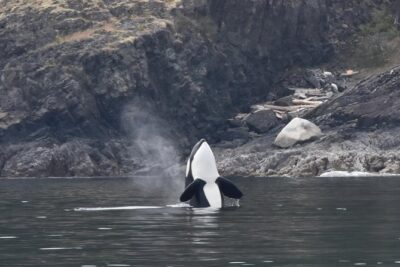
Vancouver Half-Day Whale Watching Adventure with Free Photos
Read our review →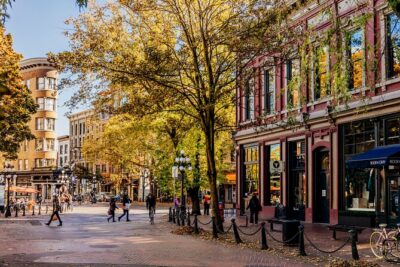
Big Bus Vancouver Hop-On Hop-Off Sightseeing Tour
Read our review →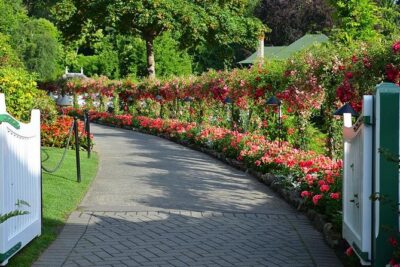
Victoria & Butchart Gardens Tour with Ferry from Vancouver
Read our review →
Covered Whale Watching Adventure with Free Photos
Read our review →
Victoria and Butchart Gardens Day Trip from Vancouver
Read our review →
Browse the lists this tour appears in