

Reviewed · HISTORICAL TOURS
Admission 1 person – Visit of the Acadian Historic Village
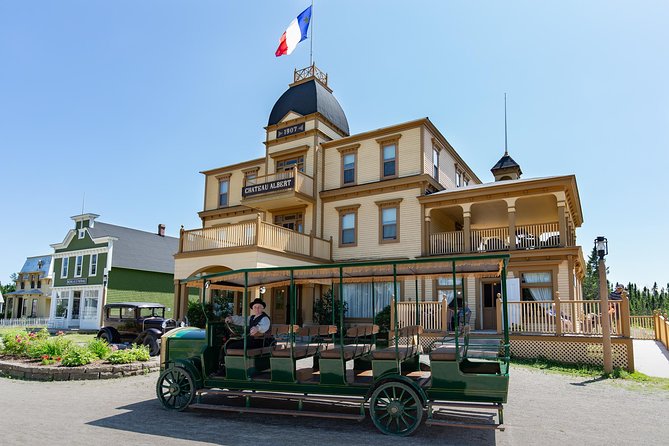
Acadian history feels close here. At Village Historique Acadien, you walk a 2.2 km route through historic buildings where bilingual interpreters explain daily life from 1770 to 1949. I like the freedom to set your own pace, and I like that the buildings are not just scenery: they are brought to life by interpreters in French and English. The main consideration is time, since the full visit can take four to six hours and requires a moderate level of fitness.
This is a good choice if you want more than a quick museum stop. Each house offers another piece of Acadian life, and the staff are praised for their warmth, clear explanations, and convincing period presentation. If you are not especially interested in history, the length of the visit may feel like a lot, but the chance to speak with interpreters makes the experience more personal than a standard self-guided attraction.
In This Review
- Key points to know before you go
- Walking into Acadian history on a 2.2 km route
- Historic buildings that feel more personal than ordinary exhibits
- Why bilingual interpretation improves the visit
- A visit built around everyday life, not just major events
- Planning four to six hours without feeling rushed
- What the $18.63 admission is really buying
- Who will get the most from this village
- Small practical details that make a difference
- The details that give the visit its strongest appeal
- Should you book the Village Historique Acadien?
- FAQ
- Where is the Village Historique Acadien located?
- How much does admission cost?
- How long does the visit take?
- What are the opening hours?
- Is the ticket mobile?
- Is the visit self-guided?
- Are the interpreters bilingual?
- What time period does the village cover?
- Is parking available?
- Are animals allowed?
- Can I cancel for a full refund?
Key points to know before you go
- A 2.2 km historic route: The village is designed as a walking circuit, so plan for several hours rather than a brief stop.
- Acadian life from 1770 to 1949: You get a broad look at daily life across nearly two centuries, not a single snapshot in time.
- Bilingual interpretation: Interpreters speak both French and English, making the site accessible to a wide range of visitors.
- Admission costs $18.63 per person: The value is strongest if you stay long enough to explore several buildings and speak with the interpreters.
- Free parking for cars and RVs: You can arrive by car or recreational vehicle without adding a parking charge.
- Best for curious, active visitors: The route involves a moderate amount of walking and rewards people who enjoy taking their time.
Walking into Acadian history on a 2.2 km route

The visit begins with a simple idea: follow the route and let the village unfold one building at a time. There is no fixed tour group to keep up with. You can pause where you like, spend extra time in a house that catches your attention, or move along when you feel ready.
That flexibility matters. A large historic site can become tiring if you are pushed from one stop to another. Here, you can shape the day around your own interests. I would allow at least four hours if you want to listen carefully and stop often. Six hours gives you a more relaxed visit.
The route covers Acadian life from 1770 through 1949. That long period gives the site room to show change over time. You are not looking at one frozen version of the past. Instead, the buildings and explanations help connect different stages of Acadian life and the daily routines of the people who lived through them.
The path is 2.2 km, but the walking distance does not tell the whole story. You will also spend time standing inside buildings, listening to interpreters, and moving between stops. Wear comfortable shoes and be ready for a moderate physical effort.
More historical tours in Canada:
- Victoria Guided Food and History Tour
★ 5.0 · 2,015 reviews - Gastown Historic Walking Food Tour
★ 5.0 · 1,863 reviews - Vancouver: Gastown Historical Walking Food Tour
★ 4.8 · 539 reviews
Historic buildings that feel more personal than ordinary exhibits
The main appeal is the collection of historic buildings along the route. Each one has its own character, and each adds another angle to the story. One house may help you understand domestic life, while another gives you a clearer sense of work, community, or the practical demands of earlier generations.
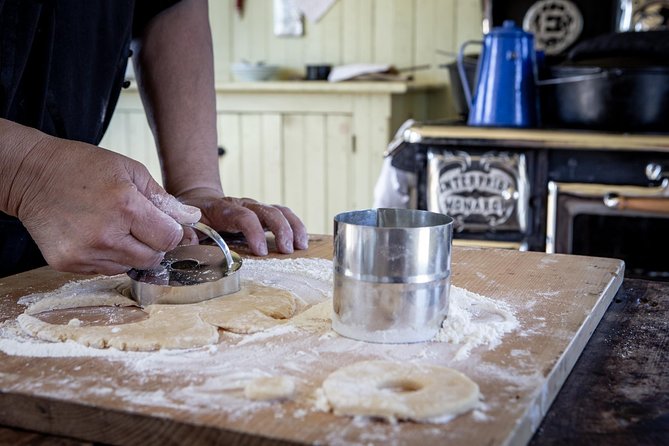
The people working inside the buildings are a major part of the experience. They are not simply stationed at information desks. The site describes them as interpreters who inhabit the buildings and explain Acadian history and daily life. That human touch gives you a chance to ask questions instead of only reading signs.
I especially like this format for families and mixed-interest groups. A person who enjoys dates and historical details can ask for more explanation, while someone less interested in formal history can focus on the buildings, clothing, objects, and stories. The experience does not depend on everyone having the same level of interest.
The strongest praise goes to the staff’s kindness and their convincing presentation. The interpreters are described as working as if the period belonged to them, and that approach can make each house feel active rather than preserved and silent. The result is less like walking through empty rooms and more like meeting people who are ready to explain how those rooms were used.
Why bilingual interpretation improves the visit
The interpreters speak both French and English. That is important here because Acadian history is closely tied to language and identity, and you can receive explanations in the language that helps you understand the most.
If you speak French, you can enjoy the setting without having to translate every detail in your head. If you prefer English, you can still ask questions and follow the explanations fully. The bilingual format also works well for families or groups where people are more comfortable in different languages.
This is not described as a large guided group tour. The admission is self-guided, but the interpreters are available throughout the buildings. That gives you the best of both formats: freedom to walk independently, with human explanation available when you want it.
I would not rush past the interpreters. The buildings may attract your eye first, but the conversations are where much of the meaning comes together. The staff’s explanations about Acadian history and everyday life are repeatedly praised for being clear and engaging. If you have a question, ask it. This is the type of place where a short exchange can add more value than another quick look at a room.
A visit built around everyday life, not just major events

Many historic attractions focus on leaders, battles, and important dates. This village puts more attention on how ordinary Acadian people lived. The period from 1770 to 1949 covers generations of work, family life, and community routines.
That focus makes the history easier to understand. You are not only learning what happened. You are considering how people organized their days and adapted to the world around them. The staff’s explanations help connect the larger story with practical details of daily life.
The long time span also gives you a broader sense of continuity and change. A visit focused on one year can be precise but limited. Here, you get a wider view, though you may need to pay attention to the dates and explanations to keep the different periods straight.
I recommend taking a moment at each building rather than treating the route as a checklist. The village works best when you allow the details to build gradually. One house may seem modest on its own, but several stops together create a clearer picture of Acadian life.
More attraction tickets in Canada:
- Banff: Banff Gondola Admission Ticket
★ 4.7 · 3,698 reviews - Toronto: Casa Loma Entry Ticket
★ 4.7 · 2,705 reviews - Banff Gondola Ride Admission
★ 4.5 · 2,688 reviews - Jasper: Columbia Icefield Skywalk and Ice Explorer Ticket
★ 4.6 · 2,444 reviews
Planning four to six hours without feeling rushed
The stated visit length is approximately four to six hours. That is a substantial block of time, so plan this as a main activity for the day rather than a quick detour between other attractions.
Four hours may be enough if you walk steadily and listen to the main explanations. Six hours suits you if you want to ask questions, linger in several houses, and take the route at an easy pace. Your exact timing will depend on how much you read, how long you speak with interpreters, and how often you stop.
The site is open from 10:00 a.m. to 5:30 p.m. daily during the listed season, from June 4 through September 12, 2026. Those hours give you room to arrive in the morning and spend most of the day there. Starting earlier can be useful if you prefer a relaxed pace, while a late arrival may limit how much time you have before closing.
Because the route involves moderate physical activity, I would avoid treating the final hour as a race. If you know that long walks or extended periods on your feet are difficult, consider shortening your visit rather than trying to cover every building.
What the $18.63 admission is really buying
The admission price is $18.63 per person. That is a reasonable value if you use the site as a half-day or full-day cultural visit, especially since the ticket includes access to the historic village and its interpreters.
The value is not in speed. You are paying for time, space, buildings, interpretation, and the chance to explore independently. If you only have an hour, the price may feel less attractive because you will see only part of what the village offers.
For a longer visit, the calculation improves. You can walk the entire 2.2 km circuit, enter multiple buildings, and return to the parts that interest you most. The bilingual interpretation also adds something that a simple outdoor collection of buildings cannot provide.
Free parking helps keep the total cost down. Cars and RVs can park without charge, which is useful if you are making the visit part of a larger road trip through New Brunswick. The ticket is mobile, so you can keep admission on your phone rather than manage a paper pass.
Booking ahead is also presented as a way to skip the ticket line. That may be useful during busy periods, though you should still allow time for parking and getting oriented before you begin the route.
Who will get the most from this village
I would recommend this experience to you if you enjoy:
- Acadian history and culture
- Historic buildings and living-history interpretation
- Self-guided visits with staff available for questions
- French and English cultural programming
- Long, unhurried visits
- Road trips where free parking matters
It is particularly suited to people who enjoy asking questions. The interpreters are one of the strongest parts of the experience, and you will gain more if you engage with them instead of simply walking past each building.
Families can also find plenty to discuss because the visit connects historical ideas with everyday life. The self-guided format lets each person move at a comfortable pace, which is easier than keeping a whole group together on a tightly scheduled tour.
I would be more cautious if you want a short, highly structured attraction. Four to six hours is a long visit, and the moderate fitness requirement is worth taking seriously. Someone who dislikes walking or has only a narrow gap in the day may not get full value from the ticket.
Small practical details that make a difference
The experience is offered in English, while the village interpreters are bilingual in English and French. That combination means English-language access is available, with the added benefit of French interpretation on site.
Service animals are allowed. Other animals, including dogs and cats, are not permitted. If you are traveling with a pet, plan around this rule rather than assuming the outdoor setting allows animals.
Free parking is available for cars, RVs, and similar vehicles. That makes arrival straightforward for a driving trip. No transportation service is included in the information provided, so you should plan to reach the village independently.
Your booking confirmation is sent at the time of booking. The ticket is mobile, so keep your phone charged and ready when you arrive. You can cancel for a full refund if you do so at least 24 hours before the experience begins. Changes or cancellations made inside that window are not accepted for a refund, and the cut-off follows local time.
The details that give the visit its strongest appeal
The most praised parts are the friendliness of the people working in the village, the clarity of the historical explanations, and the care put into the reconstruction. Each house is described as having its own charm, which is a useful reminder not to judge the experience after only the first stop.
The interpreters’ role is especially important. They help turn a collection of structures into a connected story. You can ask about the past, hear explanations in English or French, and compare the different buildings as you move along the route.
There is also a personal quality to the history. One visitor recognized the Ouellet family name as part of the story, showing how the site can connect broad Acadian history with individual family roots. If you have Acadian ancestry, you may find that the visit becomes more than an educational stop.
Even if you do not have a family connection, the village offers a clear way to understand how history reaches ordinary homes and daily routines. That is why the experience works for people who already love history and for those who simply want to understand the region better.
Should you book the Village Historique Acadien?
Book it if you can give it four to six hours and want a thoughtful, people-focused look at Acadian life. The $18.63 admission is good value when you walk the full 2.2 km route, spend time in several buildings, and speak with the bilingual interpreters.
You may want to skip it if your schedule allows only a brief stop or if moderate walking is a problem. This is not a quick photo opportunity. It rewards patience, curiosity, and a willingness to let one house lead you to the next.
For an English-speaking visitor exploring New Brunswick by car, the combination of mobile admission, free parking, flexible pacing, and bilingual interpretation makes this a practical and worthwhile half-day visit.
FAQ
Where is the Village Historique Acadien located?
It is located in New Brunswick, Canada.
How much does admission cost?
Admission costs $18.63 per person.
How long does the visit take?
The visit takes approximately four to six hours.
What are the opening hours?
During the listed season, from June 4 through September 12, 2026, the village is open Monday through Sunday from 10:00 a.m. to 5:30 p.m.
Is the ticket mobile?
Yes. The experience includes a mobile ticket.
Is the visit self-guided?
Yes. You can explore the 2.2 km route at your own pace.
Are the interpreters bilingual?
Yes. The interpreters speak both English and French.
What time period does the village cover?
The village presents Acadian history and daily life from 1770 to 1949.
Is parking available?
Yes. Parking is free for cars, RVs, and similar vehicles.
Are animals allowed?
Service animals are allowed. Other animals, including dogs and cats, are not allowed.
Can I cancel for a full refund?
Yes. You can cancel at least 24 hours before the experience start time for a full refund. Cancellations or changes made less than 24 hours in advance are not accepted for a refund.
Newest reviews from Canada
- Private Boat Charter Explore Southern Gulf Islands Tour★ 5.0 · 6 reviews
- Hire Photographer, Professional Photo Shoot – Niagara Falls★ 5.0 · 6 reviews
- Toronto Landmarks★ 5.0 · 6 reviews
- Jason Parkes Trail Full Day Guided Westside Wine Tour in Kelowna★ 5.0 · 6 reviews
- Whitehorse: Half-Day Snowshoeing Tour★ 5.0 · 6 reviews
- Toronto: Niagara Falls Tour with Boat and Lunch★ 3.6 · 6 reviews
- Toronto: Muskoka Cranberry Farm and Hardy Lake Hike★ 5.0 · 6 reviews
- Vancouver Street Food Tour in Mount Pleasant Neighborhood★ 5.0 · 6 reviews
Historical Tours, compared.



Evening Gourmet Tour 5 Course Dinner – History and Food in Old Quebec City
Read our review →


Browse the lists this tour appears in