
Reviewed · BANFF TOURS
2 Hour Banff Horseback Riding Adventure
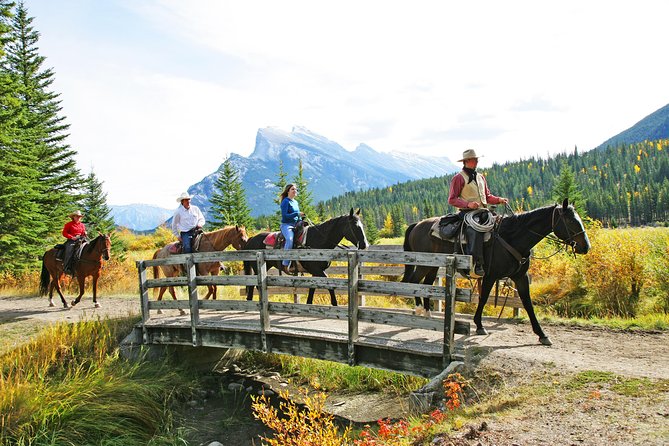
Trade pavement for a saddle in Banff. This gentle two-hour ride follows the Sundance Loop beside the Bow River, passes the Cave and Basin area, and climbs forested trails toward Sulphur Mountain. I like the calm, well-trained horses and the careful lead-and-tail guide system. I also like that beginners and children age eight and up can join. The main drawback is simple: this is a walking ride, not a trotting or cantering adventure.
You will ride with up to 12 people, so you may not hear every bit of commentary from the front of the line. Come 30 minutes early, wear long pants and sturdy ankle-covering shoes, and remember the strict 230-pound weight limit. Guides such as Abby, Amy, and Jess have earned warm praise for friendly instruction and a strong focus on safety.
In This Review
- Key points to know before you book
- Starting at the Banff Trail Riders stables
- Getting comfortable with your horse
- Following the Bow River Trail
- Passing the Cave and Basin area
- Climbing the Sulphur Mountain trails
- Reaching Windy Knoll for the best photos
- What two hours feels like in the saddle
- Guide quality and group size
- Price and value at $160.52
- Who will enjoy this Banff ride most
- Practical advice for a smoother ride
- Should you book the Sundance Loop ride?
- FAQ
- Where does the horseback ride begin and end?
- How long is the horseback riding adventure?
- What age must children be to participate?
- Is horseback riding experience required?
- What is the maximum rider weight?
- What should I wear?
- Can I cancel for a full refund?
Key points to know before you book
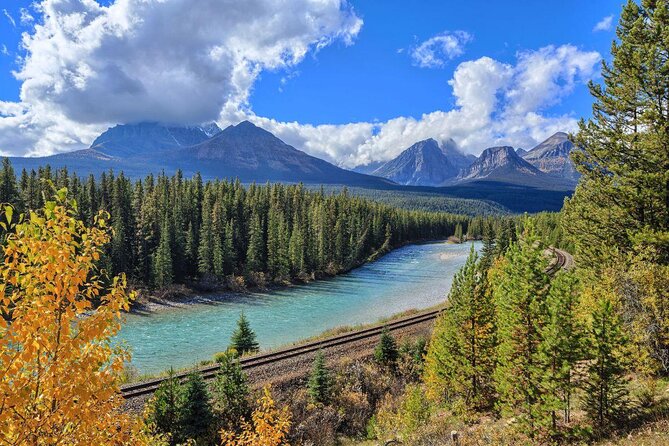
- The Sundance Loop gives you a different view of Banff: You ride beside the Bow River and into wooded sections that cars cannot reach.
- This is a true beginner ride: Horses are trained for slow, steady trail work, and basic instruction is included.
- Expect walking pace only: The route is gentle, but riders hoping to trot or canter may find it too quiet.
- The group can reach 12 riders: The two-guide setup helps with safety, but hearing the lead guide can be difficult from the back.
- The rules are strict for good reason: Helmets are mandatory, riders must be at least eight years old, and the maximum weight is 230 pounds.
- Plan for a little soreness: Two hours in a western saddle can be tiring if you rarely ride.
Starting at the Banff Trail Riders stables
Your ride begins at Banff Trail Riders, at Stables, 100 Sundance Road in Banff. The activity returns to the same place, and no hotel pickup or drop-off is included. The stables are near public transportation, but you should still allow plenty of time to arrive, find the check-in area, and complete the required paperwork.
All riders must arrive 30 minutes before the scheduled departure. That early arrival matters. You will receive basic riding instruction, be fitted with a mandatory helmet, and get settled with your horse before the group leaves.
Adults must sign a waiver. A parent or legal guardian must complete the waiver for anyone under 18, and documentation may be requested to confirm the adult’s authority. The age and weight rules are enforced at check-in. Riders may be asked to show proof of a child’s age or confirm their weight on a scale.
That may feel formal, but horseback riding in a national park calls for clear rules. If you are over the 230-pound limit, the booking can be forfeited without a refund. The same applies if a child does not meet the minimum age. Check these details before paying, not at the stable door.
More horse riding in Banff:
- Banff National Park: 1-Hour Bow River Horseback Ride
★ 4.6 · 518 reviews - Banff National Park: 1-Hour Spray River Horseback Ride
★ 4.7 · 315 reviews - Banff: Family Friendly Horse-Drawn Sleigh Ride
★ 4.2 · 237 reviews
Getting comfortable with your horse
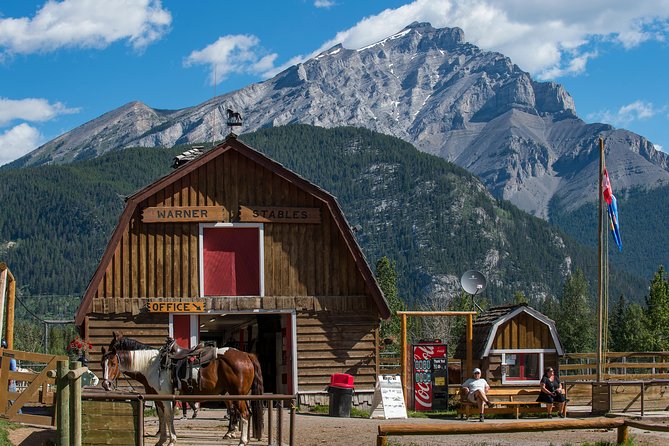
The ride includes the horse, helmet, lead guide, tail guide, and basic riding instruction. This is not a lesson in advanced western riding. It is a practical briefing to help you sit safely, follow the line, and manage a horse at walking pace.
The horses are the strongest part of the experience for many riders. They are described as gentle, steady, sure-footed, and easy to handle. That makes a real difference if you have never ridden before, or if you are bringing a child who feels unsure around large animals.
I would still be honest with yourself about the physical side. You must be able to control the horse without assistance. The operator cannot accommodate riders with disabilities or special needs because the barn does not have the equipment or staff skills needed for those situations.
Children eight and older ride their own horses. They are not paired with an adult, and anyone 17 or younger must be accompanied by a parent or guardian. A child who has never ridden can participate, but you should be comfortable with the fact that the child will manage an individual horse in the line.
For clothing, wear long pants and sturdy closed-toe shoes that cover the ankle. Open shoes and large heels are not allowed. Food and drinks are not included, so have water and any needed snacks before or after the ride.
Following the Bow River Trail
Once the line leaves the stables, the route moves onto the Bow River Trail. This opening section helps you settle into the rhythm of the horse before the route becomes more wooded and uneven.
The Bow River gives the ride much of its appeal. You get a slower view of the valley, with the river and mountain scenery appearing between trees and open sections. On foot, you may focus on your steps or other people on the path. From horseback, you sit higher and move quietly, which can give you a better chance of spotting wildlife.
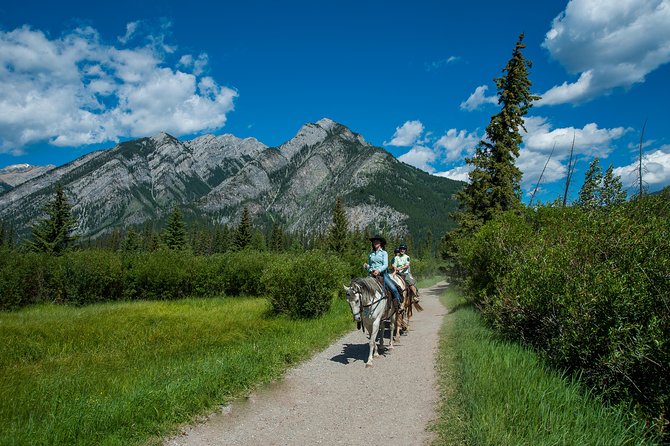
Do not expect a private wilderness outing. A group of up to 12 horses creates a long single file, and the ride keeps to a controlled pace. That arrangement is good for safety and for inexperienced riders, but it limits the feeling of freedom you might want from a western trail ride.
The guides are positioned at the front and back. This lead-and-tail system is useful when the group stretches out, and it received strong praise for helping riders feel safe. The lead guide also provides information about the area and points out features along the route.
Here is the catch: if you are in the middle or toward the back, you may hear little of the front guide’s commentary. A full line of riders can make conversation difficult. If learning about the surroundings matters to you, ask the staff where you will be placed or stay alert for explanations from the guide nearest you.
Passing the Cave and Basin area
The route continues toward the Cave and Basin National Historic Site, one of Banff’s important landmarks. You pass natural sulphur hot springs on the way, adding a distinct local feature to what might otherwise be a straightforward forest ride.
The Cave and Basin area matters because it connects the scenery to Banff’s origins as a protected mountain destination. You are not booking a separate visit inside the historic site, so think of this as a passing view and a geographical highlight rather than a full sightseeing stop.
This part of the route is valuable because it gives the ride a sense of place. You are not simply circling a ranch. You are moving through a section of Banff National Park tied to the town’s famous hot springs and early national park story.
The ride continues at a slow walk. That is a plus if you want time to look around, take in the river, and feel secure in the saddle. It is less appealing if you want changing speeds or a more active riding lesson.
A few more tours worth putting side by side
- Banff National Park: 2-Hour Sundance Loop Horseback Ride
★ 4.3 · 128 reviews - 2 Hour Wilderness Adventure Snowmobile Tour in Whistler
★ 5.0 · 610 reviews - 2 Hours Guided Whale and Bird Boat Tour in Bay Bulls
★ 5.0 · 557 reviews - 2 Hour Award-Winning Whale and Seabird Boat Tour from St. John’s
★ 4.5 · 455 reviews
Climbing the Sulphur Mountain trails
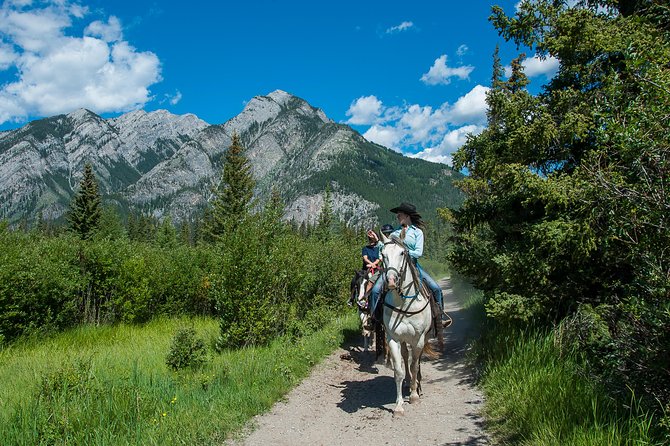
After the flatter river sections, the horses head through thicker marsh and wooded terrain as the trail climbs toward Sulphur Mountain. This is where the outing feels more like a mountain trail ride than a casual loop around town.
The horses do the work steadily, and the route can include muddy sections depending on conditions. Mud may slow the group and make footing less pleasant, though the horses are used to the trail. Wear shoes and pants you do not mind getting dirty.
The name Sulphur Mountain can create an expectation of a grand summit view. Set that expectation carefully. The ride does not take you to a high lookout with a sweeping panorama. Much of the climb remains in the forest, and some riders have found the upper section more like a quiet trek up and back down than a scenic summit stop.
That does not make the climb pointless. The forest gives you a closer look at the park, and riding uphill adds variety to the route. Just do not book this as a mountain-top photo excursion. The best broad views come at open points along the loop, especially around Windy Knoll and the Bow Valley.
Reaching Windy Knoll for the best photos
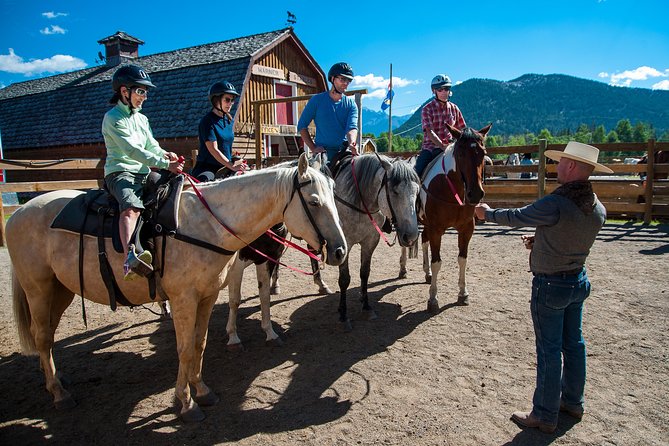
Windy Knoll is the route’s strongest photo opportunity. From here, you can take in broader views across the Bow Valley and capture the horses with the mountains behind you.
Photography on horseback takes some planning. The group cannot stop anywhere for a long personal photo session, and horses may not be trained to stand still on demand. The guides may offer a photo at the end, which is helpful, but you should not count on a posed trail picture with the perfect background.
Keep your phone secure. You will want it available for the views, but you also need both hands when managing a horse. A small, secure pocket is better than carrying a loose camera or bulky bag.
The scenery is the main reason to choose this activity over a standard sightseeing drive. You reach parts of Banff that cars cannot access, and the slow pace gives you time to notice the river, forest, marsh, and mountain slopes. The tradeoff is that the route is not packed with dramatic stops. Much of the beauty comes quietly, along the trail.
What two hours feels like in the saddle
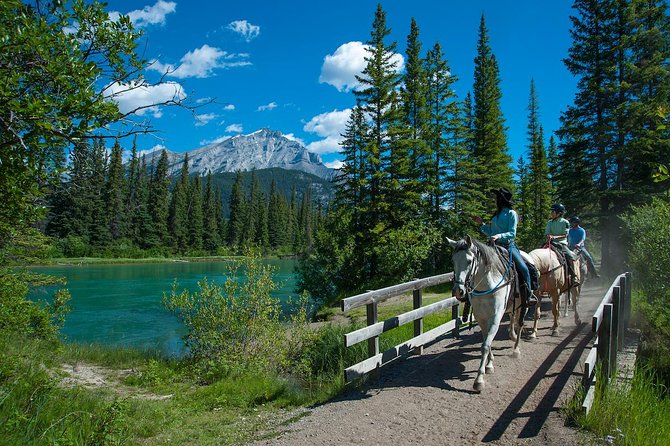
Two hours is a useful length for a first trail ride. You get enough time to move beyond the stable and see several parts of the park without committing to a full-day outing.
For some beginners, however, two hours can feel long. A horse walking steadily for that length of time may leave your legs, hips, or lower back sore, especially if you have not ridden recently. An Epsom salt bath or massage afterward was suggested by one rider, and that is sensible advice if your body is not used to the position.
The pace is almost certainly the issue for anyone expecting action. This ride is designed around control and safety, not speed. You should not expect a trot, canter, or gallop through a meadow. A few riders specifically wished for even a short trot, but the slow pace is also why the activity works for families and nervous first-time riders.
I would choose this ride if you want a calm way to see Banff from a new angle. I would skip it if your main goal is to practice riding skills or feel the horse move at faster speeds.
Guide quality and group size
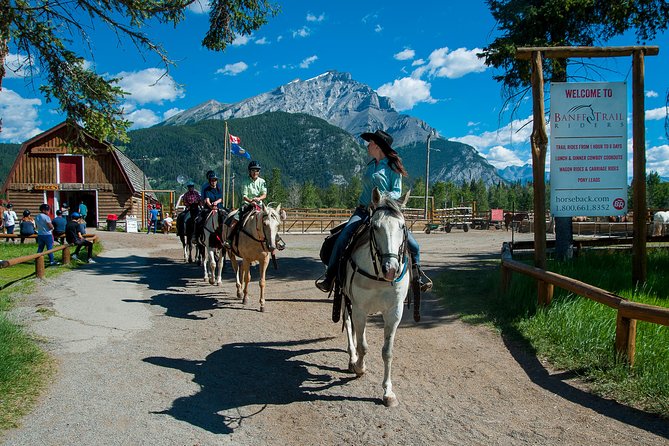
The guides are a major part of the value. The best feedback describes them as friendly, funny, attentive, safety-focused, and helpful with nervous riders. Guides named Abby and Amy were praised after one two-hour outing, and Jess received a special mention for making a ride feel informative and reassuring.
The guide system is practical. One person leads the line while another stays at the rear, watching the group and helping maintain order. That gives you more support than a single guide can provide, especially when the trail stretches through wooded or muddy areas.
The group size can work both ways. A maximum of 12 keeps the operation efficient and allows families or couples to ride together. But 12 horses in one line is not intimate. If you are in the middle, you may struggle to hear the front guide, and the ride can feel more like a procession than a small nature outing.
A smaller group would improve the personal attention and make the commentary easier to follow. Still, the two-guide arrangement helps offset the larger line. I would treat the group size as a known limitation, not a surprise.
Price and value at $160.52
At $160.52 per person, this is not a cheap way to spend two hours. The price includes the horse, helmet, instruction, and two guides, but not food, drinks, or transportation from your hotel.
The value depends on what you want from Banff. You are paying for access to a managed horseback route, trained horses, safety support, and time in parts of the park that you cannot experience from a car. For a first ride in the Rockies, that combination can feel worthwhile.
The price is harder to justify if you already ride often and want technical instruction, speed, or a private group. This is a standard guided trail ride with a controlled walking pace. You are buying scenery, a well-run operation, and an easy introduction, not an advanced equestrian outing.
Because the activity often fills well ahead of time, with bookings averaging 56 days in advance, you should plan early during popular periods. That booking pattern also means last-minute flexibility may be limited. The cancellation terms are fair if you plan carefully: cancel at least 24 hours before the start for a full refund. Later cancellations and changes are not refunded, while poor weather may lead to a new date or full refund.
Who will enjoy this Banff ride most
This outing fits several types of visitors:
- First-time riders: You receive basic instruction, ride gentle horses, and stay at a walk.
- Families with older children: Children age eight and up can ride their own horses with a parent or guardian present.
- Couples and solo visitors: The two-hour length fits neatly into a Banff day without taking over the schedule.
- Nature lovers: You reach the Bow River, wooded trails, marsh areas, Cave and Basin surroundings, and Windy Knoll.
- Nervous riders: The guides and steady horses help create a reassuring setting.
It is less suitable for riders who want speed, a small private group, a high summit viewpoint, or a formal riding lesson. It also is not suitable if you exceed the weight limit, are under eight, cannot control a horse without help, or need adaptive riding equipment.
Practical advice for a smoother ride
Arrive early enough to handle check-in without rushing. Wear the required clothing, and bring only what you can keep secure while riding.
If you care about hearing the guide, ask about your position in the line. Sitting near the front may give you a better chance to catch the commentary, though the group order is not something you can assume will be flexible.
Expect dirt and possible mud. Choose practical clothes rather than your best vacation outfit. Also plan some recovery time afterward if you are new to riding. Two hours sounds modest until you spend it in a saddle.
Bring Canadian cash if you want to tip the guides. Tips are not listed as included, but the staff’s work can make a major difference, especially when they are helping nervous riders, children, or a long line of horses.
Should you book the Sundance Loop ride?
Book it if you want a safe, scenic, beginner-friendly horseback introduction to Banff. The horses, guides, Bow River route, and mountain scenery make this a strong choice for families, couples, and first-time riders.
Skip it if you need a faster pace or a dramatic mountain summit view. You should also confirm every restriction before booking, especially the 230-pound maximum, minimum age of eight, required footwear, and the need to control your own horse.
My call: book this for the setting and the gentle ride, not for advanced riding. Arrive early, dress for mud, accept the large group, and let the Rockies unfold at walking speed.
FAQ
Where does the horseback ride begin and end?
The ride begins and ends at Banff Trail Riders, Stables, 100 Sundance Road, Banff, Alberta. Hotel pickup and drop-off are not included.
How long is the horseback riding adventure?
The ride lasts approximately two hours.
What age must children be to participate?
Riders must be at least eight years old. Children age 17 and under must be accompanied by a parent or legal guardian, and children ride their own horses.
Is horseback riding experience required?
No. The activity includes basic horseback riding instruction and is designed to suit beginners. Riders must still be physically able to control their horse without assistance.
What is the maximum rider weight?
All riders must be under 230 pounds, or 104 kilograms. The requirement is strictly enforced, and a weight check may be part of check-in.
What should I wear?
Wear long pants and sturdy, closed-toe shoes that cover the ankle. Open-toe shoes and shoes with large heels are not permitted. Helmets are mandatory and provided.
Can I cancel for a full refund?
You can cancel for a full refund if you do so at least 24 hours before the experience start time. Cancellations or changes made less than 24 hours before departure are not refunded. If poor weather forces cancellation, you will be offered another date or a full refund.
Newest reviews from Banff
- Banff: Sightseeing, Lake Minnewanka Cruise and Banff Gondola★ 4.7 · 41 reviews
- Banff/Canmore Moraine Lake & Lake Louise-Hike/Canoe/Sightsee★ 5.0 · 44 reviews
- Grotto Canyon Icewalk★ 4.5 · 49 reviews
- Banff |Canmore| Kananaskis to Calgary YYC Airport–Private Shuttle★ 5.0 · 50 reviews
- Banff : Lake Louise, Moraine, Emerald & Johnston Canyon tour★ 4.8 · 51 reviews
- Banff National Park Big Canoe Tour★ 5.0 · 52 reviews
- Banff: Grizzly Bear Refuge Tour with Lunch★ 4.6 · 53 reviews
- Banff: Sightseeing Chairlift Ride High Above Banff★ 4.6 · 57 reviews
Banff Tours, compared.
Lakes Moraine, Louise, Emerald, Johnston Canyon & Yoho Tour
Read our review →
Lake Louise, Moraine Lake and the Icefields Parkway Full-Day Tour
Read our review →
Lake Louise, Moraine, Emerald Lake & Johnston Canyon
Read our review →

Banff Highlights & Wildlife | Award-Winning Small Group Adventure
Read our review →Browse the lists this tour appears in